Hiking that Feels the Vitality of All Things in Gyeongsangbuk-do Chilgok County · schedule Other · distance 56.2km · 4 stops · highlights Dodeokam, Song…

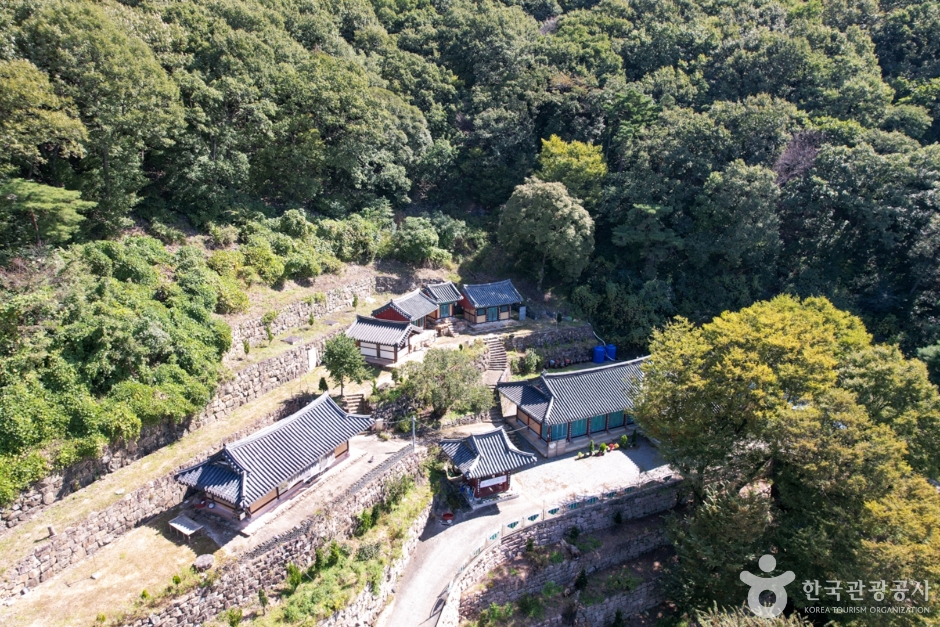
Dodeokam is said to have been established during the reign of King Nulji of Silla, but exact records are unknown. The only historical record remaining is that in the 19th year of Goryeo King Gwangjong's reign (968), Monk Hyegoe (惠居國師) rebuilt it under the name Chilseongam (七星庵).
This course is a sample 2-day itinerary. Save it as-is or expand it into an AI itinerary.
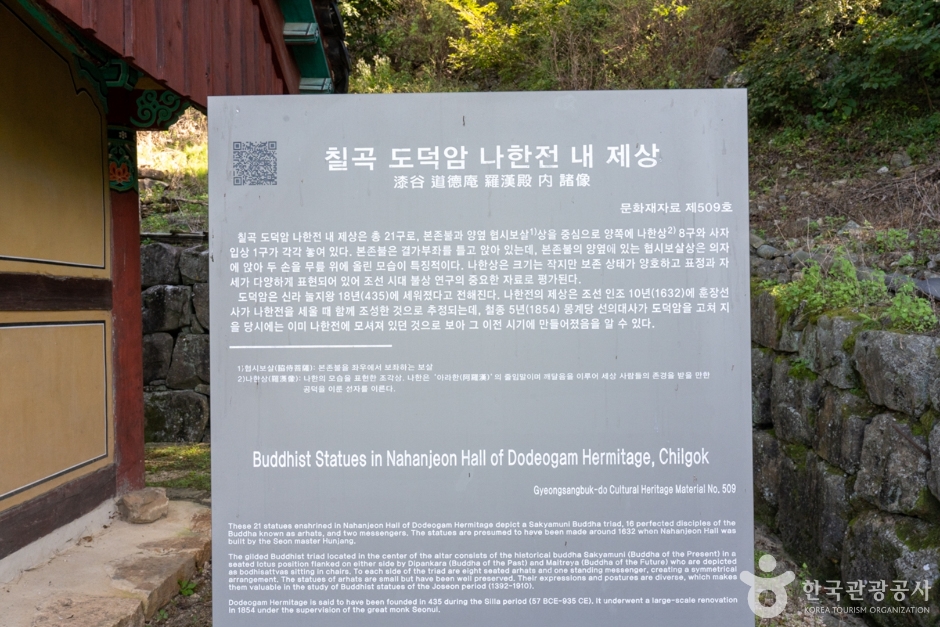
Dodeokam is a Jogye Order temple located in Gudeok-ri, Dongmyeong-myeon, Chilgok-gun. It is said to have been founded in 435, but there are no precise records. In 968, Hyegeo Guksa extensively renovated it and named it Chilseongam. However, after being damaged during the Imjin War, the Nahanjeon was built in 1632. After several renovations, in 1854, Monggye-dang Seonui Daesa renamed it Dodeokam. The temple grounds include Geungnakjeon, Daeungjeon, Sansingak, Jonggak, Yosachae, and Yeomhwasil. Among its cultural assets, it houses the Gyeongsangbuk-do Tangible Cultural Property “Chilgok Dodeokam Monggye-dang Seonui Daesa Portrait” and the Joseon-period Nahan statue enshrined in Nahanjeon. Additionally, the temple preserves the legend of “Eojeongsu,” a medicinal spring that healed Goryeo King Gwangjong’s ailment after he stayed for three days to honor Hyegeo Guksa as a royal monk.
Songlimsa Temple is a temple founded by the Silla monk Myeonggwan during the Three Kingdoms period, located in Gasan, Chilgok-gun. It was established in 544 by Myeonggwan, who returned from the Jin Dynasty, to enshrine the sarira (Buddha's relics) brought from China. In 1092, the temple was renovated by Daegakguksa Uicheon, but it was ruined by Mongol troops in 1235. It was rebuilt later but was destroyed by arson from Japanese troops in 1597. In 1858, Yeongchu rebuilt it again, and it has continued to the present. Existing buildings include Daeungjeon, Myeongbujeon, and the monks' quarters. In front of Daeungjeon stands the five-story stone pagoda of Songlimsa, designated as a treasure. This pagoda is a rare brick pagoda typical of the Silla period. During its dismantling and repair in 1959, important relics were discovered inside the pagoda. These included a pure gold Buddhist reliquary, a Bodhi tree-shaped craft made with an jade stem and gold leaves, and various beads, all believed to be relics from the Silla era.
Songjeong Natural Recreation Forest is located under Gibansan Mountain in Chilgok-gun and opened in 2006. The name comes from Songjeong Village, historically known for its many pine trees and pavilions. Gibansan Mountain features many rocks and hosts a variety of tree species such as pine, Korean nut pine, pagoda tree, and oak, creating a beautiful landscape. The dense forest is home to several wild animals including rabbits and roe deer. The forest consists of 11 accommodations, a campground, an observatory, walking trails, a native plant garden, and a forest classroom. The accommodations use natural materials like logs and loess. There is a forest interpretation program available as an experience program. Anyone can participate, the experience lasts about one hour, and appropriate clothing for forest activities is required.
현재 남아있는 안채와 사랑채, 멸실된 문간채와 헛간채를 갖추고 있던 상류주택이다.
Good places to stop and rest after the course

Booking and payment continue on a partner site.
Check rooms & priceSign up to feature your channel.
(As a member, you can add your Instagram, YouTube, and blog links in My Page, and we’ll show them with every comment you write.)
““Stayed near Hongdae and did a night café tour. Perfect city views and vibes.””
Guest comments do not display social media links or profile cards.
Share a short tip about this place.
Or leave a quick comment as a guest.
Photo attachments are available after login.
No reviews yet. Be the first to share your experience!