
Primal Nature and Cultural Heritage That Light Up Changnyeong in Gyeongsangnam-do Changnyeong County · schedule Other · distance 10.9km · 3 stops · high…
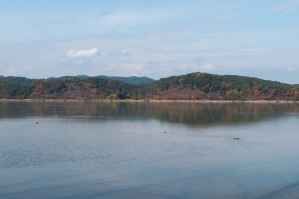
When thinking of Changnyeong, the first thing that comes to mind is Upo Wetland, known as a 'living natural history museum.' However, it is also an 'open-air history museum' where you can find valuable cultural heritage sites scattered from the Gaya period through the Joseon dynasty. After exploring Upo Wetland and the beautiful cultural heritage, end your Changnyeong trip by relaxing at Bugok Oncheon.
This course is a sample one-day itinerary. Save it as-is or expand it into an AI itinerary.
Upo Wetland is a vast swamp with a total area of 2,505,000㎡, spanning four myeon: Yuo, Ibang, Daehap, and Daeji in Changnyeong-gun. It is an ecological treasure trove inhabited by more than 800 species of plants, 209 species of birds, 28 species of fish, 180 species of benthic large invertebrates, and 17 species of mammals. It was designated an Ecological and Landscape Conservation Area on July 26, 1997, registered as a Ramsar Convention wetland on March 2, 1998, and designated a Wetland Protection Area on August 9, 1999. Due to its importance, it was designated a Natural Monument on January 13, 2011, and on February 8, 2012, it was designated a Wetland Improvement Area and changed to a Wetland Protection Area. On October 25, 2018, at the 13th Ramsar Convention of the Parties, it was certified as the world's first Ramsar Wetland City. The formation of the wetland began approximately 140 million years ago. During the Mesozoic Cretaceous period when dinosaurs roamed, the sea level rose sharply, and the ground of the Nakdonggang basin subsided, causing water flowing into the Nakdong River to pool and form swamps and natural lakes, which became playgrounds for dinosaurs. Dinosaur footprint fossils remain in Sejin-ri, Yuo-myeon near Upo Wetland. During the rainy season, the water depth can reach 5 meters but is usually 1 to 2 meters. The swamp bed has thick layers of humus accumulated from numerous life forms over tens of millions of years, preventing feet from sinking like in mudflats. This humus layer makes Upo Wetland an ecological archive or a living natural history museum. Until the Japanese colonial period, there were 10 more wetlands around Upo Wetland, including Gahang Wetland, Pallak Wetland, and Hakambeol, but they have disappeared due to reckless development and encroachment by farmland.
Seokbinggo is an ice storage warehouse showcasing the wisdom of ancestors who harvested ice in the cold winter and preserved it for use through the hot summer. According to a stele remaining on the right side of the ice reservoir, inscribed with '숭정기원후재임술이월초일일여사월초십일필,' it was constructed in 1742 by local governor Shin Seo and others. Based on its architectural style and the customs of storing ice, it is presumed to have been built during the Joseon Dynasty. Changnyeong Seokbinggo has almost entirely preserved its earth mound; externally, it looks like a massive ancient burial mound and is constructed north-south at a right angle to the stream flowing behind it. The entrance to the ice chamber is located on the south side, with large rectangular stones laid sideways on both sides to form the ceiling, which includes two ventilation holes connecting to the outside. The walls are made of rough stones but their surfaces have been chiseled flat to form smooth inner walls. This architectural style is identical to representative Seokbinggo such as those in Gyeongju and Andong, though Changnyeong Seokbinggo is somewhat smaller in scale.
This is a house from the Joseon Dynasty, said to have been built by Baekyeon, the 17th ancestor of Ha Byeongsu. There is a handwritten note in Sangdo-ri marking the 25th year of Geonryong, so it is estimated to have been built in 1760 (the 36th year of King Yeongjo's reign). It is a south-facing thatched house reflecting the Joseon-era house structure and folk architectural techniques, and served as the home of the Ha family for several generations. The house is a wooden one-story thatched structure in a line shape, with the first room on the right as the kitchen, followed by the main room, a spacious hall, and a guest room, each comprising one room, forming a four-room house with slight modifications. Behind the kitchen, a half-door was added to create a storage room, and instead of traditional elevated floors for southern houses, the front porch was omitted like a low-style house in a mountain valley. The porch floorboards are flat on top and natural wood underneath; the roof is covered with thatching grass without using nails. The rafters were joined through drilled holes. Unlike modern houses where kitchens are mostly located on the west side, here it is in the east. From the west, the layout is guest room, spacious hall, main room, and kitchen. The roof was woven upside down using a rolling pin without clay. As this is a private residence, visitors must observe the designated visiting hours.
Good places to stop and rest after the course

Booking and payment continue on a partner site.
Check rooms & priceSign up to feature your channel.
(As a member, you can add your Instagram, YouTube, and blog links in My Page, and we’ll show them with every comment you write.)
““Stayed near Hongdae and did a night café tour. Perfect city views and vibes.””
Guest comments do not display social media links or profile cards.
Share a short tip about this place.
Or leave a quick comment as a guest.
Photo attachments are available after login.
No reviews yet. Be the first to share your experience!


