
In Search of the Essence of Buddhist Culture and the Mystery of the Wetlands in Gyeongsangnam-do Changnyeong County · schedule Other · distance 38.4km ·…
Upo Swamp in Changnyeong is a treasure trove of wetland ecosystems. It showcases unique natural scenery throughout all four seasons, featuring various aquatic plants and migratory birds. Haeinsa Temple in Hapcheon is one of the Three Jewels Temples, and the Tripitaka Koreana stored there is registered as a World Cultural Heritage. The Video Theme Park has recently become a popular travel destination.
This course is a sample one-day itinerary. Save it as-is or expand it into an AI itinerary.
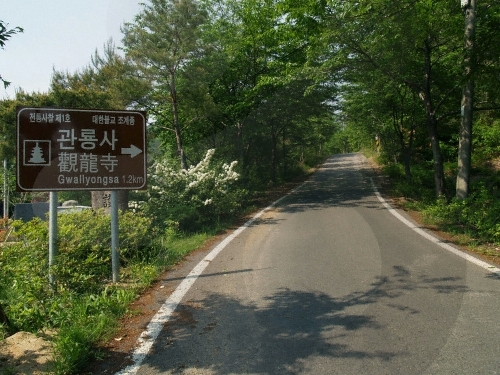
Gwallyongsa Temple, one of the eight major temples of the Unified Silla period, holds many cultural heritages and is also famous for its beautiful scenery. Legend says that Wonhyo and his disciple Songpa were praying here for one hundred days when suddenly they saw nine dragons rising from the pond to the sky, after which the temple was named 'Gwallyongsa' and the mountain was called Guryongsan. The Daeungjeon hall existed in the first year of King Taejong of Joseon (1401) but was destroyed during the Japanese invasions of Korea, rebuilt in the 9th year of King Gwanghaegun (1617), and repaired in the 25th year of King Yeongjo (1749) to its current state. Within Gwallyongsa are many Buddhist relics including the Daeungjeon, Yongseondae Stone Sakyamuni Buddha statue, Gwallyongsa Stone Buddha statue, Yaksa-jeon (all designated treasures), the three-story stone pagoda of Yaksa-jeon (a tangible cultural asset), and stupa.
Built during the reign of Silla King Jinheung, it was originally located at the foot of Hwawangsan Mountain. It was discovered by students on a school trip and became known, then moved in 1924 to its current location at Manokjeong for preservation. Often generally called Sunchubi, unlike the Sunchubi at Bukhansan, Hwangchoryeong, and Maunryeong, it lacks the term 'Sunsugwangyeong' and instead lists the king’s new territories and related people, thus called Cheokgyeongbi. The Changnyeong Silla King Jinheung Cheokgyeongbi uses natural rock without a base stone or large stone and follows the typical inscription format of the Three Kingdoms period. One side is plain, and the outer side is carved with grooves following the shape of the stele. Due to the sloping rock in the upper right, the text is written in a stepped manner, lowering one line at a time. The inscription has 27 lines, with variable character count per line; the last line has only 3 characters, while most lines have 26 characters. In the latter part, the text is written with one character lowered every two lines. The first part of the inscription is worn and unclear, but the latter part is clear enough to read. The content consists of three parts: date of the Sunchu (February of the Sinsa year), historical record, and the attendants. The order of names follows the typical Three Kingdoms Silla stele format: clan name, personal name, rank, and position. The script is in regular script (Haeseoche), with spacing of 4 cm between characters.
The Changnyeong area was called Bulsaguk, one of the twelve countries of Jinhan mentioned in the Samguk Sagi, also known as Bisabeolguk. The Changnyeong Gyodong and Songhyeon-dong tumuli cluster refers to a large burial mound group distributed around Gyori and Songhyeon-ri below Mokma Fortress on the western foothills of Hwawangsan in Changnyeong-eup. It was first identified in 1911 by the Japanese scholar Sekino Tadashi. In Gyodong, tens of mounds of various sizes were gathered around a large mound called the royal tomb, but only eight remain today, and the preservation of the surviving mounds is imperfect. Partial excavations were conducted by the Japanese from 1918 to 1919, and it is said that large quantities of pottery and gold crafts corresponding to 20 chariots and two war chariots were unearthed, but except for some artifacts held by the National Museum of Korea and the Tokyo National Museum, these are unconfirmed. According to the investigation results, the large tumuli were horizontal stone chamber or horizontal pit-style tombs. Excavations of Songhyeon-dong tumuli nos. 6 and 7 began in 2002 by the Gyeongnam Cultural Heritage Research Institute and the National Gaya Cultural Heritage Research Institute, revealing over 280 pottery pieces and over 90 iron artifacts including ornaments, horse gear, weapons, and farming tools, as well as over 100 wooden artifacts, including the country’s first boat-shaped camphor coffin, gaining great academic attention. Confirmed artifacts include gilt-bronze crowns, gold and silver ornaments, silver crown decorations, gilt-bronze coronets, gold earrings, various horse gear, decorated weapons, scale armor and various iron weapons, U-shaped shovel blades and various farming tools, metal vessels, and various pottery and wooden objects from Gyodong and Songhyeon-dong tumuli. Most artifacts, including some pottery, closely resemble those found in Gyeongju, the capital of Silla, and based on the structure of the tumuli, the burial cluster is estimated to have been created in the early 5th to 6th century.
경상남도 창녕군 창녕읍 교리에 있는 종합박물관이다. 지역 문화를 연구하고 홍보하며, 선사시대부터 가야시대까지 창녕 지역에서 출토된 고고유물을 중심으로 전시하고 있다. 창녕박물관은 1996년 3월 개관하였으며, 화왕산의 서쪽 기슭에 있는 교동고분군과 인접하고 있으며 2개의 전시실과 시청각실 등을 갖추고 있다.
Good places to stop and rest after the course

Booking and payment continue on a partner site.
Check rooms & priceSign up to feature your channel.
(As a member, you can add your Instagram, YouTube, and blog links in My Page, and we’ll show them with every comment you write.)
““Stayed near Hongdae and did a night café tour. Perfect city views and vibes.””
Guest comments do not display social media links or profile cards.
Share a short tip about this place.
Or leave a quick comment as a guest.
Photo attachments are available after login.
No reviews yet. Be the first to share your experience!


