
Walking the Ibagu trail in Busan Dong-gu · schedule Other · distance 2.37km · 7 stops · highlights Busan Former Baekje Hospital, Namsun Warehouse Site,…
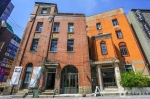
Ibague-gil is a place where you can hear stories of people living together in diverse ways of life, serving as a treasure trove of countless stories. It is notable for many 'firsts,' such as Baekje Hospital, the first modern private general hospital, and Namsun Warehouse, the first warehouse, due to its proximity to a harbor that generously embraced various cultures like the vast sea. Later, the area endured the Japanese colonial exploitation period and the Korean War, with people building shanties on the hillside roads to support each other during difficult refugee lives. The harbor became their source of livelihood. By climbing the dizzying 168 steps countless times, they created the present. Ibague-gil, filled with the rich scent of salt and the essence of common people's lives, is the best place to see this and to seek our future. Source: Busan Tourism Organization
This course is a sample one-day itinerary. Save it as-is or expand it into an AI itinerary.
Busan Former Baekje Hospital was Busan's first modern private general hospital opened in 1927 by Choi Yong-hae. At the time, it was a sizable hospital, gaining fame as one of Busan's three major hospitals alongside Busan Municipal Hospital and Railroad Hospital. After closing, it became a high-end Chinese restaurant named Bongraegak in 1933, then served as officer accommodations for the Akatsuki unit stationed in Busan. After liberation in 1945, it was used as the Busan Police Command office. In 1950, it functioned as a temporary consulate and embassy before being purchased privately and converted into a wedding hall in 1953. Currently, the fifth floor was demolished, and cafes and general shops occupy the building.
Namsun Warehouse Site was the first logistics warehouse, established in 1900 to store goods brought by ship from Hamgyeong-do. Initially called Bukseon Warehouse, it was a storage facility before transporting goods to Seoul via the Gyeongbu Line. After the Gyeongwon Line was created and a Bukseon Warehouse was established in the northern regions, the name was changed to Namsun Warehouse. As Busan's first modern logistics warehouse, Namsun Warehouse was built by Choryang Gaekju Jeongchiguk in Choryang-dong around 1900. Without freezers, it used floor channels to remove moisture and keep the warehouse cool. Unlike the nearby old Baekje Hospital, which still stands, Namsun Warehouse was demolished in 2009, leaving only the red brick walls. Until liberation, it mainly served as a Pollack warehouse, also called Pollack Gobang. Later, reflecting changes in Busan's industrial economy, it was used as a general warehouse for chemical products, plywood, shoes, Russian bundle merchants' cargo, and home appliances.
Choryang Church is the first church in Busan, established in 1892 by missionary William Baird, and the first church south of the Han River established by missionaries. It originally began as Yeongseonhyeon Church within the missionary base. As the congregation grew, it used the district office in front of Bongnae Elementary School in Yeongju-dong as an education center, then purchased the building in 1912 to convert it into a church. The church name changed from Yeongju-dong Church to Choryang 3.1 Church, and finally to Choryang Church. During the Japanese colonial period, Choryang Church was closely connected to the Korean independence movement, leading the opposition to shrine worship and serving as a secret prayer place for independence activists. Currently, it runs the Choryang Church History Museum, exhibiting historical materials preserved by the church and tracing the footsteps of the church during difficult times.
It is the shortcut that descends fastest from Sanbok Road to Busan Port. One of the representative features of Sanbok Road is this dizzying vertical staircase about six stories high above ground. There are 168 steps, and originally there were three wells below the stairs. Currently, only one well used for drinking water remains, and one can imagine people lining up long to fetch water during times of scarcity. It was a meeting place for everyone—men, women, and children with water carriers and water jars—and is said to have been the origin from which rumors spread.
At the middle of the 168 stairs, turning right leads to Kim Minbu Observatory, where you can overlook Busan Port at a glance. On one wall of the observatory is inscribed the song "Waiting Heart," a vocal piece included in high school music textbooks with lyrics written by Kim Minbu. It is known as one of the nine best views along the Sanbok road. Kim Minbu, a genius poet born in Busan, was born in Sujeong-dong, Dong-gu. His birth name was Kim Byeongseok. During his elementary school years at Seongnam Elementary School in Beomil-dong, he skipped grades twice and scored the highest in Busan in his middle school entrance exam. He changed his name to Kim Minbu while attending Busan Middle School. In his first year of Busan High School, he was selected in the Dong-A Ilbo's New Year's Literary Contest with a sijo titled "Pomegranate," and in April of the same year, he won a special prize for the poem "In the Strawberry Fields" in the first nationwide student literary contest co-hosted by Busan University and Busan Ilbo. In his sophomore year, he published his first poetry collection "Hangari," and in his junior year, his sijo "Crack" won the Korea Ilbo New Year's Literary Contest, demonstrating exceptional literary talent. After graduating from the Department of Literary Arts at Seorabeol Arts College in 1960, he transferred to and graduated from Dongguk University's Korean Literature Department. In 1962, he joined Busan Cultural Broadcasting Station, planning and writing the radio program [Jagalchi Ajima], which still airs and is the station's longest-running program. In 1965, he moved to Seoul and gained prominence as a broadcast writer at MBC, DBC, and TBC. In 1970, he wrote the libretto for the opera "Wonhyodaesa," which was staged by the Kim Ja-kyung Opera Company.
This is a place dedicated to Dangsan gods (Dangsan Grandfather and Dangsan Grandmother), the village guardian deities in traditional Korean faith. Dangje is a communal ritual praying for the village's prosperity and peace, held annually on the full moons of the 3rd and 9th lunar months. The person selected as the ritual officer conducts themselves with caution, and as the ritual day approaches, cleans the area around the Dangsan tree, ties a sacred rope, and places a few handfuls of yellow earth to ward off impurities. It is located 100 meters from Kim Minbu Observatory, about a 3-minute walk.
산복도로를 중심으로한 도시재생사업인 산복도로르네상스의 지역 거점으로 만들어진 곳이다. 산복도로 사람들의 이야기를 수집하는 아카이브센터이며, 2개월마다 새로운 기획전시가 열린다. 개관 시에는 요강전이 열렸으며 산복도로 어르신들의 요강을 기증받아 사연과 함께 전시하였다. 저마다 각자의 사연으로 산복도로에서 살아가는 개인의 역사를 모아 보관하며, 앞으로 다양한 문화콘텐츠로 2차 가공되어져 쓰일 수 있는 자원의 창고이다.
Good places to stop and rest after the course

Booking and payment continue on a partner site.
Check rooms & price
Booking and payment continue on a partner site.
Check rooms & price
Booking and payment continue on a partner site.
Check rooms & price
Booking and payment continue on a partner site.
Check rooms & price
Booking and payment continue on a partner site.
Check rooms & price
Booking and payment continue on a partner site.
Check rooms & priceSign up to feature your channel.
(As a member, you can add your Instagram, YouTube, and blog links in My Page, and we’ll show them with every comment you write.)
““Stayed near Hongdae and did a night café tour. Perfect city views and vibes.””
Guest comments do not display social media links or profile cards.
Share a short tip about this place.
Or leave a quick comment as a guest.
Photo attachments are available after login.
No reviews yet. Be the first to share your experience!


