Ancient temple scenery along forest paths Naesosa and Gaemsa in Jeonbuk Special Self-Governing Province Buan County · schedule Other · distance 38km · 4…

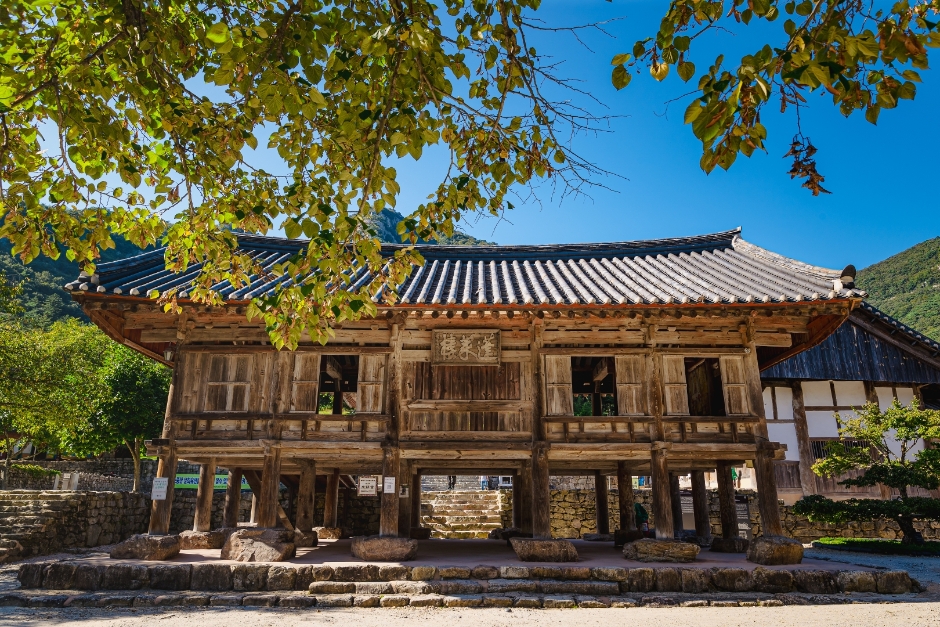
Naesosa and Gaeamsa are temples that resemble each other closely. The entrance road to the temple grounds, the Daeungjeon Hall with its unpainted dancheong (traditional multicolored paintwork), giving a strong antique feel, and the beautiful floral lattice windows are all similar. However, as thousand-year-old temples with a millennium of history, the atmosphere when walking around the temples feels distinctly different. The fir forest path of Naesosa, the Grandmother and Grandfather Dangsan (village guardian) trees, the floral lattice windows and the bronze bell of Daeungbojeon Hall, as well as Gaeamsa's Daeungbojeon Hall and the Ulgeumbawi Rock create a harmonious view and are must-visit temple attractions.
This course is a sample one-day itinerary. Save it as-is or expand it into an AI itinerary.
Gaeamsa Temple is an ancient temple from the Baekje period located on Ugumsan in Buan-gun. It is a branch temple of Seonunsa and was founded in 634 by Myoryeon. The name Gaeam originated when, in 282 BCE, Munwang of Byeonhan, fleeing conflicts among Jinhan and Mahan, built a fortress here. He ordered Generals U and Jin to construct royal palace halls in the left and right valleys, naming the east side Myoam and the west side Gaeam. In 676, Wonhyo and Uisang renovated it, and in 1276, under the monk Wongam Guksa, about thirty buildings were erected, establishing it as a large temple complex. Most buildings were destroyed during the Japanese invasions except for the Hwanggeumjeon Hall, and in 1636, monk Gyeho restored it, leading to its present form. Behind Gaeamsa, Ugumam and Ugumsanseong (Juryuseong) are known historical sites where Baekje remnants supported Prince Buyeo Pung and carried out the Baekje Restoration Movement for three years.
이곳의 젓갈들은 2년 이상 응달에서 곰삭아야 상에 오르는데, 젓갈에 불필요한 양념은 전혀 섞지 않고, 젓갈 고유의 맛을 내는데 주력한다.
Gomso Salt Field, located in Jinseo-ri, Jinseo-myeon, Buan-gun, is one of the few places in Korea producing sun-dried salt. During the Joseon Dynasty, hwaryeom (salt made by boiling seawater) was produced from Julpo Bay to Gomso Bay. The current Gomso Salt Field was established during the late Japanese colonial period but has produced sun-dried salt since liberation. Salt is usually produced from April to October, with May and June being the peak season for production and taste, making it the harvest season for salt workers. The coastal area from Chaeseokgang to Gochang, including Gomso Salt Field, is famous worldwide for its tidal flats, and the mineral-rich seawater of Gomso Bay enriches the flavor of the salt. This place, located deep inland in Julpo Bay, part of the Chilsan Sea known for Yeonggwang Gulbi, has exceptional natural conditions and is famous for salted fermented seafood made with fresh fish caught in front of Gomso salted with sun-dried salt.
Naesosa Temple was established by Hye Guduta (惠丘頭陀) in the 34th year of King Mu of Baekje (633), and its original name was Soraesa. The Daeungbojeon hall is a Buddha hall enshrining Shakyamuni in the center, with Manjushri Bodhisattva and Samantabhadra Bodhisattva on the sides, and is said to have been built when Cheongmin Daesa renovated the temple in the 11th year of King Injo of Joseon (1633). It is three kan wide and three kan deep, with an octagonal paljak roof. The decorative structure supporting the eaves roof is of dapo style, with components layered not only above the columns but also between them, exemplifying mid-Joseon architectural features. The floral wooden lattice (kkotmunsal) of the Daeungbojeon showcases excellent carving skills of the time, and behind the Buddha statue on the rear wall is the largest surviving painting of the White-Robed Avalokitesvara Bodhisattva seated statue in Korea. The signboard of the Daeungbojeon was written by Wongyo Lee Gwangsa (1705–1777). There are subsidiary hermitages such as Jijangam and Cheongryeonam at the entrance. Existing buildings and important cultural properties include the treasure-designated Daeungbojeon, Goryeo bronze bell (treasure), Lotus Sutra folding scripture (treasure), large hanging Buddhist painting (treasure), and Jeollabuk-do designated tangible cultural assets such as the monks' quarters, Seolseondang, and three-story stone pagoda. The Naesosa area is designated as a Jeollabuk-do monument. A 600m fir tree forest path starting from Iljumun Gate is selected as one of the '100 Beautiful Paths' and welcomes tourists with different scenery each season. Daejanggeum filming location (pond) ◎ Travel information to experience the charm of Hallyu - In the drama Daejanggeum, the memorable scene where Jang-geum is throwing stones into the pond and Min Jeong-ho watches is filmed at the pond inside Naesosa Temple grounds. The tranquil temple atmosphere and the beautiful scenery around the pond deepen the drama’s emotional appeal.
Good places to stop and rest after the course

Booking and payment continue on a partner site.
Check rooms & priceSign up to feature your channel.
(As a member, you can add your Instagram, YouTube, and blog links in My Page, and we’ll show them with every comment you write.)
““Stayed near Hongdae and did a night café tour. Perfect city views and vibes.””
Guest comments do not display social media links or profile cards.
Share a short tip about this place.
Or leave a quick comment as a guest.
Photo attachments are available after login.
No reviews yet. Be the first to share your experience!