Walking Through Geumgang Pine Forest in Bonghwa in Gyeongsangbuk-do Bonghwa County · schedule Other · distance 18.7km · 4 stops · highlights Bonghwa Geu…
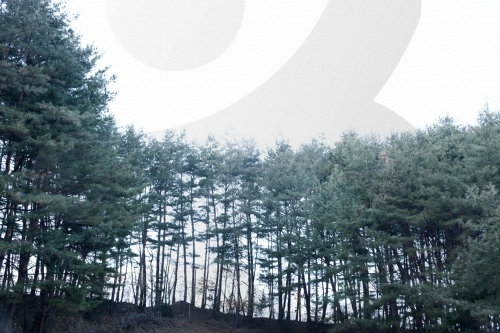
Bonghwa is famous for its Geumgang pines. Walking among the straight Geumgang pines, you will naturally feel your body lighten. Bonghwa is an extremely gentle and warm rural village. You cannot miss experiencing the Chunyongjang and traditional homes in this area. Let's stroll through the affectionate Chunyongjang and the well-preserved inner quarters of the noble family estate.
This course is a sample one-day itinerary. Save it as-is or expand it into an AI itinerary.
The Southern Regional Forest Service created the 'Eco Tour-led Geumgang Pine Ecological Management Forest' at three locations: Uljin Sogwang-ri, Yeongyang Bonsin-ri, and Bonghwa Goseon-Daehyeon-ri, to restore the declining Geumgang pine forests—affected by artificial logging and environmental changes—to their late Joseon Dynasty state. A 606-hectare successor forest and a 3.5-hectare natural ecological plant area for food chain restoration have been established, releasing over 30,000 native fish species such as pirami, nuchi, and beodeulchi into the valley, restoring it as a living space. The site offers ecological trails with 1-, 2-, and 4-hour courses where visitors can breathe phytoncide from Geumgang pine trees, observe birds, roe deer, fish playing in streams, and wildflower colonies, all while listening to explanations from forest interpreters. Reservations are made through Supnadeul-e to enjoy a mentally and physically healthy experience.
Located near Bonghwa Station, Eokji Chunyang Market was once the largest traditional market in Bonghwa. It was established in the 1940s centered around the 12-ryeong peddlers and later, in the 1960s-70s, developed into a rice market and a cattle market where 200 to 300 cows were traded daily, becoming the largest traditional market in the area. There is a theory that the market’s name, Eokji Chunyang, comes from forcibly changing the Yeongdong Line route to pass through Chunyang-myeon during its construction in the 1950s. Due to population decline and the entry of large supermarkets, the market shrank, but in 2015 Bonghwa-gun modernized it as a cultural tourism market, adding facilities, night markets, and performances to revitalize the market and attract tourists. On regular days, it is like any traditional market, but on the 4th, 9th, 14th, 19th, 24th, and 29th of each month, the market extends outside Eokji Chunyang Market to the central area of the myeon office. The market features regional specialties directly grown not only from within the county but also from nearby Uljin-gun and Taebaek-si in Gangwon-do. Goods include Chunyang strawberries, native medicinal jujubes, walnuts, apples, forest products, wild pine mushrooms growing under Chunyang trees, medicinal herbs, highland vegetables, as well as daily necessities and food sold by traders from outside, creating a lively and vibrant market scene.
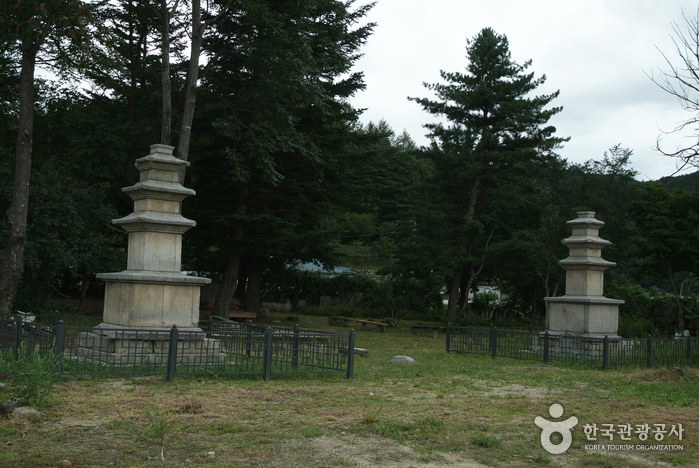
These are two pagodas standing facing each other east and west inside Chunyang Middle School, forming a twin pagoda style. They are of the same scale and are typical Silla-style stone pagodas with identical style and technique. The pagodas are composed of a three-story body on a two-tiered base and are estimated to date back to the 9th century of the Unified Silla period based on their style. The two stone pagodas, the east tower at 3.9m and the west tower at 3.97m, are small but exhibit beautiful proportions and refined sculptural beauty overall. The bases were buried underground and the towers were severely tilted, so they were dismantled and restored in October 1962. During this restoration, a sarira chamber was found in the west tower, and in the east tower, a sarira bottle along with 99 small earthen pagodas [土塔] were discovered. Except for one stone Buddha in front of the pagodas, there are no remains nearby that suggest a temple site, but the place is known as the former site of Namhwa Temple, an old Silla temple. It is said that in the 16th year of King Munmu of Silla (676), Monk Wonhyo established the current Gakhwasa Temple 6km northwest of here, leading to the closure of this temple.
Samijeong Valley, located in Socheon-ri, Beopjeon-myeon, Bonghwa-gun, is one of the few remaining pristine areas in South Korea. It is a Y-shaped valley between Taebaek Mountain and Sobaek Mountain, the sources of the Nakdong River, featuring clear and cool streams, dense pine forests, and unique rock formations. At the entrance of the valley, Okcheon Jo Deok-rin, who served as a Ubujeungji during King Yeongjo's reign in Joseon, built a pavilion in 1737 at this scenic spot, naming it Samijeong, from which the valley also took its name. The Ungokcheon stream winds through magnificent rock formations, creating a picturesque and charming scene. Every summer, many visitors come for vacation, and the Bonghwa County Office deploys safety personnel from early June to late August during the water play season to ensure safety and water quality management.
Good places to stop and rest after the course

Booking and payment continue on a partner site.
Check rooms & price
Booking and payment continue on a partner site.
Check rooms & priceSign up to feature your channel.
(As a member, you can add your Instagram, YouTube, and blog links in My Page, and we’ll show them with every comment you write.)
““Stayed near Hongdae and did a night café tour. Perfect city views and vibes.””
Guest comments do not display social media links or profile cards.
Share a short tip about this place.
Or leave a quick comment as a guest.
Photo attachments are available after login.
No reviews yet. Be the first to share your experience!