Exploring the Feng Shui of Daksil Village with Geumgye Poran Shape in Gyeongsangbuk-do Bonghwa County · schedule Other · distance 28.7km · 4 stops · hig…

Daksil Village is a village of related families established by Master Chungjae Kwon Beol in the mid-Joseon Dynasty and is considered a prime site of the Geumgye Poranhyeong, where a golden rooster hatches its eggs. It boasts over 500 years of history and is also famous for hangwa (traditional Korean sweets). Along with the treasure-designated remains of Master Chungjae Kwon Beol, the Chungjae ancestral home has a beautiful pavilion called Cheongamjeong, well known as a filming location for dramas and movies. The walking path from Daksil Village along Seokcheon Valley to Seokcheonjeongsa and Samgye Seowon is also quite pleasant.
This course is a sample one-day itinerary. Save it as-is or expand it into an AI itinerary.
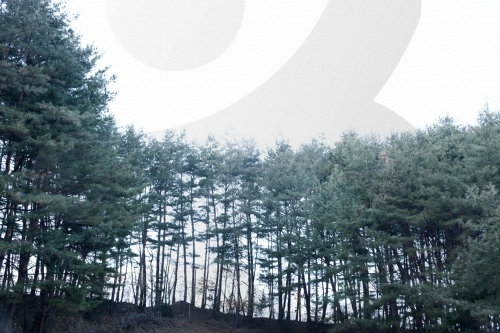
According to the theory of pungsu (geomancy), Daksil Village is named for its shape resembling a golden rooster sitting on its eggs, called Geumgye Poranhyeong. This place was where Chungjae lived in seclusion, and his descendants have formed a clan village for 500 years. Related treasures such as Cheongamjeong, Samgye Seowon, Chungjae Diary, Geunsarok, rare books, and old documents are preserved in the Chungjae Relics Museum. The surrounding mountains, dense pine forests, large rocks, and clean water make it an ideal spot for family outings. Mid-Joseon scholar Lee Jung-hwan praised it as one of Korea's top scenic spots in his book Taekriji. In Seokcheon Valley, there is Seokcheon Jeongsa, built by Chungjae Kwon Beol's eldest son Cheongam Kwon Dong-bo to commemorate his father's virtues. Climbing from Seokcheon Valley to Daksil Village, there are the remains of Chungjae Kwon Beol, and this area is designated as Historic and Scenic Site No. 3. (Source: Bonghwa County Office)
The Bonghwa Bukjiri Seated Buddha Carving is made by carving a large chamber-like space into a natural rock face to house the Buddha statue, in which a 4.3m tall Buddha image is prominently carved. The wide and large face is richly proportioned and wears a slight smile on the front, showing a vivid expression. The shoulders appear somewhat hunched but the figure is dignified, and the robe draped over both shoulders forms thick U-shaped folds across the chest and extends down the arms, covering the pedestal on which the statue sits. The hands are depicted with the right hand raised to the chest and the left hand resting on the knee, enhancing the solemn elegance of the statue. The aureole behind the Buddha is divided into the head aureole and body aureole, featuring small Buddhas sculpted in various places, with a delicate lotus pattern engraved at the center of the head aureole. Considering the softness of the face and body expressions, the statue is estimated to have been made in the late 7th century and together with the Yeongju Gahung-dong Triad Buddha Carving and Seated Buddha (Treasure) represents the Buddhist sculpture style of the Yeongju-Bonghwa area at that time, leaving a significant mark in the history of Silla Buddhist sculpture.
계서당은 조선 중기의 문신인 계서 성이성(1595~1664)선생이 살던 곳이다. 성이성은, 창녕 사람으로 남원 부사를 지낸 부용당 성안의선생의 아들로 인조 5년(1627) 문과에 급제했다. 진주부사 등 6개 고을의 수령을 지내고 4번이나 어사로 등용되었으며, 근검과 청빈으로 이름이 높았던 인물이다. 훗날에 부제학으로 추서 받고 청백사로 녹선 되었다.
The Southern Regional Forest Service created the 'Eco Tour-led Geumgang Pine Ecological Management Forest' at three locations: Uljin Sogwang-ri, Yeongyang Bonsin-ri, and Bonghwa Goseon-Daehyeon-ri, to restore the declining Geumgang pine forests—affected by artificial logging and environmental changes—to their late Joseon Dynasty state. A 606-hectare successor forest and a 3.5-hectare natural ecological plant area for food chain restoration have been established, releasing over 30,000 native fish species such as pirami, nuchi, and beodeulchi into the valley, restoring it as a living space. The site offers ecological trails with 1-, 2-, and 4-hour courses where visitors can breathe phytoncide from Geumgang pine trees, observe birds, roe deer, fish playing in streams, and wildflower colonies, all while listening to explanations from forest interpreters. Reservations are made through Supnadeul-e to enjoy a mentally and physically healthy experience.
Good places to stop and rest after the course

Booking and payment continue on a partner site.
Check rooms & price
Booking and payment continue on a partner site.
Check rooms & price
Booking and payment continue on a partner site.
Check rooms & price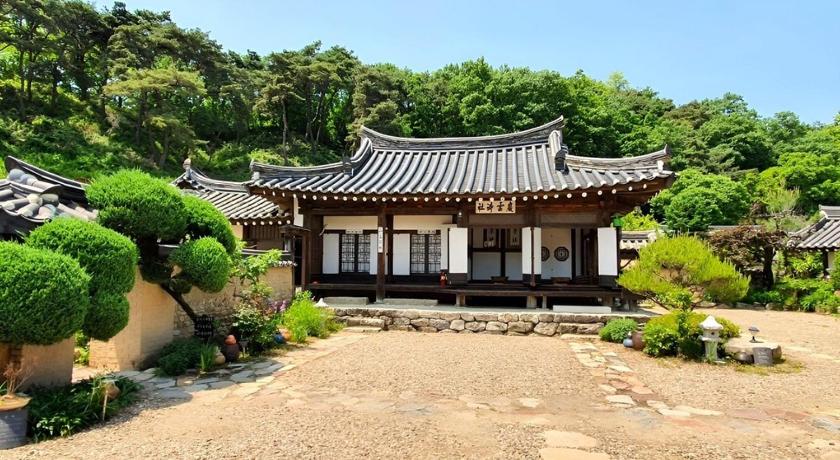
Booking and payment continue on a partner site.
Check rooms & priceSign up to feature your channel.
(As a member, you can add your Instagram, YouTube, and blog links in My Page, and we’ll show them with every comment you write.)
““Stayed near Hongdae and did a night café tour. Perfect city views and vibes.””
Guest comments do not display social media links or profile cards.
Share a short tip about this place.
Or leave a quick comment as a guest.
Photo attachments are available after login.
No reviews yet. Be the first to share your experience!