
Andong Hahoe Village a Shining World Heritage Site in Gyeongsangbuk-do Andong City · schedule Other · distance 18km · 4 stops · highlights 하회 겸암정사, Buyo…
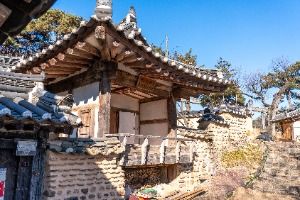
Hahoe Village is a traditional village registered as a World Cultural Heritage Site, where you can find historic old houses such as Bukchon House, Yangjindang, and Chunghyodang. Notable attractions also include Byeongsan Seowon, enshrining Seoae Ryu Seong-ryong, Buyongdae with its beautiful Nakdong River scenery, and Manjeong Pine Forest known for its beautiful woods.
This course is a sample one-day itinerary. Save it as-is or expand it into an AI itinerary.
하회 겸암정사는 겸암(謙庵) 류운룡(柳雲龍, 1539~1601)이 학문 정진과 제자 양성을 위해서 지은 정사이다. 겸암 류운룡이 1567년에 학문 정진과 제자 양성을 목적으로 지었다. 정사에서 바라보는 강 건너 모래사장과 송림이 운치 있다. 겸암이란 당호는 퇴계 이황이 류운룡의 학문에 감복하여 지어준 것으로 이를 귀하게 여겨 자신의 호로 삼았다 한다. 현재 사람이 거주하고 있어 내실은 살펴볼 수 없다. 고 정사의 외곽만 돌아볼 수 있다.
Buyongdae is a representative tourist attraction of Andong where you can see the entire view of Hahoe Village at a glance. Buyongdae means a lookout point for lotus flowers and is the best place to view Andong Hahoe Village, which resembles a lotus flower. You can enjoy the view of the Nakdong River winding around the village and the Taebaek Mountain Range surrounding Hahoe Village like a folding screen all at once. It is recommended to visit Buyongdae when traveling to Hahoe Village. ◎ Travel information to experience the charm of Korean Wave - It was the place where the cast of variety show Season 16 enjoyed a mat date. After each took their spot by the Nakdong River and opened up, the date ended with taking couple photos with Buyongdae in the background.
Hahoe Village is a typical clan village where the Pungsan Ryu (柳) family has lived for generations, embodying the beauty of traditional Korean houses. It is also the birthplace of prominent Joseon Dynasty Confucian scholars Gyeomam Ryu Un-ryong and Seoae Ryu Seong-ryong. On April 21, 1999, Queen Elizabeth II of the United Kingdom visited on her third day in Korea, making it even more famous as a place of Korean tradition. The name Hahoe (河回) originates from the Nakdong River flowing eastward in an S-shape, surrounding the village. To the east is Hwasan, a branch of the Taebaek Mountains, whose ridges extend to the village forming low hills. Houses are arranged facing lower ground around the hills, resulting in their orientations varying in all directions (east, west, south, and north). At the village center stand large tile-roofed houses of the Ryu family, surrounded by well-preserved thatched-roof houses. The Nakdong River flows leisurely in front of the village, with the strikingly steep Buyongdae cliff, an endless white sandy beach, and dense pine forests creating a magnificent landscape. In front of Buyongdae, the waterway opens again, allowing the use of ferries. Hahoe Village offers the Hahoe Byeolsingut Talnori mask dance as a permanent performance and holds the annual Andong International Mask Dance Festival every autumn. Nearby attractions include Bongjeongsa Temple, Gosan Seowon Academy, Gwiraejeong Pavilion, Gye-myung Mountain Natural Recreation Forest, Hakga Mountain Natural Recreation Forest, and Waryongsan Mountain, offering various sights. Notably, on July 31, 2010, Andong Hahoe Village and Gyeongju Yangdong Village were inscribed as 'Historic Villages of Korea' on the UNESCO World Cultural Heritage list. With their inclusion, Korea's world heritage sites number ten, following Seokguram and Bulguksa, Haeinsa Janggyeong Panjeon, Jongmyo Shrine (1995), Changdeokgung Palace, Suwon Hwaseong Fortress (1997), Gyeongju Historic Areas, Gochang, Hwasun, and Ganghwa Dolmen sites (2000), Jeju Volcanic Island and Lava Tubes (2007), and Joseon Royal Tombs (2009). Representative local foods in Hahoe include Andong soju, Heotjesatbap (a banquet-style rice dish emerging from the many renowned seowon academies), Andong salted mackerel, and Andong noodles. ◎ Travel Information to Experience the Charm of Hallyu - In the drama , numerous sparks approach while sliding down a rope from a 64m cliff. Egg-shaped fires float gently down the river, and with the shout 'Nakhwa!', large fireworks cascade like a waterfall below the cliff. The Korean-style fire festival Seonyu Julbulnori is a grand purification ritual embodying the wishes of those gathered. Gusanyeong, determined to live by her own will and not for anyone else, smiles brightly amid the starlit hopes at a moment of visual peril.
Byeongsan Seowon originated from Pungak Seodang (豊岳書堂), an educational institution in Pungsan, Andong dating back to the mid-Goryeo period. It was a place where local Confucian scholars gathered to study. During the late Goryeo period, when King Gongmin traveled through Pungsan amidst the Hong Geon-jeok rebellion, he was deeply moved to see the students devoted to learning despite the turmoil and generously gave many books and a grant of land to encourage them. After 200 years, as more houses and roads appeared nearby causing noise, the scholars sought a new location. Seoae Ryu Seong-ryong, after the death of his father and while residing in Hahoe, recommended Byeongsan as the best site. Following his advice, in 1575 (8th year of King Seonjo), the Seodang was relocated and renamed Byeongsan Seowon. In 1614 (6th year of King Gwanghae), disciples including Ubok Jeong Gyeong-se, Changseok Lee Jun, Dongni Kim Yun-an, and Jeongbong An Dam-su built Jondeoksa to commemorate Seoae's scholarship and virtue, enshrining his spirit tablet. The spirit tablet was moved in 1620 (12th year of Gwanghae) to Yeogang Seowon (dedicated to Toegye Yi Hwang), but was returned to Byeongsan in 1629 (7th year of King Injo). There were debates over whether to enshrine Seoae's tablet in both Yeogang and Byeongsan Seowons or in only one, but following the precedent of Zhu Xi, it was deemed acceptable to honor it in two seowons in the same area. In 1662 (3rd year of King Hyeonjong), the spirit tablet of Seoae’s third son, Suam Ryu Jin (1582–1635), was also enshrined. Byeongsan Seowon played a vital role in local education and produced many scholars. It was one of the 47 seowons that survived the 1868 order by Heungseon Daewongun to abolish seowons. (Source: Byeongsan Seowon website)
Good places to stop and rest after the course

Booking and payment continue on a partner site.
Check rooms & price
Booking and payment continue on a partner site.
Check rooms & price
Booking and payment continue on a partner site.
Check rooms & priceSign up to feature your channel.
(As a member, you can add your Instagram, YouTube, and blog links in My Page, and we’ll show them with every comment you write.)
““Stayed near Hongdae and did a night café tour. Perfect city views and vibes.””
Guest comments do not display social media links or profile cards.
Share a short tip about this place.
Or leave a quick comment as a guest.
Photo attachments are available after login.
No reviews yet. Be the first to share your experience!


![Andong Hahoe Village [UNESCO World Heritage] 1](https://tong.visitkorea.or.kr/cms/resource/32/3542032_image2_1.jpg)
![Andong Hahoe Village [UNESCO World Heritage] 2](https://tong.visitkorea.or.kr/cms/resource/34/3542034_image2_1.jpg)
![Andong Hahoe Village [UNESCO World Heritage] 3](https://tong.visitkorea.or.kr/cms/resource/64/4059764_image2_1.jpg)
![Andong Hahoe Village [UNESCO World Heritage] 4](https://tong.visitkorea.or.kr/cms/resource/65/4059765_image2_1.jpg)
![Byeongsan Seowon [UNESCO World Heritage] 1](https://tong.visitkorea.or.kr/cms/resource/51/3575951_image2_1.jpg)
![Byeongsan Seowon [UNESCO World Heritage] 2](https://tong.visitkorea.or.kr/cms/resource/52/3575952_image2_1.jpg)
![Byeongsan Seowon [UNESCO World Heritage] 3](https://tong.visitkorea.or.kr/cms/resource/53/3575953_image2_1.jpg)
![Byeongsan Seowon [UNESCO World Heritage] 4](https://tong.visitkorea.or.kr/cms/resource/54/3575954_image2_1.jpg)