文学之乡的文人气息 in 庆尚北道 永阳郡 · schedule 其他 · distance 53.4km · 3 stops · highlights 점심식사(선바위가든), Yeongyang Jusil Village, Geumgang Pine Ecological Management F…
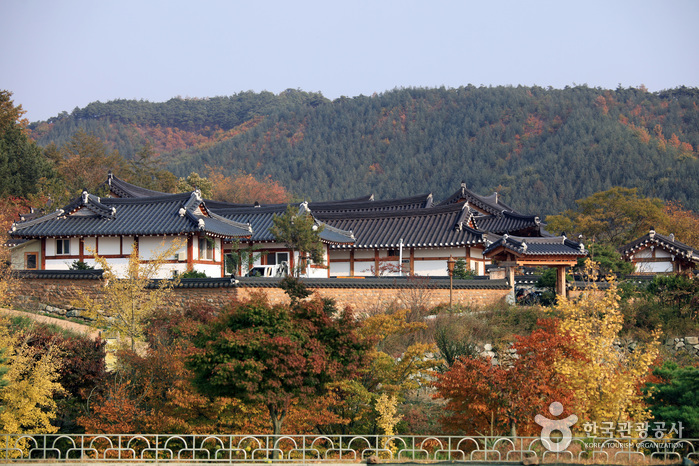
英阳是诗人赵芝薰和小说家李文烈、吴日道等文人的故乡。青绿派诗人赵芝薰出生的主室村,以及再令李氏的聚居地、小说家李文烈的故乡杜得村,不仅文学氛围浓厚,村庄的历史和风景也十分优美,吸引众多游客。
这条路线是单日行程示例。你可以直接保存,或扩展为 AI 行程。
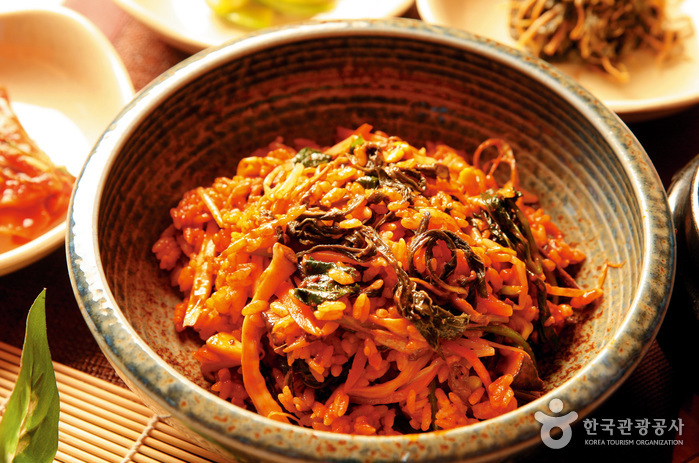
일교차가 심한 영양군에서 자라나는 고추는 과피가 두껍고 식물성지방도 많고 빛깔도 진하고 선명하다해서 빻으면 가루가 많이 나고 국물에도 빛깔과 맛이 잘 우러난다. 이 때문에 전국적인 명성을 얻어 '영양고추'가 유명한데 동시에 산채도 많이 나기로 유명하다.
* Jusil Village of Jo Ji-hoon Jusil Village, located in Jugok-ri, Ilwol-myeon, Yeongyang-gun, is bordered by Ilwol Mountain to the north, Cheonggi-myeon to the west, Subi-myeon to the east, and Yeongyang-eup to the south. The village, where poet Jo Ji-hoon was born, is a traditional village that preserves a very historic and progressive culture connected to exchanges with practical scholars and enlightenment reforms. In the heart of Jusil Village stands the Ho-eun Jongtaek (壺隱宗宅, Gyeongsangbuk-do Monument), the birthplace of poet Jo Ji-hoon, along with cultural resources such as Okcheon Jongtaek (玉川宗宅: Gyeongsangbuk-do Folklore Material) and Wolnok Seodang still intact. * Jo Ji-hoon Birthplace Poet and Korean literature scholar Jo Ji-hoon (1920–1968) was born here. His real name was Dong-tak (東卓). Jo Ji-hoon, from Yeongyang, Gyeongsangbuk-do, sang mainly about the context of national history, the world of classical beauty, and Zen in poems published in the Cheongnok collection he co-edited with Park Mok-wol and Park Doo-jin. His work is valued for its high moral Confucian natural understanding and historical significance in poetry literature. The house is divided into main quarters and servants' quarters, with a 7-kan by 7-kan front and side and a ㅁ-shaped floor plan. The roof is an octagonal hip-and-gable style typical of northern Yeongnam yangban houses. The front and inner gates feature color-painted Taegeuk patterns, and the house is surrounded by an old-style wall. Built during King Injo's reign (1623–1649) by Jo Jeong-hyeong, it was partially damaged in the Korean War and restored in 1963. This place is also the birthplace of Jo Seung-gi, an independence activist in the late Joseon period, and Jo In-seok, Jo Ji-hoon's grandfather, notable patriots. * Jugok-dong Okcheon Jongtaek The old home of Han-yang Jo clan’s Jo Deok-rin is a representative late 17th-century yangban house composed of the main living quarters (Jeongchim), a study pavilion (Chodang), and an ancestral shrine (Sadang). The main quarters have a ㅁ-shaped floor plan typical of Andong region homes, with a central door on the 5-kan front, a left inner room (An Sarangbang), and a right ondol room converted from a stable plus kitchen and storage rooms. The building body is elevated compared to the side parts with a 6-kan large open wooden hall (Daecheong) facing the inner yard; right of the hall are the dojoengbang and main room (Anbang), with a one-kan floor extension to create two kan. While the placement of dojoengbang on top of the Daecheong and Anbang is sometimes seen in northern Gyeongsangbuk-do ㅁ-shaped houses, the wooden floor rather than ondol heating is rare. The Chodang was built in 1695 (Sukjong 21) for teaching children and providing a resting place for elders. It displays the typical layout of this region and was surrounded by walls. Built in 1790 (Jeongjo 14), it features a wider middle kan, positioned on the right rear of the main quarters. While following Andong region’s typical layouts, the arrangement with the main room facing east and the sarangbang west differs, reflecting an 18th-century floor plan style where the main room and kitchen are placed westward. * Wolnok Seodang This seodang (private Confucian academy) was established to educate and train disciples. Proposed by scholar Wolha Jo Undo (1718–1796) and built mainly by the Hanyang Jo, Yaseong Jeong, and Hamyang Oh clans in 1773 (Yeongjo 49). It is a single-line building with 4 kan front and 2 kan side, offering great views and a quiet study environment. The middle two kan are an open wooden hall (Daecheong), flanked by rooms named Geugbokjae (克復齋) on the right and Jonseongjae (存省齋) on the left. The building well preserves late Joseon architectural style in a scenic setting.
The Southern Regional Forest Service established the Geumgang Pine Ecological Management Forest, guided by ecotours, in three locations: Uljin Sogwang-ri, Yeongyang Bonsin-ri, and Bonghwa Goseon and Daehyeon-ri, to restore the declining Geumgang pine forests, which have deteriorated due to artificial logging and environmental changes, to their late Joseon Dynasty state. In the Bonsin-ri area of Subi-myeon (1,839ha), the Geumgang pines (금강소나무) grow with straight trunks, long nodes, and uniquely reddish bark, regarded as the best among pines, unlike the typical twisted pines nearby. In addition, 27 other tree species of exceptional aesthetic value line the forest, creating a beautiful landscape that pleases visitors. Ecological trails of 1.5 km (2-hour course) and 4 km (4-hour course) have been arranged to provide a natural ecosystem experience, offering a sense of comfort rarely felt in daily life when entering the forest along small paths and becoming one with nature.
优先展示路线结束后方便休息的住宿
注册成为会员,让更多人认识你的频道。
(成为会员后,在“我的页面”中设置 Instagram、YouTube、博客链接,我们会在你发表的每条评论旁一起展示。)
““住在弘大附近,晚上去了一圈咖啡馆,城市夜景和氛围都太完美了。””
以访客身份发表的评论,不会显示任何社交账号链接或个人资料卡片
分享一条关于这个地点的小贴士吧。
或者以访客身份快速留下一个评论。
请登录后再上传照片。
还没有任何评论,快来写下你的第一条感受吧!