水绕无岑村与独木桥体验 in 庆尚北道 荣州市 · schedule 其他 · distance 80.1km · 5 stops · highlights Museom Single-log Bridge, 점심식사(죽령주막), 수도리 전통마을

英州不仅有浮石寺和小修书院,还有许多古代文人的遗迹。无岑村被三面环水包围,是一个水绕村庄,景色独特如陆地中的岛屿。据说无岑独木桥即将消失。可以前往这座充满乡村风情的独木桥体验一番。
这条路线是单日行程示例。你可以直接保存,或扩展为 AI 行程。
Museom Village is a traditional village beautifully preserved with old houses, surrounded on three sides by the Naeseongcheon River, creating a land island like a floating island. In the past, villagers used to connect wood to build a bridge crossing the Naeseongcheon River to work in the fields on the land. During the rainy season, the bridge would be swept away by the rising water, and villagers rebuilt it every year. Before the installation of a water supply bridge, the Museom Village’s only access was a single-log bridge measuring 150 meters in length and only 30 cm in width. Due to the narrow width, crossing required reliance on a long pole. The current single-log bridge was recreated by the village residents and expatriates to resemble the original, representing the only connection between the village and the land for over 350 years. Every autumn, the ‘Museom Single-log Bridge Festival’ is held here, a representative cultural festival of the Yeongju region aimed at preserving and enjoying the fading traditional culture. The event features Museom Village night tour, autumn concerts, old house cultural experiences, traditional craft experiences, traditional game experiences, traditional wedding reenactments, and various other sights and activities.
영남의 관문 죽령고개 정상에서 16년째 소백산산나물을 이용한 음식과 장아찌를 만들어 음식점을 운영하고 있으며 2012 영주삼계요리경연대회에서 “홍삼삼계떡갈비”로 금상을 수상한 경력이 있다. 이 집 음식은 소백산아래 위치해서 산나물을 많이 사용하고 있으며 “산나물 무침”, “산나물 장아찌”등 정말 토속적인 음식을 취급하고 있을 뿐만 아니라 특히 5~6월에만 취급하는 특선산나물전은 산나물향이 가득한 이 집만의 특색 있는 음식이다.
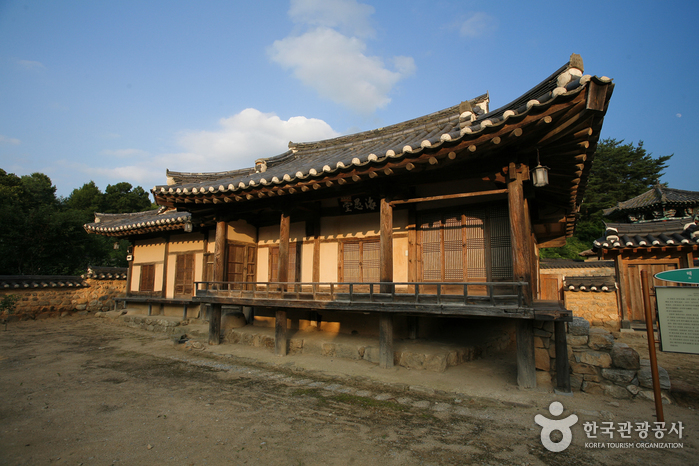
문수면 수도리는 아름다운 자연과 옛 고가가 그대로 보존된 전통마을이다. 수도리는 이름 그대로 내성천이 마을의 3면을 감싸 안고 흐르고 있으며, 그 가운데 섬처럼 떠 있다. 안동 하회마을을 연상시키는 이 마을에는, 휘감아 도는 강을 따라 은백색 백사장이 펼쳐져 있으며 맞은편에는 소나무, 사철나무 등이 숲을 이룬 나지막한 산들이 강을 감싸 안고 이어진다. 또, 강 위로는 견실한 다리가 놓여 마을과 마을을 잇고 있다.
Yeongju Seonbi Village is located adjacent to Sosu Seowon in Sunheung, Yeongju, the birthplace of Korean Confucian culture. It is a place that recreates the study area and traditional living spaces of the ancient scholars. It was established as an experiential education center to inherit the Seonbi spirit, establish correct values, and promote a clear sense of history. This site embodies the Seonbi spirit rooted in our nation's life philosophy, aiming to revive fading traditional culture to address social issues such as the collapse of ethics and loss of humanity. It is also used as a living educational venue for inheriting the Seonbi spirit and establishing proper values and historical awareness. Through various planned programs (sensory exhibition experiences, participatory events, traditional culture experiences, etc.), visitors can experience the lifestyle of ancient Seonbi and feel the refined spirit of Seonbi culture that is fading away.
Sunheung Hyanggyo's exact founding date is unknown, but it is estimated to have been established in the late Goryeo or early Joseon Dynasty. Initially built north of Geumseong in Sunheungbu, it was relocated eastward to Yadong in 1718 (44th year of King Sukjong), then southward to Seokgyo-ri in 1750 (26th year of King Yeongjo), and again moved to its current location in 1770 (46th year of King Yeongjo). It was renovated in 1971 and the pavilion and dancheong were restored in 1975. Originally, Sunheung Hyanggyo served as a Confucian school where local scholars of Sunheung studied, and a site for memorial rites honoring Confucius and other sages. Later, it was used as a local self-governance institution, but from the 16th century onward, due to operational difficulties and socio-economic changes, its educational role diminished, leaving only the memorial rites function. Existing buildings include a 7-room Daeseongjeon, a 6-room Myeongnyundang, 5-room Dongmu and Seomu, 4-room Dongjae, a 7-room gate tower, a Sammun, a Hyepum, and a Jusa. The Daeseongjeon enshrines tablets of the Five Sages and Ten Wise Men; the Dongmu and Seomu enshrine tablets of six Confucian scholars from the Song dynasty and 18 Korean scholars. Additionally, records such as Jipsa-an, Myeonbunryuwonim-an, and Gyojungjaprok, created during the late Joseon period for managing the hyanggyo, are preserved.
优先展示路线结束后方便休息的住宿
注册成为会员,让更多人认识你的频道。
(成为会员后,在“我的页面”中设置 Instagram、YouTube、博客链接,我们会在你发表的每条评论旁一起展示。)
““住在弘大附近,晚上去了一圈咖啡馆,城市夜景和氛围都太完美了。””
以访客身份发表的评论,不会显示任何社交账号链接或个人资料卡片
分享一条关于这个地点的小贴士吧。
或者以访客身份快速留下一个评论。
请登录后再上传照片。
还没有任何评论,快来写下你的第一条感受吧!