眺望北方的延川历史一日游路线 in 京畿道 延川郡 · schedule 其他 · distance 92.3km · 6 stops · highlights Yeolsoe Observatory, 태풍전망대, 점심식사(하남식당)
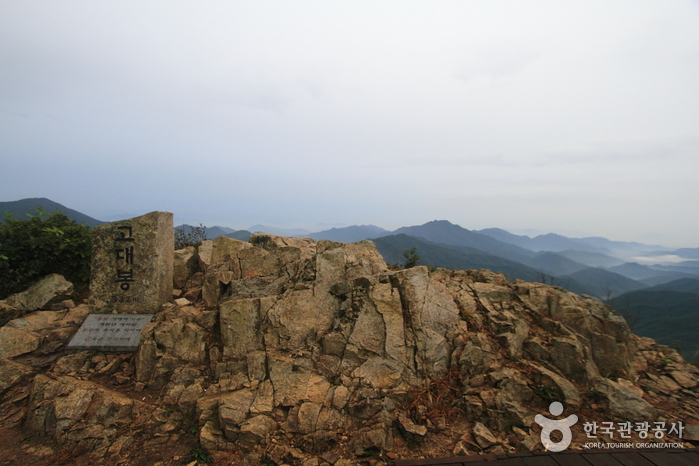
这是可以看到北方土地的延川一日游路线。延川山势深厚,开发缓慢,路线较长,但能原汁原味地体验自然。以被称为古代山的深谷山为中心,沿途有展望台、从日据时代至今保存的给水塔和全谷里遗址,展现历史的痕迹。
这条路线是单日行程示例。你可以直接保存,或扩展为 AI 行程。
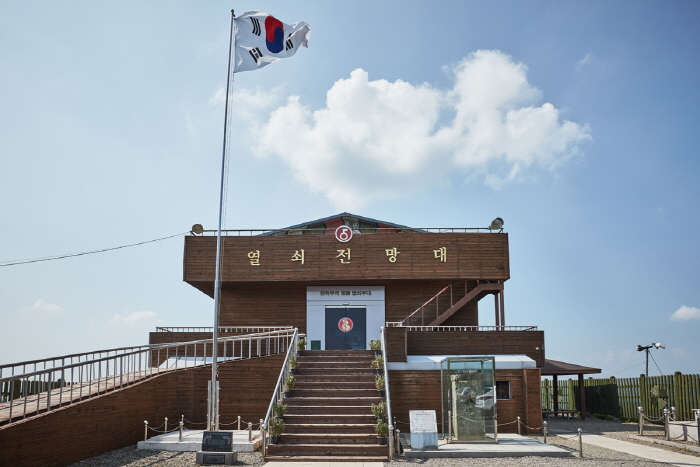
Yeolsoe Observatory was established on April 11, 1998, by the Army Yeolsoe Unit to provide security education and soothe the grievances of displaced persons. From the observatory, visitors can see the DMZ barbed wire fence and the frontline guard post (GP) at a glance. Inside the exhibition hall, North Korean household items and combat equipment against South Korea are displayed, offering a fragmented glimpse of North Korea's actual conditions. The exhibition hall also features a unification wish postcard tree shaped with barbed wire, adding interest for visitors.
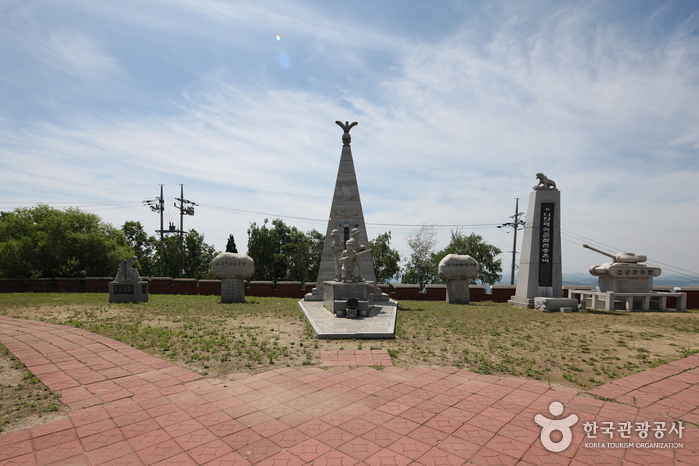
천하무적 태풍부대에서 1991년 12월 3일 건립한 것으로, 서울에서 약 65km, 평양에서 약 140km 떨어진 중면 비끼산의 가장 높은 수리봉에 위치한다. 처음에는 군사분계선을 기점으로 2km 지점에 남방 한계선과 북방 한계선이 설정되었으나, 1968년 북한이 휴전선 가까이 철책을 설치함에 따라 우리나라도 1978년에 부분적으로 철책을 설치하였다. 태풍전망대는 휴전선까지 800m, 북한 초소까지는 1,600m의 거리에 떨어져 위치하고 155마일 휴전선상 북한과 가장 가까운 전망대로 유명하다.
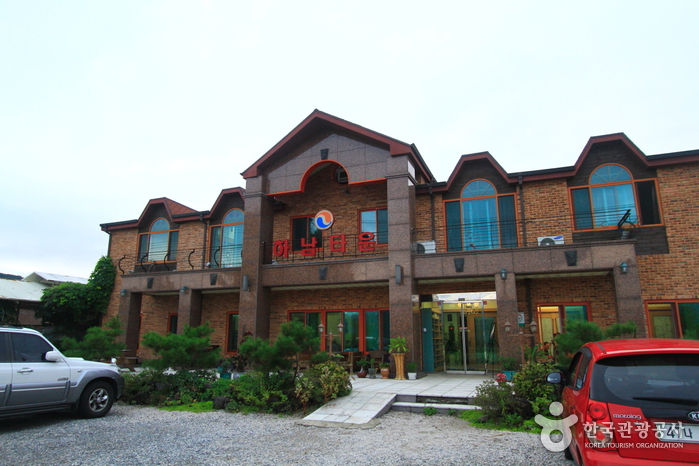
한탄강 국민관광단지내 가장 규모가 크고 민물매운탕 맛이 뛰어나기로 소문난 곳이다.
The Yeoncheon Station Water Tower is a railway water tower built in 1919 at a midpoint between Incheon and Wonsan, used to supply water to steam locomotives. Steam locomotives and water towers first appeared with the opening of the Gyeongin Line between Seoul and Incheon in September 1899, serving as transportation means but disappeared with the advent of diesel locomotives in the 1950s. All historical facilities built in Yeoncheon during the Japanese colonial period were destroyed by bombing during the Korean War, but only the water tower remains well preserved in its original form. At the time of construction, during the water supply to the tender (炭水車) attached behind the locomotive, active trade took place, functioning somewhat like a marketplace. Until before the Korean War, this area was the southernmost region of North Korea, and a large amount of North Korean military supplies were unloaded via the Gyeongwon Line. Because of this, the white water tower served as a coordinate for intense air raids by U.S. forces, and shell marks are still clearly visible on the building. The Yeoncheon Station Water Tower, along with the water towers at Dogye Station in Gangwon-do, Chupungnyeong Station, Yeonsan Station in Chungnam, Andong Station in Gyeongbuk, Yeongcheon Station, and Samrangjin Station in Gyeongnam, is recognized as a significant heritage for understanding railway history and modern transportation research, designated as a national registered cultural heritage.
Jaein Waterfall has long been widely known as a scenic spot. The waterfall is formed where a small stream flowing down from Jijangbong in the north pours down an approximately 18m high basalt columnar joint cliff, creating a spectacular sight. Around Jaein Waterfall, it is also known as a habitat for natural monuments such as Eoreumchi and endangered species like the pink dragonfly. A beautiful love story related to the name of the waterfall has been passed down. Various basalt features can be observed at Jaein Waterfall, notably columnar joints, undercut caves, potholes, and gas tubes. The waterfall, about 18m high, continues to erode the area below it, forming a pothole with a depth of 5m. A pothole is a deep hole formed when whirlpools occur in concave or broken parts of river rocks.
The Jeongok-ri Site is located around the Hantan River in Jeongok-ri, Jeongok-eup, Yeoncheon-gun, and is a representative site of the early Paleolithic period in Korea. This site, a symbol of Korea's Paleolithic heritage, gained attention in 1977 when a U.S. soldier visiting the Hantan River recreational area discovered stone tools on the surface. The Jeongok-ri stratigraphy provides very important data for studying paleoclimate and paleoenvironment and is a geological landmark with records related to human development. In the clay layer, a soil wedge structure called soil wedge cracking phenomenon is observed, presumed to have formed in the Ice Age, and is an important resource for paleoclimate research. Additionally, volcanic ash (Tephra) carried by the wind from Japan was found in the stratigraphy, revealing that the upper layers were deposited about 20,000 to 100,000 years ago. Thus, the Jeongok-ri stratigraphy is archaeologically significant and is a crucial geological site for studying paleoclimate. (Source: Hantan River Geopark website)
优先展示路线结束后方便休息的住宿
注册成为会员,让更多人认识你的频道。
(成为会员后,在“我的页面”中设置 Instagram、YouTube、博客链接,我们会在你发表的每条评论旁一起展示。)
““住在弘大附近,晚上去了一圈咖啡馆,城市夜景和氛围都太完美了。””
以访客身份发表的评论,不会显示任何社交账号链接或个人资料卡片
分享一条关于这个地点的小贴士吧。
或者以访客身份快速留下一个评论。
请登录后再上传照片。
还没有任何评论,快来写下你的第一条感受吧!