遇见高句丽的古迹 in 京畿道 延川郡 · schedule 其他 · distance 52.3km · 4 stops · highlights Dangposeong Fortress, 점심식사 (하남식당), Yeoncheon Sungui-jeon Site

延川是以大量发现旧石器时代遗物的遗址而闻名的地区。除了旧石器遗址外,还可以看到其他地区难以见到的当浦城、虎鹫城等高句丽古城的遗迹。延川是一个可以从旧石器时代到高句丽城、最后新罗王庆顺王陵墓、朝鲜时代建立的高丽王和功臣祠堂崇义殿,见证韩国历史片段的地方。
这条路线是单日行程示例。你可以直接保存,或扩展为 AI 行程。
Dangposeong Fortress maximized the use of terrain, building stone fortress walls only on the east side, connected by flat land without vertical cliffs. The east fortress wall is about 50m long and remains approximately 6m high, with a length of about 200m from the east wall to the west end of the fortress, and an overall circumference of about 450m. Most stones used for construction were processed local basalt, a major characteristic of Goguryeo fortresses. Behind Dangposeong Fortress lies Majeonhyeon, a route to Gaeseong, making the fortress essential for defending against northern enemies approaching the Yangju basin area by the shortest route. It also held a very important position for defending against southern enemies, indicating it was used continuously even during the Silla occupation period.
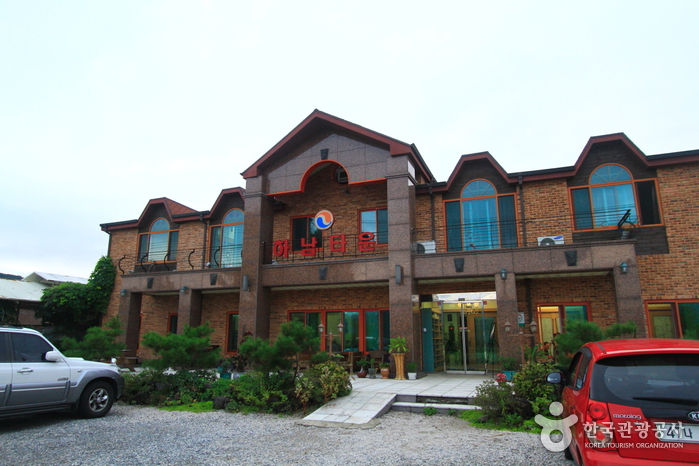
한탄강 국민관광단지내 가장 규모가 크고 민물매운탕 맛이 뛰어나기로 소문난 곳이다.
Sungui-jeon Site [崇義殿址] is the location where Sungui-jeon stood during the Joseon Dynasty, a shrine that enshrined the spirit tablets of kings and meritorious subjects from the previous Goryeo Dynasty and conducted memorial rites. Originally, this place was home to Angamsa Temple [仰巖寺], the original temple of Goryeo's founder King Taejo Wang Geon [王 建]. In 1397, a shrine was established here to enshrine the spirit tablet of King Taejo, becoming the origin of the current Sungui-jeon. After the shrine was built, in 1399 (the 1st year of King Jeongjong's reign), by royal decree, spirit tablets of eight Goryeo kings—including Taejo, Hyejong [惠宗], Seongjong [成宗], Hyeonjong [顯宗], Munjong [文宗], Wonjong (Chung-gyeong King 元宗), Chungnyeolwang [忠烈王], and Gongminwang [恭愍王]—were enshrined. The currently reconstructed buildings consist of Sungui-jeon, measuring three kan in front and three kan in depth, along with five auxiliary buildings: Baesincheong, Iancheong, Jeonsacheong, etc., as well as three gates—Naesinmun, Oesinmun, and Hyupmun—and six gates including Unjomon.
Located near Yeoncheon Gorangpo Historic Park, Yeoncheon Gyeongsunwang Tomb is the burial site of Gyeongsunwang, the 56th and final king of Silla (reigned 927–935). His family name is Kim, and his given name is Bu; he was a sixth-generation descendant of the 46th Silla king Munseongwang (reigned 839–857) and the son of ichan Hyojong. After King Gyeae died in 927 during an attack by Later Baekje's Gyeon Hwon, Gyeongsunwang ascended the throne. In 935, he surrendered to Goryeo's Wang Geon, relinquishing the kingdom and leading to Silla's fall. Upon surrender, his eldest son, Prince Ma-ui, opposed submission and went to Mount Geumgang, while his youngest son entered Hwaeomsa Temple as a monk. After surrender, Gyeongsunwang was honored with the posthumous title Jeongseunggong, ranked above the crown prince, and Silla was renamed Gyeongju as his fief, where he served as sashimgwan (regional official). He remarried King Taejo Wang Geon's eldest daughter, Princess Nakrang, and had several children. The tomb is a circular earthen mound about 3m high and 7m in diameter, surrounded by flat stones. It is enclosed by a fence called gokjang, common in Goryeo royal tombs, indicating the tomb was built with royal honors. It is the only Silla royal tomb located outside Gyeongju, in Gyeonggi-do. The tombstone in front is inscribed with "Silla Gyeongsunwang Ji Neung" (新羅敬順王之陵), and the inscription on its back dates the tombstone to 1747 (23rd year of King Yeongjo). The Chunhyang and Chuhyang rituals are held annually in spring and fall. A guide house operates at the tomb where cultural explanations are available if needed. The site is about a 26-minute drive from Dangdong IC. Nearby attractions include Yeoncheon Gorangpo Historic Park, Yeoncheon Horogoru, British Army Seolmari Battle Memorial Park, Yulgok Yi I Historical Site and Hwaseokjeong, Imjingak (Pyeonghwa Nuri Park), Odusan Unification Observatory, Heyri Art Village, and Paju Samneung World Cultural Heritage Site.
优先展示路线结束后方便休息的住宿
注册成为会员,让更多人认识你的频道。
(成为会员后,在“我的页面”中设置 Instagram、YouTube、博客链接,我们会在你发表的每条评论旁一起展示。)
““住在弘大附近,晚上去了一圈咖啡馆,城市夜景和氛围都太完美了。””
以访客身份发表的评论,不会显示任何社交账号链接或个人资料卡片
分享一条关于这个地点的小贴士吧。
或者以访客身份快速留下一个评论。
请登录后再上传照片。
还没有任何评论,快来写下你的第一条感受吧!