原州市内游览路线 in 江原特别自治道 原州市 · schedule 其他 · distance 12.1km · 4 stops · highlights Park Kyung-ri Literary Park, 점심식사(호반 닭갈비), 원주역사박물관

原州市是一个历史悠久的地区,拥有以致岳山国立公园为代表的自然景观,以及雄伟的仙江。这里有丰富的文化遗迹,展现了智慧地克服国难的历史。一天内游览这些历史遗迹将是一次宝贵的体验。路线包括土地文学公园、民庆浩将军墓地、江原感营遗址和原州乡校遗迹,还可参观原州历史博物馆和古老的国形寺。
这条路线是单日行程示例。你可以直接保存,或扩展为 AI 行程。
Park Kyung-ri Literary Park is a space infused with the spirit of Park Kyung-ri's novels. Although Park Kyung-ri was born in Tongyeong, she had great attraction and attachment to Wonju, where she settled and engaged in extensive writing activities. It is especially meaningful as the place where she completed parts 4 and 5 of the novel Toji. The park was completed in May 1999 by the Korea Land Corporation following cultural circles' recommendations, concerned that Park Kyung-ri's old house would disappear due to land development in 1989. It was once called Toji Literary Park but renamed Park Kyung-ri Literary Park in 2008 to avoid confusion with the Toji Cultural Center. Facilities include the garden the author personally tended, the old house preserved as it was where parts 4 and 5 of Toji were completed, and the Park Kyung-ri House of Literature, a five-story building with exhibition, archive, and seminar rooms. The literary house, designed by a renowned domestic architect and elaborated by designers, exhibits photos and relics on the second floor showing the author in her lifetime, and videos about the Toji novel on the third floor, as well as space for literary events. The first floor of the book cafe serves as the park management office and slow mailbox experience area, while the second floor offers various books including the author's works and picture books. Additionally, there is the Pyeongsari Yard, Yongdurebeol, the main setting of part 2 of Toji, and Hong-i Hill, a space for children named after Hong-i, a child character in the work.
호반 닭갈비는 닭갈비 전문점으로 닭갈비와 닭내장을 메뉴로 하고 있다. 닭갈비나 닭내장에 치즈, 우동사리, 고구마사리, 떡사리를 추가할 수 있으며, 날치알볶음밥, 치즈볶음밥, 볶음밥을 주문하여 볶아먹을 수 있다.
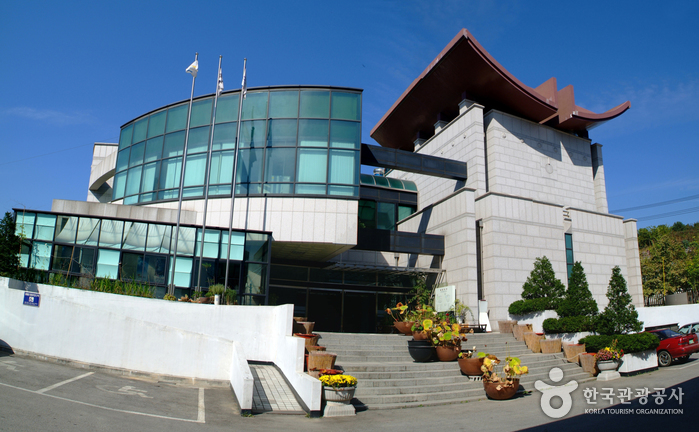
원주역사박물관은 평원, 북원경, 강원감영으로 이어져 우리 민족사의 전개에 큰 영향을 미쳤던 원주지역의 역사와 민속문화 자료를 수집ㆍ전시하고 온전하게 후세에 전함은 물론 지역사 연구와 날로 확대되는 사회문화교육 기관으로서의 역할을 담당하기 위하여 2000년 11월에 개관하였다.
Located in Haenggu-dong, Wonju-si, Gukhyeongsa Temple is a branch temple of Woljeongsa, the main temple of the Jogye Order of Korean Buddhism's 4th district. It was founded by Monk Muchak during the reign of King Gyeongsun of Silla. Originally named Bomunam, the pronunciation changed over time to Bang-eoro and came to be called Gomonam (古文庵). King Taejo of Joseon, Yi Seong-gye, enshrined the Dongakshin (East Mountain Spirit) here and built an altar, holding annual rituals praying for the nation's peace and prosperity, hence it was called Gukhyeongsa. It is also said that when Princess Heehee, the second daughter of King Jeongjong of Joseon, was cured after a one-hundred-day prayer at this temple, King Jeongjong expanded the temple greatly and renamed it Gukhyeongsa. The temple was abolished in 1680 but was restored in 1907, 1945, and 1974. Existing temple buildings include the Daeungjeon, Sugwangjeon, Dongakdan, Beomjonggak, and Seungdang, and it houses a cultural property, the Jinamdang Dae Seonsa (Great Zen Master) stupa built in 1799.
优先展示路线结束后方便休息的住宿
注册成为会员,让更多人认识你的频道。
(成为会员后,在“我的页面”中设置 Instagram、YouTube、博客链接,我们会在你发表的每条评论旁一起展示。)
““住在弘大附近,晚上去了一圈咖啡馆,城市夜景和氛围都太完美了。””
以访客身份发表的评论,不会显示任何社交账号链接或个人资料卡片
分享一条关于这个地点的小贴士吧。
或者以访客身份快速留下一个评论。
请登录后再上传照片。
还没有任何评论,快来写下你的第一条感受吧!