秋日萧瑟中的废寺遗址之旅 in 江原特别自治道 原州市 · schedule 其他 · distance 30.1km · 4 stops · highlights Kim Je-nam Shindobi, Uimongongsa Shrine, Wonju Beopcheonsa Site

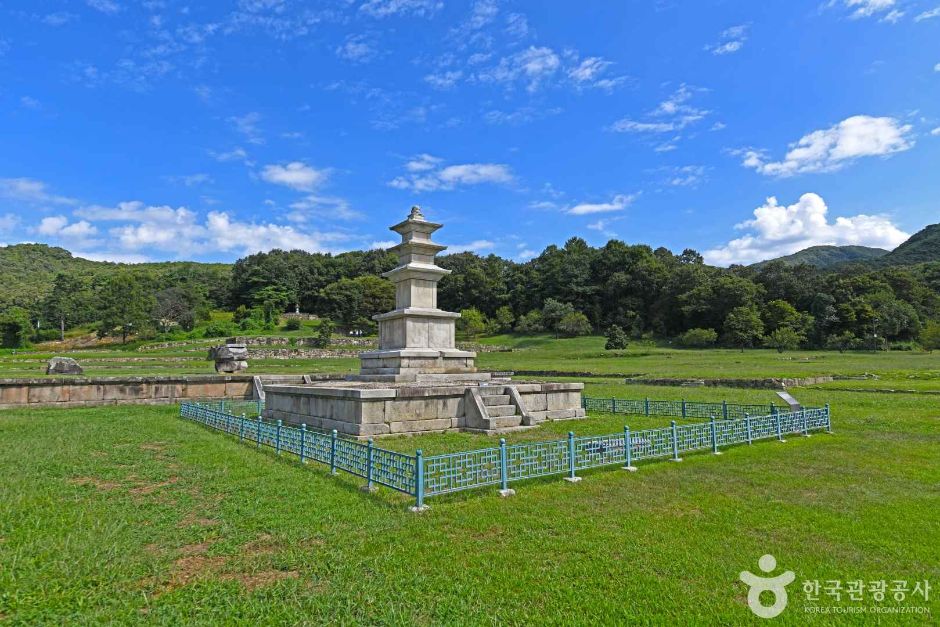
江原道原州市沿着从忠州到驿州延伸的南汉江路展开。南汉江曾是通往汉阳的重要水路,沿岸水运发达,自高丽时代起建有大型寺庙。兴法寺址、法泉寺址、巨敦寺址完整保留了古代遗迹,蕴含丰富历史故事。废寺遗址中保存的高丽人手工痕迹,如浮屠和塔的遗迹,是特别的文化体验。
这条路线是单日行程示例。你可以直接保存,或扩展为 AI 行程。
Kim Je-nam Shindobi is a Joseon Dynasty memorial stele located in Anchang-ri, Jijeong-myeon, Wonju-si, Gangwon-teukbyeol-jachido. It was designated as a cultural heritage material of Gangwon-teukbyeol-jachido on June 2, 1984. A Shindobi is a stele erected in front of or along the way to the tombs of kings or high officials, honoring their achievements; 'Shindo' means the path of spirits. Kim Je-nam was the father-in-law of King Seonjo, the father of Queen Inmok, and the grandfather of the ill-fated prince Yeongchangdaegun, who faced the crisis of family extermination. In the power struggle over the royal succession, he and his three sons were forced to take poison and suffered the humiliation of dismemberment and public display of remains. His honor was restored only after the Injo coup, and a shrine was built for him; he was posthumously promoted to Chief State Councillor (Yeonguijeong). The more than 3-meter tall large stele has a large capstone and body stone, with a relatively small pedestal, giving an overall neat appearance. The traces of Kim Je-nam carved on the body stone have been worn by time and are now difficult to read. The pedestal is uniquely shaped like a tortoise, not a dragon, with the tortoise's head turned backward to face the stele, and the capstone is richly carved with the image of a dragon breaking through the clouds.
Uimongongsa Shrine is a shrine located in Jijeong-ro, Jijeong-myeon, Wonju-si, Gangwon-do. It was established in 1965 but was twice destroyed by fire, and was rebuilt in 1997. It is managed by the Yeonan Kim clan's Cheongjugong branch. Kim Je-nam (1562–1613) was a mid-Joseon Dynasty government official and relative by marriage. He was the father-in-law of King Seonjo, and Queen Inmok, Seonjo's second consort, was his second daughter. In 1613, he was accused of trying to enthrone Prince Yeongchang, the son of Queen Inmok, and was sentenced to death by poison, along with his three sons who also received death sentences, resulting in the annihilation of his family. In 1616, Queen Inmok was deposed, and Kim was subjected to posthumous punishment, but he was reinstated in 1623 by the Injo Restoration and later posthumously honored with the title of Chief State Councillor. Nearby tourist sites include the Eulmi Uibyeong Memorial Tower and the Heungbeopsa Temple Three-story Stone Pagoda.
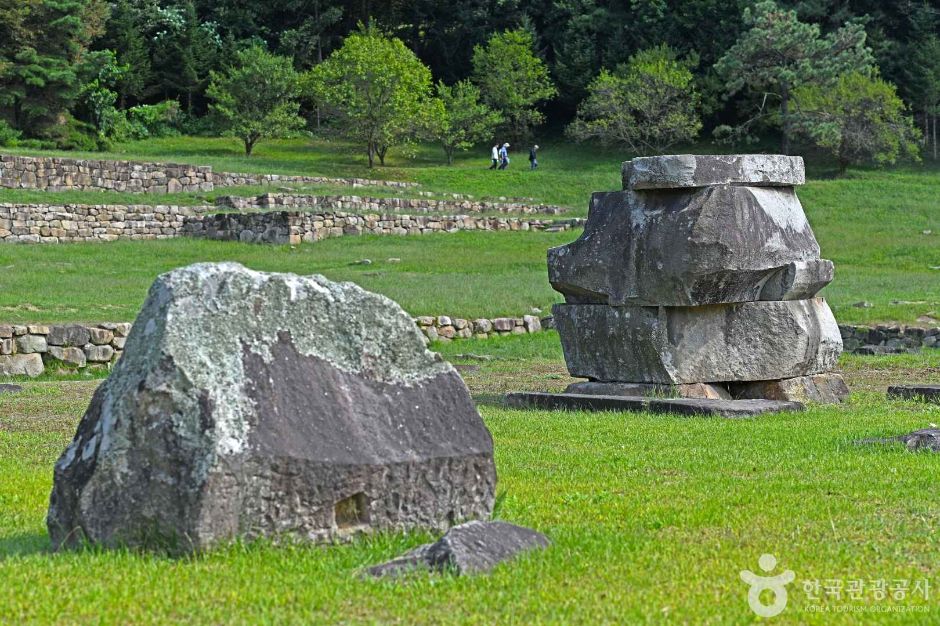
Wonju Beopcheonsa Site is the temple site of Beopcheonsa, built during the Unified Silla period, located at the foot of Myeongbong Mountain. It was designated as a historic site of South Korea in 2005. Although the exact founding date is unknown, various documents indicate it was established in the late Silla period in the 8th century and extensively rebuilt during the Goryeo period. It prospered as a Beopsangjong sect temple, which along with Hwaeomjong, was one of the two major sects in Goryeo. It burned down during the Japanese invasions of Korea (Imjin War) and was not rebuilt. Currently, the site contains the Wonju Beopcheonsa Site Jigwang Guksatapi, lotus-patterned large stones, and pagoda remains. About 800m south of the site stands a 280 cm tall, complete Silla period dangganjiju (flagpole supports). Excavations conducted five times between 2001 and 2007 uncovered 19 buildings and 3 wells from various periods ranging from Unified Silla to Joseon, as well as stone walls, fences, staircases, gilt-bronze Buddha statues, lotus-platform stones, various roof tiles, and ceramics. Roof tiles, ceramics, and coins used in the Goryeo mid-period, when Beopcheonsa flourished, were found, but artifacts from the Joseon period around the time of the temple's abandonment during the Imjin War were rarely discovered.
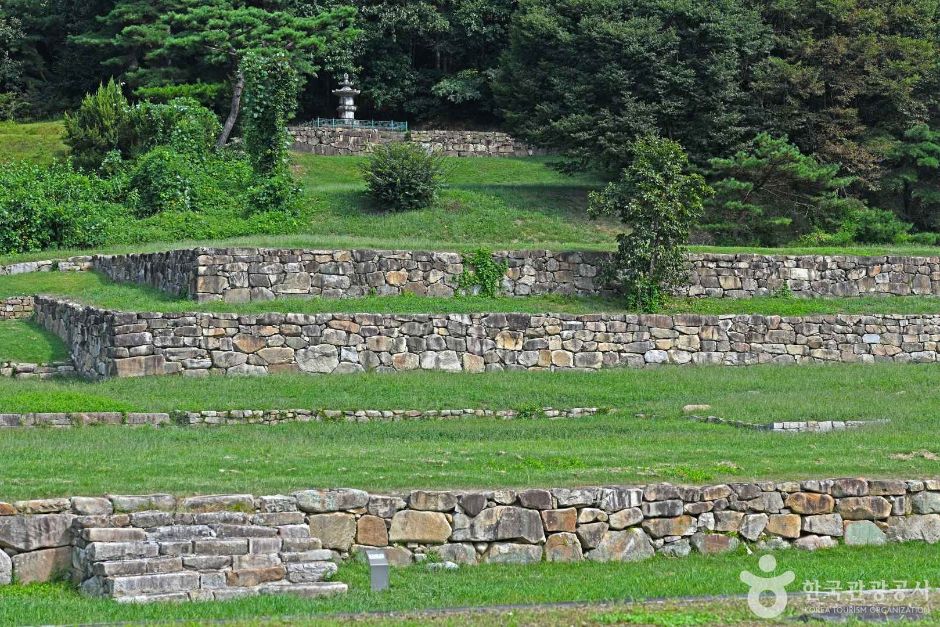
Wonju Geodonsaji is the site of the old Geodonsa Temple located at the foothills of Hyeongyesan in Buron-myeon, Wonju-si, Gangwon Special Self-Governing Province. Along with Heungbeopsaji and Beopcheonsaji, it is a place where only the temple site remains. From 1989 to 1992, four rounds of archaeological excavations were conducted by Hallym University Museum. Based on unearthed artifacts, it is believed that the temple was first built in the late Unified Silla period around the 9th century, expanded and repaired in the early Goryeo period, and maintained until the early Joseon period. Upon arrival at Geodonsaji, visitors first see well-stacked natural stone retaining walls, and at the edges stand a thousand-year-old zelkova tree designated as a protected tree by Wonju City. Walking up these stone steps, one encounters the modest-looking Geodonsaji Three-Story Stone Pagoda, roughly dated to the 9th century. Behind the pagoda is the Geodonsaji Golden Hall site, where a Buddha shrine was enshrined; this was the central space of the temple. Though it is now vacant, the Golden Hall was likely a two-story building with a front width of 5 kan and a side width of 3 kan. Behind the Golden Hall site are the lecture hall ruins, and the east side has Been maintained as the Hwarang site. The Three-Story Stone Pagoda and the Won Gong National Preceptor's Tomb Stele were designated as treasures in 1982 and 1963, respectively.
优先展示路线结束后方便休息的住宿
注册成为会员,让更多人认识你的频道。
(成为会员后,在“我的页面”中设置 Instagram、YouTube、博客链接,我们会在你发表的每条评论旁一起展示。)
““住在弘大附近,晚上去了一圈咖啡馆,城市夜景和氛围都太完美了。””
以访客身份发表的评论,不会显示任何社交账号链接或个人资料卡片
分享一条关于这个地点的小贴士吧。
或者以访客身份快速留下一个评论。
请登录后再上传照片。
还没有任何评论,快来写下你的第一条感受吧!