
寻找真正心灵之所的完州寺庙之旅 in 全北特别自治道 完州郡 · schedule 其他 · distance 약 50km · 3 stops · highlights Songgwangsa, Wibongsa, Wibong Fortress
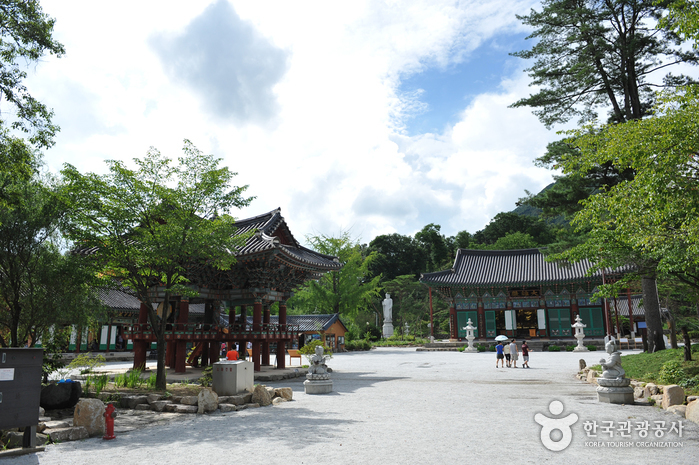
完州的寺庙华岩寺和松广寺简朴宁静,是适合悠闲停留、反思自我的旅行地。安度贤诗人称华岩寺为“偶尔想独自翻阅的小而珍贵的书般的寺庙”。春日樱花盛开的松广寺,以及沿途的威峰山城,都能留下独自的浪漫回忆。华岩寺至松广寺的路上,大雅湖景色宜人。
这条路线是单日行程示例。你可以直接保存,或扩展为 AI 行程。
Songgwangsa is a temple located on Jongsan Mountain in Wanju-gun, Jeollabuk-do. Songgwangsa first appears in historical records at the end of the Unified Silla period. Ven. Chejing practiced at Seoraksan's Eokseongsa Temple, and on his way to study in China, he briefly stayed at Baekryeonsa Temple after hearing its reputation as a sacred place. According to tradition, Baekryeonsa was a temple built beside a sacred spring south of Jongsan Mountain. After returning, Ven. Chejing renamed Baekryeonsa to Songgwangsa. Later, the temple was burned down during the Japanese invasions of 1592 and 1597, but from 1636, Ven. Byeokam Gakseong restored it with great effort to its current structure. Songgwangsa consists of Daeungjeon Hall, Jijangjeon Hall, Yaksa-jeon, Gwaneumjeon, Sipjagak, Geumgangmun, Hyangrojeon, Jeokmukdang, and more. Cultural assets on site include Wanju Songgwangsa Bell Tower, Wanju Songgwangsa Four Heavenly Kings statues, Songgwangsa Bronze Bell, and historical monuments. Experience programs include templestay and a Buddhist academy. The Buddhist academy, established for broad exploration of Buddhist philosophy based on correct Buddhist understanding, offers 16-week lectures in two semesters covering early Buddhism, Mahayana Buddhism, and commentary on the Madhyamaka. Templestay programs include day, experience, and rest types, featuring dawn prayers, 108 prostrations, meditation, and tea with monks, providing time to quietly embrace and understand oneself by temporarily setting aside the mind filled with constant thoughts.
Wibongsa is an ancient temple located on Wibongsan (Chujulsan) in Wanju-gun, Jeollabuk-do. It was rebuilt by the monk Naong at the end of the Goryeo period, and during the reign of King Sejo of Joseon, monks Seonseok and Seokjam repaired it. In the late Joseon Dynasty, through a reconstruction of more than 60 rooms led by the monk Poryeondae, and by 1312, it was one of the 31 main temples nationwide (large temples serving as the base for sects or subsects) overseeing about 50 branch temples throughout Jeonbuk. After liberation and the Korean War, it rapidly declined. In 1988, just before it was about to be abandoned, the monk Beopjung was appointed and immediately began restoring the temple site, repairing the deteriorated Bogwangmyeongjeon and Gwaneumjeon halls, and with the participation of several donors, constructed over 100 rooms of buildings. Currently, it includes Bogwangmyeongjeon, Geungnakjeon, Gwaneumjeon, Samseonggak, Nawoldang, and temple lodgings, housing 50 to 60 resident monks, presenting the scale of a major temple.
Wibong Fortress was built in the first year of Sukjong of Joseon (1675) and has an impressive circumference of about 16km. It was constructed to evacuate the portrait of King Taejo and the wooden memorial tablets symbolizing his ancestors from Jeonju Gyeonggijeon and Jogyeongmyo in emergencies. During the Donghak Peasant Revolution when Jeonju was actually captured, the portrait and wooden tablets were brought here. Inside the fortress, there was a small palace to enshrine the portrait and memorial tablets, but it was demolished a long time ago. Gates were built on the east, west, and north sides, but only a half-moon-shaped gate leading to Jeonju remains on the west side. Inside the fortress are Wibongsa Temple and Wibong Waterfall, one of the eight scenic spots of Jeonju.
优先展示路线结束后方便休息的住宿
注册成为会员,让更多人认识你的频道。
(成为会员后,在“我的页面”中设置 Instagram、YouTube、博客链接,我们会在你发表的每条评论旁一起展示。)
““住在弘大附近,晚上去了一圈咖啡馆,城市夜景和氛围都太完美了。””
以访客身份发表的评论,不会显示任何社交账号链接或个人资料卡片
分享一条关于这个地点的小贴士吧。
或者以访客身份快速留下一个评论。
请登录后再上传照片。
还没有任何评论,快来写下你的第一条感受吧!


