
鲸鱼的故乡,拥有绝美自然景观和大型工业设施 in 蔚山广域市 蔚州郡 · schedule 其他 · distance 83.2km · 4 stops · highlights Ganjeolgot, Ulsan Grand Park, Ulju Daegok-ri Bangudae Petrogly…

蔚山作为工业城市形象鲜明。然而,蔚山环绕着山和海,拥有众多如宝石般闪耀的旅游景点。细细探索这座城市的隐秘之处,或许有机会遇见鲸鱼。
这条路线是单日行程示例。你可以直接保存,或扩展为 AI 行程。
Located in Ulju-gun, Ulsan, Ganjeolgot is the place where the sun rises first on the Korean Peninsula, making it a representative spot visited by many every New Year's Day to witness the sunrise. Here, the sun rises about 1 minute earlier than at Pohang Homigot and about 5 minutes earlier than at Gangneung Jeongdongjin. One of Ganjeolgot's symbols, the Ganjeolgot Lighthouse, is a historic lighthouse built in the 1920s during the Japanese colonial period. It is now loved as a great walking course and photo spot as it blends with the surrounding park. The white lighthouse standing tall against the blue sea makes the scenery of Ganjeolgot even more impressive. Another special attraction here is the world's largest wish mailbox. Postcards put in it are actually delivered anywhere nationwide, and free postcards are distributed at Ganjeolgot Haeolje (Uljugun specialty product store), offering tourists precious memories. The Ganjeolgot area boasts beauty throughout the four seasons with rapeseed flower fields, peculiar rocks, and dense pine forests. Nearby attractions include Jinha Beach, the most crowded summer beach in Ulsan, Seosaengpo Waeseong, Nasabongsudae, and Onyandonggi Village, making for a variety of sights to enjoy. The wide-open horizon, early morning sunlight, and tranquil lighthouse scenery combined make Ganjeolgot a travel destination everyone should visit at least once.
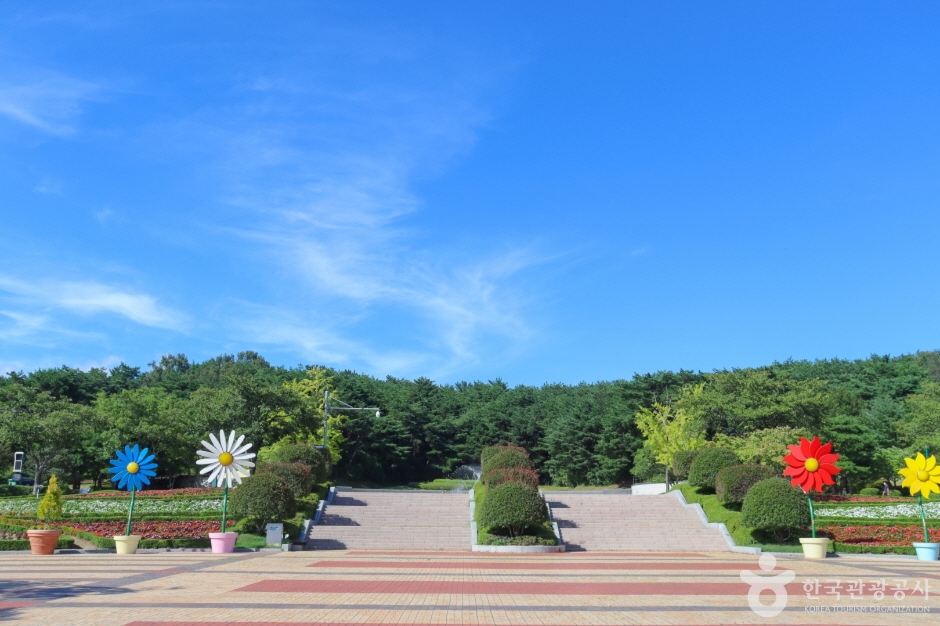
Since the 1960s, Ulsan's image as a heavy chemical industrial city has had positive aspects of 'growth,' but negative aspects such as pollution and poor quality of life have become more prominent. In this situation, a park to serve as a clean zone was urgently needed. Accordingly, from 1986, Ulsan Gwangyeoksi purchased and provided about 3.64 million square meters of land around Gonguptap Rotary in Nam-gu, Sinjeong-dong, and Ok-dong areas. SK Corporation constructed Ulsan Grand Park facilities over 10 years from 1996 and then donated them to Ulsan Gwangyeoksi free of charge. The established Ulsan Grand Park not only contributes to improving citizens' quality of life but also serves as a starting point for the city's balanced growth. It became a catalyst for transforming industrial city Ulsan into a city harmonizing industry and nature. Ulsan Grand Park is designed for the convenience of citizens, allowing them to fully experience Ulsan's rich industrial environment and culture. It is a space for experiences and culture and relaxation for various age groups and social classes, offering various lively programs through efficient park management. It also provides education and experiential learning about natural ecology to be a space for residents to visit continuously without burden.
In Daegok-ri, Eonyang-eup, Ulju-gun, Ulsan, there is the scenic Bangudae, where a ridge of Yeongosan extends down and ends abruptly in striking rock formations, resembling the shape of a turtle lying flat, hence the name Bangudae (盤龜臺). The clear waters flowing down from Cheonjeon Valley in Doodong-myeon gather here to form a lakeside, celebrated as a place of exceptional beauty. Since ancient times, poets and scholars from various regions visited to enjoy the scenery through poetry. Petroglyphs are pictures carved into rocks by prehistoric people, depicting various events from their daily lives. Typically made on large rocks or sacred sites, these places were likely gathering spots for rituals. The Ulju Daegok-ri Bangudae Petroglyphs are located at the so-called "Geonneo Gakdan," a tributary of the Taehwa River called Daegokcheon, with the main rock face measuring 10m wide and 3m high. Numerous images are also found on surrounding rocks, totaling about ten sites with petroglyphs. These carvings are believed to have been made over multiple periods from the Neolithic era, showing stylistic differences by era. They are divided into two techniques: the area-chiseling method, where entire interiors are carved out, and the outline-chiseling method, where only contours are engraved. The depicted subjects include sea animals, land animals, humans, and tools. Sea animals include whales, seals, and turtles; land animals include deer, tigers, wild boars, and dogs. Human figures appear as faces only, standing frontally or sideways, and riding boats. Tools depicted include boats, fences, nets, harpoons, and crossbow-like objects. These images are thought to represent prehistoric hunting activities, carved with the hope for successful hunts and abundant game. Expressing animals and hunting scenes vividly and realistically, these petroglyphs serve as both hunting and religious art, offering invaluable insight into prehistoric life and customs. As the earliest whale hunting record and the first prehistoric art on the Korean Peninsula, the Bangudae Petroglyphs and the Cheonjeon-ri epigraphy and petroglyphs along the approximately 3km "Banguchon Petroglyphs" were inscribed as a UNESCO World Heritage site on July 12, 2025, representing a premier historical tourism resource of Korea.
Chisan Seowon is one of the rare seowon dedicated to the loyal subject of Silla, Park Jesang, and his family. Its origin traces back to Shinmosa, established during the Silla period on Chisulryeong in Gyeongju Mukjangsan to enshrine Park Jesang's wife. In the 21st year of King Yeongjo's reign (1745) during the Joseon Dynasty, Shinmosa was reestablished in Dudong-myeon under the leadership of the Yeonghae Park clan to honor Park Jesang, his wife, and their two daughters. Park Jesang, a descendant of Park Hyeokgeose, received an order from King Nulji of Silla during King Silseong's reign to bring back his younger brothers held hostage in Goguryeo and Wa. He first rescued Bokho from Goguryeo, then went to Wa to save Misaheun, and after severe torture, he died by fire. East of Dudong-myeon Manhwa-ri at Chisulryeong, there remain Mangbuseok and Eun-euam, related to the legend that Park Jesang's wife and two daughters waited for him, turned into the Mangbu stone after death, and their souls flew away as birds. Later, King Nulji posthumously awarded Park Jesang the title Daechan and his wife the title Gukdaebuin. The adjacent Park Jesang Memorial Hall exhibits the lifestyle of the Three Kingdoms period, the 4th-5th century international situation, and Park Jesang's achievements, so visiting both is recommended.
优先展示路线结束后方便休息的住宿
注册成为会员,让更多人认识你的频道。
(成为会员后,在“我的页面”中设置 Instagram、YouTube、博客链接,我们会在你发表的每条评论旁一起展示。)
““住在弘大附近,晚上去了一圈咖啡馆,城市夜景和氛围都太完美了。””
以访客身份发表的评论,不会显示任何社交账号链接或个人资料卡片
分享一条关于这个地点的小贴士吧。
或者以访客身份快速留下一个评论。
请登录后再上传照片。
还没有任何评论,快来写下你的第一条感受吧!




![Ulju Daegok-ri Bangudae Petroglyphs [UNESCO World Heritage] 1](https://tong.visitkorea.or.kr/cms/resource/84/3507484_image2_1.jpg)
![Ulju Daegok-ri Bangudae Petroglyphs [UNESCO World Heritage] 2](https://tong.visitkorea.or.kr/cms/resource/86/3507486_image2_1.jpg)
![Ulju Daegok-ri Bangudae Petroglyphs [UNESCO World Heritage] 3](https://tong.visitkorea.or.kr/cms/resource/88/3507488_image2_1.jpg)
![Ulju Daegok-ri Bangudae Petroglyphs [UNESCO World Heritage] 4](https://tong.visitkorea.or.kr/cms/resource/89/3507489_image2_1.jpg)


