在风情山寺度过的一天 in 全罗南道 顺天市 · schedule 其他 · distance 77km · 6 stops · highlights Seonamsa Valley, Seonamsa Temple [UNESCO World Heritage], 점심식사(장원식당, 길상식당)

在深厚自然中充满风情的山寺度过一天。即使只是静静地坐在寺庙内,也能自然感受到治愈的气氛。寺庙并非都拥有相同的氛围。从小巧雅致的定慧寺到以野生茶闻名的仙岩寺,再到我国三宝寺庙之一的松广寺,各有不同的魅力。可以轻松步行约30分钟到仙岩寺,享受周岩湖的驾车游览。
这条路线是单日行程示例。你可以直接保存,或扩展为 AI 行程。
Seonamsa Valley, extending from the eastern foothills of Jogyesan in Suncheon, is a valley famous for its calm and clear water. Located northwest of Suncheon City Hall, it takes about 25 to 30 minutes by car to reach. The valley water meanders and eventually flows into Sangsaho. Seonamsa-gil runs parallel to Seonamsa Valley and leads to the Seonamsa parking lot, where many accommodations and restaurants line the road along the valley. After passing the Seonamsa ticket booth, walking quietly along the forest path formed by this valley for about 15 to 20 minutes accompanied by the sound of flowing water leads to Seonamsa Temple. Along the way to Seonamsa, near the Suncheon Wild Tea Experience Center, there is an arched bridge over the valley called Seungseon-gyo, said to have been built by Hoam Daesa in the 39th year of King Sukjong's reign (1713) during the Joseon Dynasty. Seonamsa Seungseon-gyo is a granite stone bridge measuring 7m in height, 14m in length, and 3.5m in width.
Seonamsa Temple, located on the eastern foothills of Jogyesan Mountain, was founded by Adohwa in the 7th year of King Seong of Baekje (529) by building Biroam, and then established as the current Seonamsa by Doseon Guksa, the master of Seon Buddhism, in the 1st year of King Gyeongmun of Silla. On the opposite western mountainside is the famous Seungbo temple Songgwangsa. Surrounding Seonamsa are dense forests of centuries-old oak, camellia, maple, and chestnut trees, with particularly famous autumn foliage. In front of the temple stands an arched Seungseon Bridge (treasure), solidly supported by natural bedrock, with a mysterious dragon head in the center. The three-story stone pagodas (treasures) flanking the Daeungjeon hall attract visitors’ attention. As one of the temples preserving the most traditional culture, in addition to seven treasures, it holds twelve local cultural assets including the majestic and colorful Daeungjeon, Palsangjeon, Wontongjeon halls, a gilt-bronze incense burner, and Iljumun gate. To the left of the main temple, following a steep hiking trail, a large 7-meter-high and 2-meter-wide rock-carved Buddhist image can be seen. The 800-year-old native tea garden, an ascent trail connecting Songgwangsa and Seonamsa through Jogyesan, crystal-clear valley water, dense trees, and autumn colors enhance the site’s charm. Nearby, like Jirisan and Baegunsan, native Gorosoe trees grow naturally, providing medicinal spring water around the annual Gyeongchip period. The Chiljeon Seonwon at Seonamsa is a meditation center on the eastern slopes of Jogyesan in Suncheon-si, the only Seon monastery of the Taego Order, where many monks train in both the Kangwon and Seonwon. "Chiljeon" refers to the seven buildings located at Seonamsa’s highest area. Behind Seonamsa lies a wild tea plantation over 800 years old. Although the finest tea in the region is known as Hwage tea, the naturally grown wild tea from Seonamsa is regarded as the best. The wild tea is characterized by a savory and deep flavor, stemming from tea plants growing under shaded cedar and oak trees, with mist and humid climate producing the unique taste. However, tasting Seonamsa tea is rare since the plantation is small, limiting harvests and making it highly prized.
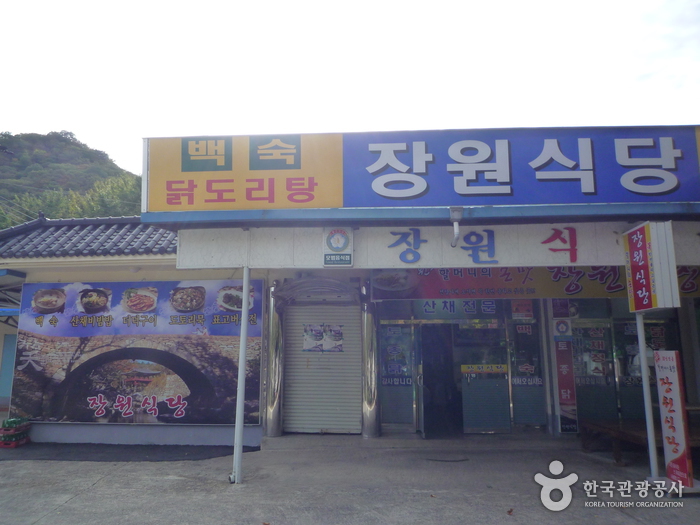
[장원식당] 맛의 고향 전라남도 순천에 위치한 장원식당은 선암사를 대표하는 오래된 맛집이다. 메뉴로는 다채로운 나물들과 깻잎, 고추장아찌, 꼬막 등 25여가지의 맛깔스러운 반찬들과 함께하는 산채정식과 토종닭요리, 간단하면서 든든하게 하는 산채비빔밥 등을 즐길 수 있다. [길상식당] 산채정식, 더덕구이정식 및 닭백숙을 판매하는 음식점이다.
Suncheon Traditional Wild Tea Experience Center is located on the way to Seonamsa Temple in Jogyesan Mountain, a cozy experience center harmonized with the sounds of the sky, water, and wind. It is a space where visitors can make and taste fragrant teas produced in Suncheon through tea ceremony and dasik (tea confectionery) experiences, offering modern people tired from daily life a comfortable rest, an opportunity to recharge, and a rich heart. Additionally, it provides Hanok meditation experiences and Hanok accommodations to feel the elegant charm, leisure, and old life atmosphere of traditional Korean houses. Group reservations are possible, and various experiences can be participated in.
Completed over 8 years from 1984 to 1992, Juamho Lake holds 707 million tons of water. Besides regulating water supply for the Gwangju and Jeonnam region, it features a 145.5 km lakeside road. The Honam Expressway, together with national routes 15, 18, and 27, connects Songgwangsa Temple and the Dolmen Park, encircling Juamho Lake. Local routes 818 and 857 link the Nagan Eupseong Folk Village with Sangsaho Lake, adding further beauty. Located below the ridges of Jogyesan and Mohusan, it offers rich and leisurely nature, making it an important tourist resource for Suncheon City. Juamho Lake, with a watershed area of 1,010 km² spanning Suncheon, Boseong, and Hwasun, holds 4 million tons of water. Formed by the Juambon Dam built in Daegwang-ri, Juam-myeon, Suncheon-si (57m high, 330m long), it supplies 6,000 tons of daily drinking water to western Jeonnam areas including Gwangju, Naju, Mokpo, and Hwasun. Sangsaho Lake, with a 135 km² watershed covering Seungju-eup and Sangsa-myeon, holds 2 million tons of water. Created by the Sangsa Control Dam in Yonggye-ri, Sangsa-myeon (106m high, 575m long), it provides 3,000 tons of daily drinking water and 2,000 tons of industrial water to eastern Jeonnam areas including Suncheon, Yeosu, and Gwangyang, with an annual generation capacity of 50 million kW.
Situated on the northern foothills of Jogyesan, Songsangsa is known as one of Korea's three treasure temples (삼보사찰), alongside Haeinsa (법보사찰) in Hapcheon and Tongdosa (佛寶) in Yangsan. It began in the late Silla period when the Zen master Hyerin built a small hermitage called Gilsangsa. Later, National Preceptor Jinul moved the Jeonghyegyeolsa movement here, making it a center for monastic meditation and practice, establishing it as a treasure temple. It produced 16 national preceptors, including Jinul. The temple has about 80 wooden structures and preserves 27 cultural heritage items: three national treasures including the Guksajeon (where the portraits of the 16 national preceptors are enshrined), 13 treasures such as Hasadang, Yaksajeon, and Yeongsanjeon, and 17 national cultural assets including the natural monument Ssanghyangsu. Additionally, 10 local cultural properties like the designated Guksasarihap are preserved. Centered around the Daeungjeon, with Seungbojeon and Jijangjeon to the left and right, the temple shows a majestic presence. The scent of incense, soft wooden fish sounds, clear chanting, and the sight of monks maintaining the brilliant temple tradition evoke a sense of reverence.
优先展示路线结束后方便休息的住宿
注册成为会员,让更多人认识你的频道。
(成为会员后,在“我的页面”中设置 Instagram、YouTube、博客链接,我们会在你发表的每条评论旁一起展示。)
““住在弘大附近,晚上去了一圈咖啡馆,城市夜景和氛围都太完美了。””
以访客身份发表的评论,不会显示任何社交账号链接或个人资料卡片
分享一条关于这个地点的小贴士吧。
或者以访客身份快速留下一个评论。
请登录后再上传照片。
还没有任何评论,快来写下你的第一条感受吧!


![Seonamsa Temple [UNESCO World Heritage] 1](https://tong.visitkorea.or.kr/cms/resource/80/3498880_image2_1.jpg)
![Seonamsa Temple [UNESCO World Heritage] 2](https://tong.visitkorea.or.kr/cms/resource/81/3498881_image2_1.jpg)
![Seonamsa Temple [UNESCO World Heritage] 3](https://tong.visitkorea.or.kr/cms/resource/82/3498882_image2_1.jpg)
![Seonamsa Temple [UNESCO World Heritage] 4](https://tong.visitkorea.or.kr/cms/resource/83/3498883_image2_1.jpg)