感受300年时光的一夜 in 忠清南道 瑞山市 · schedule 其他 · distance 28.2km · 3 stops · highlights Seosan Bowon Temple Site, Gaesimsa Temple, Seosan Haemi Eupseong

忠南西山市Handarim村是庆州金氏的聚居村。约500年前,金延在担任安州牧使和瑞兴府使期间,凭借剿灭林克正获得的赐地进入此地,形成了聚居村。这里保留着古朴的风貌和整洁的传统美食体验。
这条路线是 2 天行程示例。你可以直接保存,或扩展为 AI 行程。
This site was where Bowon Temple existed from the Baekje period to the Joseon dynasty, holding a thousand years of history and many Buddhist cultural assets. Major cultural properties here include the 4-meter-high Dangganjiju (flagpole supports) that suggest the temple's scale, the five-story stone pagoda, stone statues, the Beopin Guksa pagoda, and the Beopin Guksa monument, all designated as treasures due to their great value. At one time, the temple housed about a thousand monks, and even by today's standards, the temple site deep in the mountains is so vast that it cannot be seen all at once. The gilt-bronze standing Buddha, iron standing Buddha, and iron seated Buddha statues excavated from Bowon Temple Site were moved to the National Museum of Korea in Seoul, but traces that suggest the grandeur of this millennium-old temple can still be found scattered around the site. Recognized for its value, it was designated a historic site in 1987, and it is especially notable that this area was significant during the Baekje period. Today, it is being reconstructed as a branch temple of Sudeoksa Temple in the 7th district of the Jogye Order of Korean Buddhism. Nearby are the Maae Samjon Buddha Rock Carving of Yonghyeon-ri in Seosan, another Baekje Buddhist cultural asset, as well as Yonghyeon Valley, Gayasan Mountain, and Gopung Reservoir. The Seosan Arame-gil Millennium Smile Trail and its circular route also pass through here, making it favorable for linked tourism.
Gaesimsa Temple, located in Sinchang-ri, Unsan-myeon, is one of the four major temples in Chungnam. It was founded by Monk Hyegam in 654, the 14th year of King Uija of Baekje, and is said to have been renovated by Cheoneung Daesa in 1350, the 2nd year of King Chungjeong of Goryeo. Only the base of the Daeungjeon Hall dates back to Baekje, while the building was destroyed by a mountain fire in 1475, the 6th year of King Seongjong of Joseon, and was rebuilt in 1484, the 15th year of King Seongjong of Joseon. Daeungjeon Hall, Treasure No. 143, was reconstructed on the original base in 1484 with an architectural style combining Dapo and Jusimpo methods, exemplifying exquisite craftsmanship and architectural artistry. The dense forest, bizarre rock formations surrounding the temple, and cherry blossoms that bloom around Buddha's Birthday make the scenery even more beautiful, filling the temple area with cherry blossoms to evoke a feeling of stepping into a transcendent realm far from worldly worries. Source: Seosan City Cultural Tourism Homepage
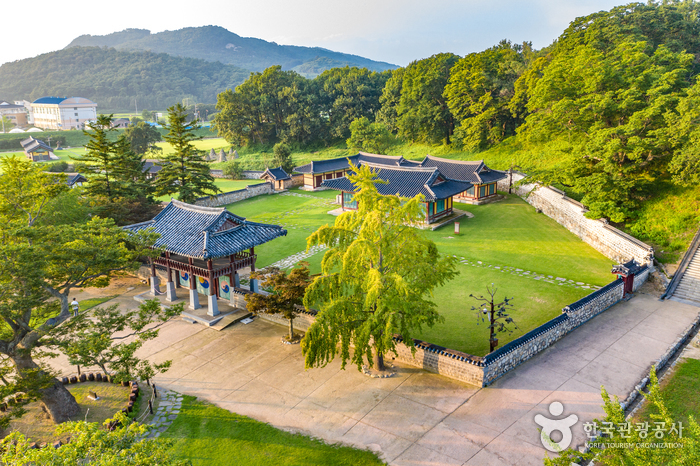
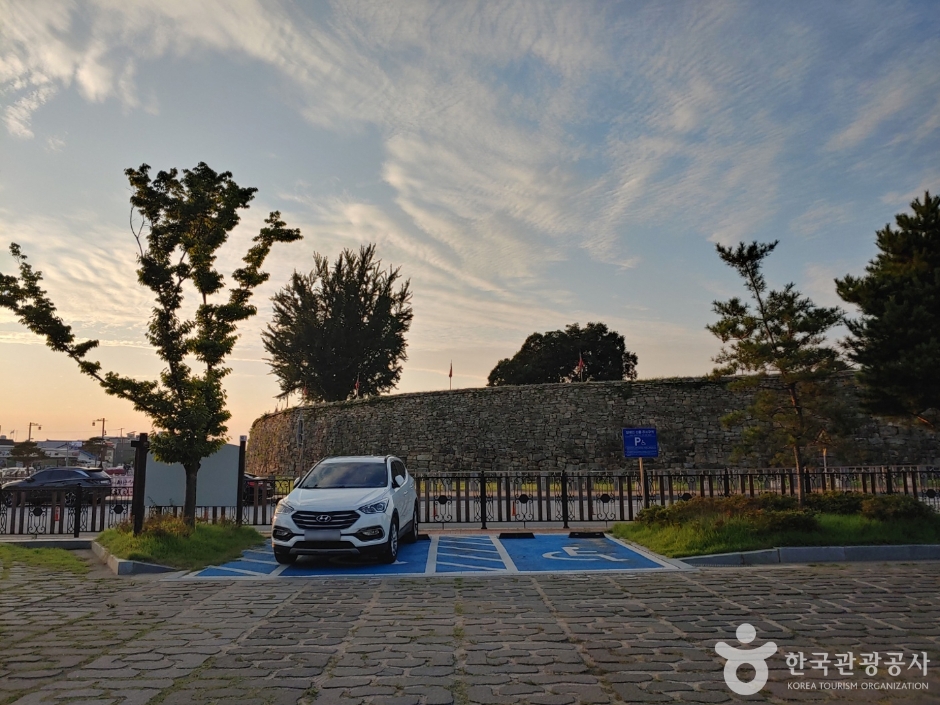
It is a representative eupseong (walled town) from the Joseon Dynasty. Eupseong are flatland castles built around an eup (town), with Haemi Eupseong being famous along with Gochang Eupseong and Nagan Eupseong. Haemi Eupseong is a stone fortress completed in 1491, the 22nd year of King Seongjong's reign. It has a circumference of about 1.8 km, a height of 5 m, and a total area of 196,381 m² (about 60,000 pyeong), featuring three gates: east, south, and west. Recently, restoration and purification projects have restored its original appearance and established it as a historic park. It is also famous as a martyrdom site for Catholics during the late Joseon period. During persecutions of Catholics, many believers from various parts of Chungcheong Province were captured, tortured, and killed at Haemi Eupseong, which had a government office. In particular, about 1,000 people were executed here during the 1866 persecution. In the plaza inside the fortress stands the site of a prison where Catholics arrested during the Daewon-gun regency were held, and an old pagoda tree under which they were brutally tortured by hanging. The 300-year-old tree at the prison entrance still bears iron wire marks from where victims’ hair was tied and hung. Just outside the fortress gate on the roadside is the Jari-gae-dol, where believers who resisted torture while hanging from the pagoda tree were beaten to death on stone slabs, making it a pilgrimage site for Catholics. Quince trees were once planted around the fortress walls to repel enemy troops, but now they are hardly seen.
优先展示路线结束后方便休息的住宿
注册成为会员,让更多人认识你的频道。
(成为会员后,在“我的页面”中设置 Instagram、YouTube、博客链接,我们会在你发表的每条评论旁一起展示。)
““住在弘大附近,晚上去了一圈咖啡馆,城市夜景和氛围都太完美了。””
以访客身份发表的评论,不会显示任何社交账号链接或个人资料卡片
分享一条关于这个地点的小贴士吧。
或者以访客身份快速留下一个评论。
请登录后再上传照片。
还没有任何评论,快来写下你的第一条感受吧!