
遇见壬辰倭乱不败神话郑起龙将军 in 庆尚北道 尚州市 · schedule 其他 · distance 86km · 5 stops · highlights 상주박물관, Nakdong River Gyeongcheondae, Jeonsabeol Royal Tomb

尚州是从釜山前往汉阳必经之地。这里有一条路线可以追寻被称为陆地上的李舜臣、拥有不败神话的郑起龙将军在壬辰倭乱期间收复尚州的足迹。让人深刻反思尚州悠久的忠义历史。
这条路线是单日行程示例。你可以直接保存,或扩展为 AI 行程。
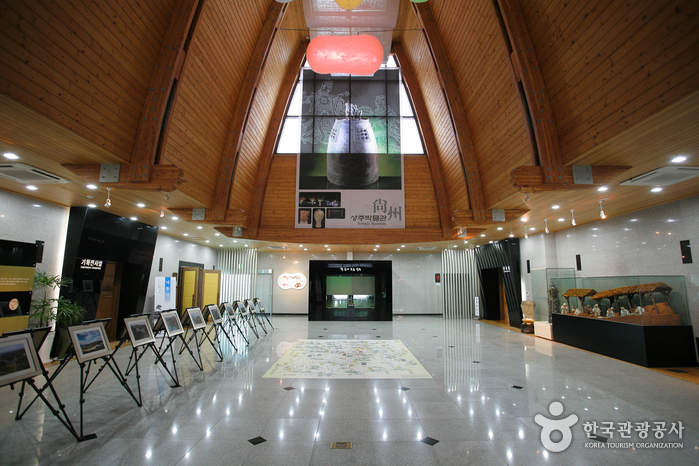
상주는 신라 시대 9주, 고려 시대 8목 중의 하나이었으며, 조선 시대에는 경상감영이 위치하였던 유서 깊은 고장으로, 조상의 슬기와 얼이 담긴 이 지역 문화유산을 체계적으로 보존하고자, 지난 2003년부터 박물관 건립을 시작하여 2007년 11월 2일에 문을 열었다. 상주박물관은 상설전시와 기획전시를 통하여 상주문화의 특징과 우수성을 한눈에 볼 수 있도록 하였으며, 야외에는 석조유물, 생태연못, 전통문양이 가미된 시계탑 등을 갖추어 다양한 볼거리와 휴식 공간을 제공하고 있다.
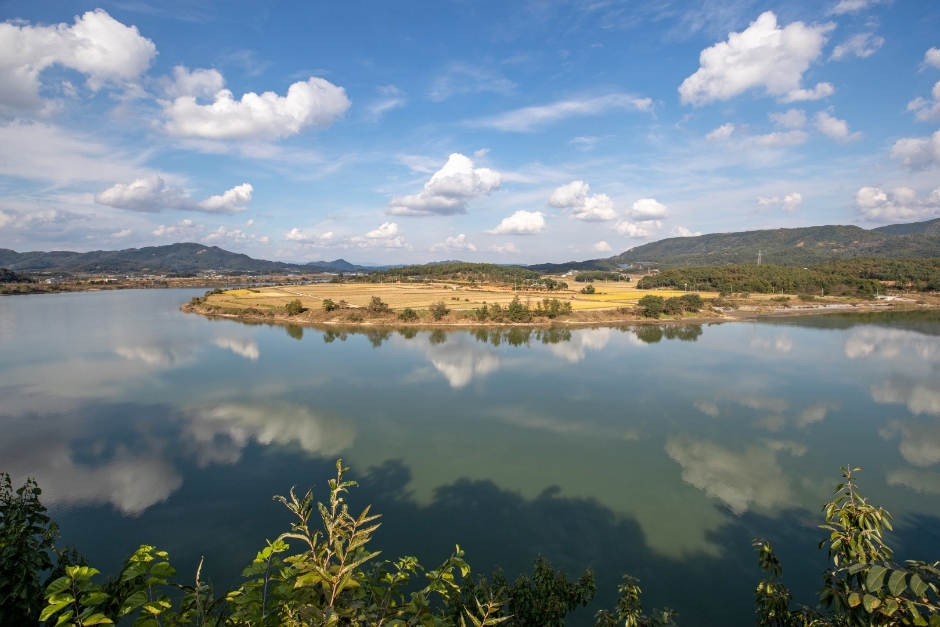
This site features a spectacular view made up of steep cliffs and old pine trees, known as Jacheondae because it was said the sky itself descended here. However, after Mr. Chae Deuk-gi inscribed the words ‘Daemyeong Cheonji (Great Bright Heaven and Earth) Sungjeong Ilwol (Revered Sun and Moon)’ it was renamed Gyeongcheondae. Muujeong, a pavilion built by the Joseon-era scholar Chae Deuk-gi from this region, is located on the cliff. Gyeongcheondae was also used for rain rituals and is associated with a legend where General Jeong Gi-ryong obtained a legendary dragon horse from the sky. Artifacts remain where Jeong carved the rock to use as a horse feeding trough. Known as a gathering place for scholars in Sangju, it was frequented by notable literati such as Kim Sang-heon, Lee Sik, and Lee Man-ryeo. From the observatory on Okjubong, visitors can view distant Juhulsan (1,106m), Hakgasan, the Nakdong River, and Baekhwasan all at once. Within Gyeongcheondae are an observatory, artificial waterfall, Gyeongcheondae Children's Land, and a camping site. Walking through the pine forest to the observatory offers a refreshing view of the Nakdong River’s waterway and surrounding scenery. The lush pine forest trail to the observatory is ideal for forest bathing. The cliff-top view overlooking the river is breathtaking, with winding Nakdong River and riverbank rock formations visible through twisted pine trees. The trail up to the observatory is shaded with pine forests, making it suitable as a forest bath site. Nearby are many cultural assets, including Jeonsabeol Royal Tomb, Jeongoryeong Gaya Royal Tomb, and Chung-uisa, designated as Gyeongsangbuk-do monuments. In autumn 2001, an outdoor marketplace set from the MBC drama was built on the southern riverbank near Gyeongcheondae, adding another attraction.
Jeonsabeol Royal Tomb (傳沙伐王陵) is a burial site located in Hwadal-ri, Sabulguk-myeon, Sangju-si, Gyeongsangbuk-do. It is situated northeast of the Sangju Hwadal-ri Three-story Stone Pagoda (Treasure) and is believed to be a royal tomb; however, there are no official historical records identifying who is buried here. According to the Shinjeung Dongguk Yeoji Seungnam and Sangju Gun Eupji, it is presumed to be the tomb of Park Eon-chang, the fifth son of the 54th king of Silla, King Gyeongmyeong. Park Eon-chang was appointed as the grand lord of Sabulju, later called Sabulguk, where he ruled independently for 11 years until the defeat by Gyeon Hwon's invasion, after which he was buried here. Next to the three-story stone pagoda stands a memorial stele belonging to the royal tomb, and to the northwest of the pagoda is a jesa house built by the Sangsan Park clan. The stone artifacts currently erected in front of the tomb are not ancient, with the memorial stele having been erected in 1954. In December 1981, Sangju-si expanded the tomb area and restored and purified the royal tomb, Yeongsagak, and the surrounding areas.
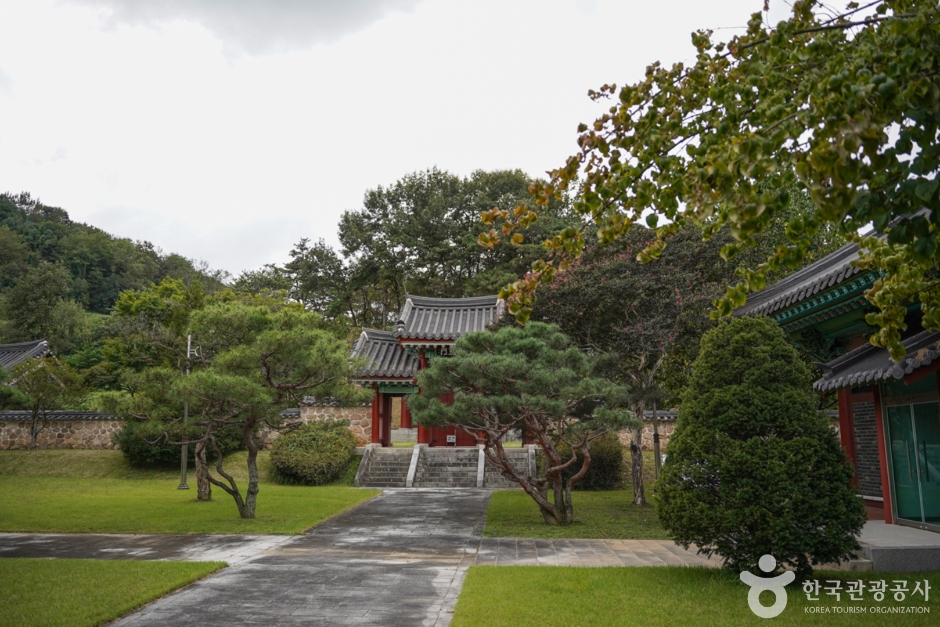
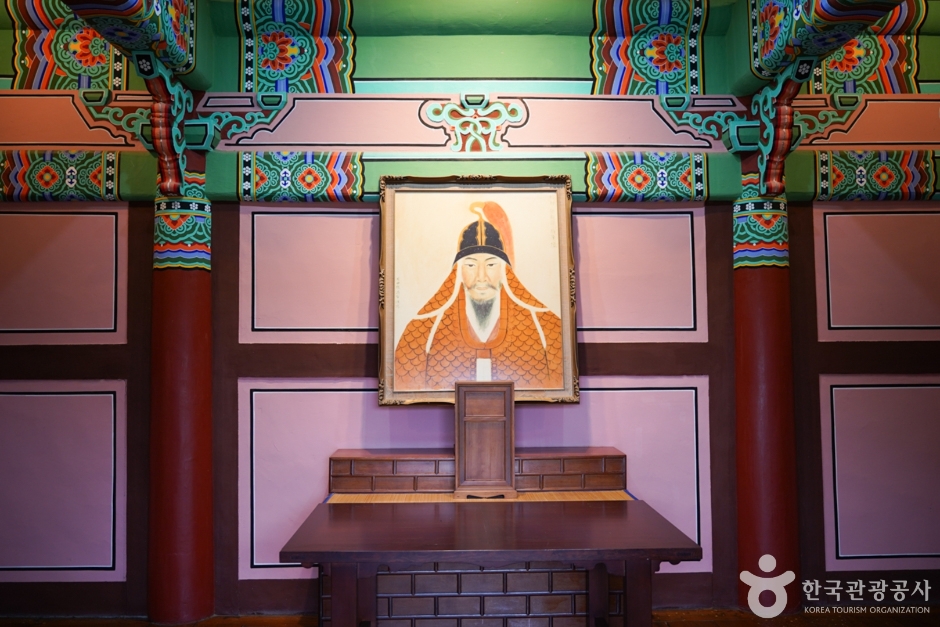
Chung-uisa is a shrine enshrining the memorial tablet of General Jeong Gi-ryong, a military commander during the reign of King Seonjo of Joseon, who achieved great feats as a master of land battles during the Japanese invasions of Korea (Imjin War). General Jeong was born in 1562 (Myeongjong 17) in Geumnam-myeon, Hadong-gun, Gyeongnam, was recommended to Sangju at age 20, passed the military examination at 25, and was renamed Gi-ryong by royal command. When the Imjin War broke out, he defeated many Japanese soldiers in more than 60 battles with a small army and reclaimed Sangju Castle after fierce fighting as Sangju Magistrate. He later served as Gyeongsang Udo Byeongma Jeoldosa, Gyeongsang-do Defense Commander, and 3-Do Tongjesa concurrently with Gyeongsang Udo Naval Commander until his death. His posthumous name is Chungui (Loyal and Resolute). The memorial stele and the general’s tomb were designated local cultural assets in 1974. In 1978, the original shrine of about 16.5㎡ was expanded to about 13,223㎡, including a shrine, exhibition hall, and administration office, in a patriotic historic site preservation project. The exhibition hall displays five treasure-level items (two royal commands, one royal decree, one memorial tablet, one jade belt) and wooden movable cultural properties (19 royal decrees and 58 woodblocks of Maehun Silgi). Every October, local residents reenact the scene of recapturing Sangju Castle during the Imjin War to promote and pass down the general’s patriotic spirit.
Sangju City was officially certified as a Slow City at the International Slow City Federation General Assembly in Poland in June 2011. It has excellent conditions for crop cultivation, including wide plains, adequate rainfall, high summer temperatures, and ample sunlight. The core areas of Sangju Slow City are designated as Hamchang-eup, Gonggeom-myeon, and Ian-myeon. Sangju is the old capital of Silla Seorabeol and Gaya Goryeong Gayagu, known for its developed agriculture and food culture, with 42% of households engaged in farming. It is also a representative bicycle city, home to the Sangju Bicycle Museum. Notable attractions include Gyeongcheondae, the number one scenic spot along the Nakdong River, Sangju Bicycle Museum, Gonggeomji, one of the three largest reservoirs from the Samhan period, and Hamchang’s famous silk town. Local specialties include Sangju dried persimmons, Sangju Hangwa, and Myungsilsanggam Korean beef. Sangju is known as the land of three whites—rice, silkworm cocoons, and dried persimmons—and is recognized for numerous health-related products, gaining attention in the oriental medicine bio-industry. At the Hamchang Myungju Museum, home to the Sangju Slow City Visitor Center, visitors can see the silk production process such as silkworm cocoon spinning and silk weaving, as well as related tools, with a slow mailbox that delivers letters a year later. Nearby, there is the Myungju Theme Park, Gyeongsangbuk-do Sericulture Insect Business's butterfly ecological garden, and a silkworm insect experience learning center. In Heukam-ri, Ian-myeon, lies Sangju Onggi Village where traditional jar-making techniques have been passed down for five generations. The Jisan-ri area offers hands-on experiences for actual farming or rural village life.
优先展示路线结束后方便休息的住宿
注册成为会员,让更多人认识你的频道。
(成为会员后,在“我的页面”中设置 Instagram、YouTube、博客链接,我们会在你发表的每条评论旁一起展示。)
““住在弘大附近,晚上去了一圈咖啡馆,城市夜景和氛围都太完美了。””
以访客身份发表的评论,不会显示任何社交账号链接或个人资料卡片
分享一条关于这个地点的小贴士吧。
或者以访客身份快速留下一个评论。
请登录后再上传照片。
还没有任何评论,快来写下你的第一条感受吧!





![Gyeongbuk Sangju Hamchang, Ian, Gonggeom-myeon [Slow City] 1](https://tong.visitkorea.or.kr/cms/resource/44/2026044_image2_1.jpg)
![Gyeongbuk Sangju Hamchang, Ian, Gonggeom-myeon [Slow City] 2](https://tong.visitkorea.or.kr/cms/resource/15/3042615_image2_1.jpg)
![Gyeongbuk Sangju Hamchang, Ian, Gonggeom-myeon [Slow City] 3](https://tong.visitkorea.or.kr/cms/resource/16/3042616_image2_1.jpg)
![Gyeongbuk Sangju Hamchang, Ian, Gonggeom-myeon [Slow City] 4](https://tong.visitkorea.or.kr/cms/resource/22/3042622_image2_1.jpg)
