寻找三陟的电影拍摄地 in 江原特别自治道 三陟市 · schedule 其他 · distance 35km · 7 stops · highlights Samcheok Beach, Beach Sculpture Park, Samcheok Cheokju Donghaebi and Pyeo…
江原道三陟是山脉、溪谷和大海和谐共存的地区。这里有许多优美的风景,因此成为电影《外出》和《春天过去了》的拍摄地。进入三陟的碧海、宁静的山寺和村庄,仿佛置身于电影场景中。沿着三陟的电影拍摄地,可以重新感受电影中的情感。
这条路线是单日行程示例。你可以直接保存,或扩展为 AI 行程。
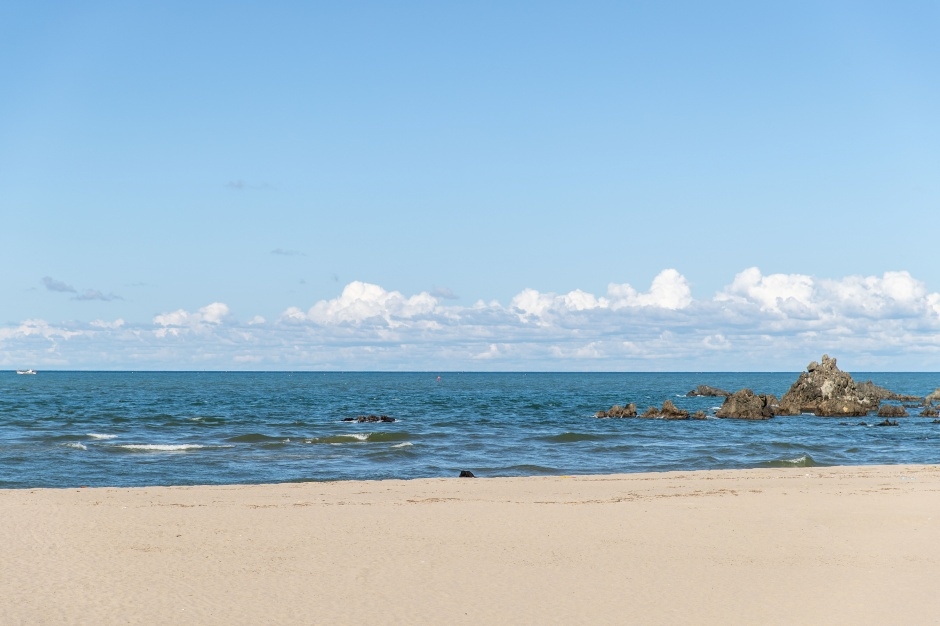
Samcheok Beach is located about 1.4 km from downtown Samcheok and is the largest beach in the area, featuring a spacious white sand shore 1.2 km long and 100 m wide. The beach is surrounded by dense pine forests, with clean sand and shallow waters suitable for swimming for people of all ages. Various auxiliary and convenience facilities are relatively well-equipped. Additionally, neighborhood facilities within the Tema Town are complete, and fresh raw fish sashimi is available. Each year, the beach attracts about 500,000 visitors as a major summer resort, hosting diverse events such as the "Barehand Flounder Catching Contest," drawing significant popularity among tourists.
Beach Sculpture Park is one of the main attractions along Saecheonnyun Coastal Road. It is popular as a place for tourists to visit and enjoy sculptures while relaxing and cooling off, not only in summer but throughout all four seasons. Climbing up through the dense pine forest leads to an octagonal pavilion where visitors can rest. From the pavilion, there is a panoramic view of the blue sea and a clear view of Saecheonnyun Road built on the coastal rock formations. A small public square near the coast often hosts performances. Particularly, the underground space called 'Cafe Marine Deck' is famous as the most beautiful date spot where you can enjoy tea or beverages closest to the sea.
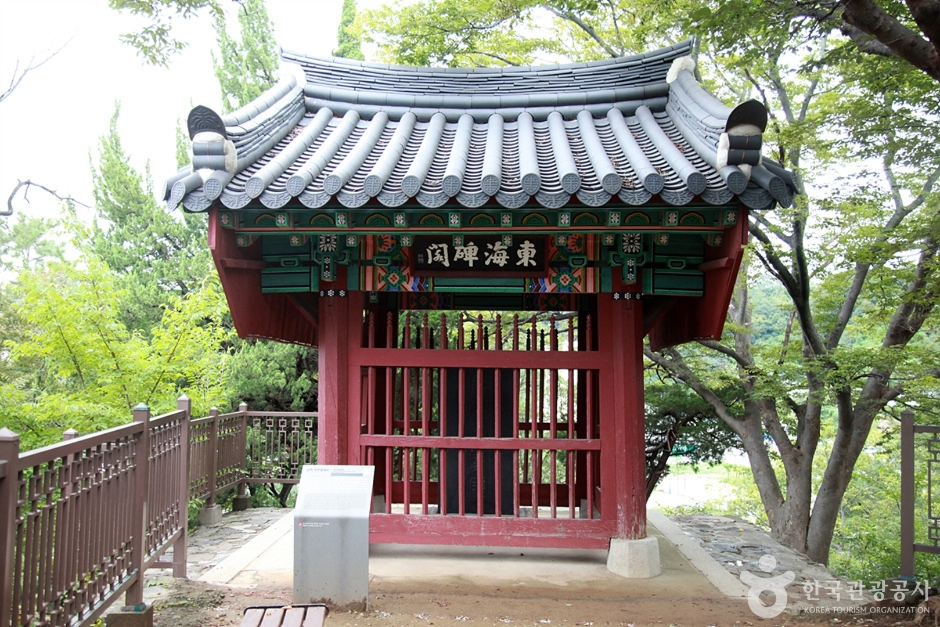
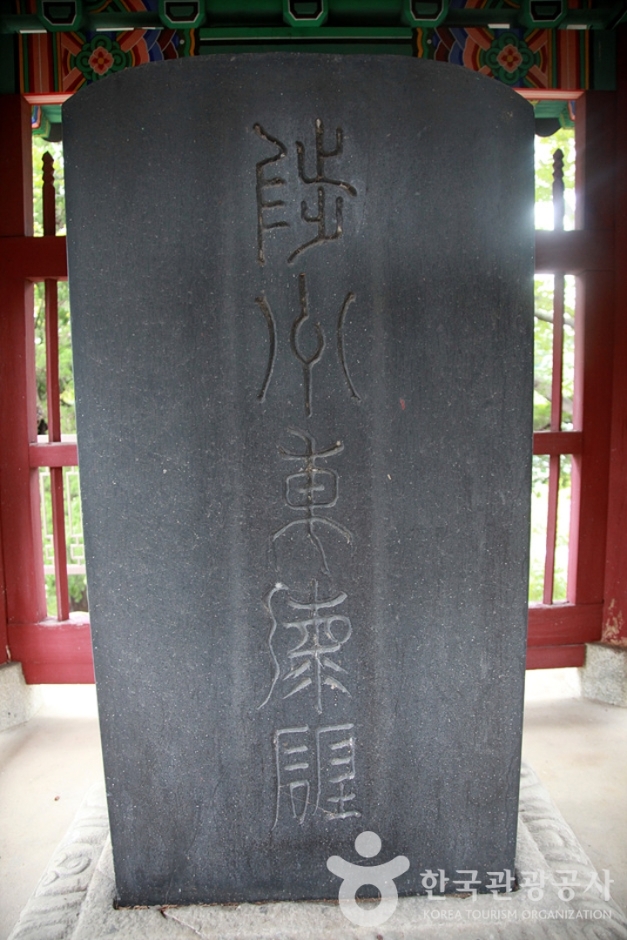
These are two stele related to Heo Mok (1595~1682), who served as Samcheok Governor in the 2nd year of King Hyeonjong of Joseon (1661). Heo Mok developed Neo-Confucianism, devoted himself to the study of various schools and classics, and was especially outstanding in etiquette studies. Cheokju Donghaebi is located on Yukhyang Mountain in Jeongsang-ri. Originally erected on Mallido in front of Jeongnarin, it was moved here in the 36th year of King Sukjong (1710) after the stele was damaged. At that time, strong waves and floods severely damaged the village. Feeling sorry for this, Heo Mok personally wrote an enigmatic inscription and carved it in a unique script on this stele. Remarkably, the sea calmed and the villagers no longer suffered damage. Called Toechoebi for its mysterious text and protective power, it is also famous for Heo Mok’s peculiar seal script style, which earned him the title of the foremost figure of the East in seal script (篆書體). Pyeongsu Tochanbi is located a short distance from Cheokju Donghaebi and was erected with the same meaning. Part of the seal script stele written by Wu Ze of Mount Heng in China, which Heo Mok had engraved on a wooden block and kept, was carved into stone exactly by royal order in the 8th year of King Gwangmu of Emperor Gojong (1904) by the royal envoy Kang Hong-dae and Samcheok magistrate Jeong Un-seok. The front displays the inscription 'Daehan Pyeongsu Tochanbi' in standard script, the side records the relocation of the stele in 1904, and the back has a 48-character inscription in seal script.
This restaurant is located a bit away from the downtown area, making it a good place to enjoy a meal while soaking in rural scenery and a countryside atmosphere. It is an old Makguksu specialty restaurant in Samcheok, with the main dishes being makguksu and suyuk. The makguksu, served with buckwheat noodles topped with cucumber and pickled radish garnishes, is generally praised for its dark color and chewy texture, resulting in a clean taste. Also, thinly sliced suyuk wrapped in baek kimchi is said to have a chewy and savory texture without being greasy, which many find delicious. It is popular among locals, and as word has spread to tourists, waiting times are often long. It is recommended to call ahead to check the waiting situation before visiting. Parking is convenient with a lot in front of the restaurant, and if full, nearby public parking lots can be used.
Jukseoru (National Treasure), located on the cliff of the Osipcheon River, is a representative pavilion of Korea. It was rebuilt on the old site by Kim Hyoson, the magistrate of Samcheok, in the 3rd year of King Taejong of Joseon (1403). Since then, it has been repaired or painted multiple times, with some expansions leading to its present form. The lower floor consists of 17 pillars; among them, 9 are set on natural stones, and the remaining 8 are placed on stone foundations (seokcho, carved base stones), combining architectural significance and beauty. The upper floor has 20 pillars, and the roof follows the traditional octagonal hip-and-gable style.
It is a model beach located about 7 km from Samcheok downtown and belongs to the Maengbang tourist area. The main road infrastructure is well established, and tourist development construction is underway. It is already well known nationwide for its image as a pristine beach. During the open season, various beach events are held, including the Myeongsasipli Running Competition and barehanded trout catching, which increase the popularity among vacationers. In addition, a nearby golf practice range serves as a hub for sports activities.
Samcheok Sinheungsa was originally established in the first year of King Minae of Silla (838) by Beom-il Guksa under the name Jihungsa in Jihung-ri, Bukpyeong-eup (currently located in Donghae-si). In the 15th year of King Hyeonjong (1674), it was relocated to its current site and renamed Gwangunsa, and in the 21st year of King Sunjo (1821), Magistrate Lee Heon-gyu renamed it Sinheungsa. It was restored in July of the 14th year of King Cheoljong (1863). On the premises are cultural heritage assets called Seolseondang and Simgeomdang. Seolseondang, built in Hyeonjong’s 15th year, was a place for teaching Buddhist disciples, and Simgeomdang, built in the 47th year of King Yeongjo, was the residence of the head monk, described as the house seeking the sword of wisdom. It is also called Jinyeonggak because portraits of venerable monks were kept there. Both buildings are constructed simply and plainly without dancheong painting. They are designated as Cultural Heritage Material No. 108. Sinheungsa is secluded and tranquil, having been used as a filming location for the movie "Spring Days Are Gone" (2001), where Seolseondang was the place the two main characters stayed. There are designated protected trees, including a Crape myrtle and pine, marked as Samcheok-51. Although not large in scale, Sinheungsa offers a quiet and serene atmosphere harmonizing with lush nature. Centered on the Daeungjeon, the temple buildings of Sinheungsa spread out in full view, with the pine forest behind, a lawn courtyard, and a stone path creating a beautiful harmony. About 15 minutes by car from Sinheungsa are a bamboo forest and Maengbang Beach, good spots to visit together.
优先展示路线结束后方便休息的住宿
注册成为会员,让更多人认识你的频道。
(成为会员后,在“我的页面”中设置 Instagram、YouTube、博客链接,我们会在你发表的每条评论旁一起展示。)
““住在弘大附近,晚上去了一圈咖啡馆,城市夜景和氛围都太完美了。””
以访客身份发表的评论,不会显示任何社交账号链接或个人资料卡片
分享一条关于这个地点的小贴士吧。
或者以访客身份快速留下一个评论。
请登录后再上传照片。
还没有任何评论,快来写下你的第一条感受吧!