遇见像水一样倒出的智慧 in 京畿道 乌山市 · schedule 其他 · distance 6km · 2 stops · highlights Osan Doksanseong and Sema Daiji, Mulhyanggi Arboretum

独山城是壬辰倭乱时期权律将军将米倒出,伪装成水源丰富的地方,使倭军解除包围并趁机击退敌人的故事传说之地。这里还可以依次参观宝寂寺和独山城森林浴场。水香树木园以水、树木和人类的相遇为主题,位于市中心,是森林与城市环境融合良好的树木园。
这条路线是单日行程示例。你可以直接保存,或扩展为 AI 行程。
Doksanseong is designated as a historic site, with a total length of 1,100m and an inner fortress of 350m, making it a compact mountain fortress. The exact date of Doksanseong's initial construction is unclear, but its strategic location between Yongin and Yangji, with Goseong and Namhansanseong forming a defensive line, shows its importance. Historical records state it was originally a Baekje fortress and remained a military stronghold during the Silla unification period and the Goryeo era. Doksan was formerly called Seokdaesan or Hyangrobong, named Doksanseong in the Joseon period, but after General Kwon Yul's clever war strategy during the Imjin War, it is now also called 'Semasan' or 'Sema-dae.' At its peak is a pavilion featuring a plaque inscribed by President Rhee Syngman. Although a critical military position, the fortress suffered from a lack of spring water. In 1593, after Ming forces recaptured Pyongyang, General Kwon Yul, commander of Jeollado’s military, camped here with 20,000 soldiers to retake Seoul alongside Ming troops, leading to the famous Battle of Doksanseong. The Japanese army, led by Ukida Hideie, assumed the barren hill lacked water and sent scouts carrying a load of water up the mountain. General Kwon Yul saw through this and had a white horse brought up, pretending to wash it with rice water. Mistaking this as a sign of abundant water, the Japanese troops retreated. This story highlights Kwon Yul's wisdom overcoming the water shortage. The fortress was restored in 1957 by the 'Sema-dae Reconstruction Committee,' composed of civilians and officials.
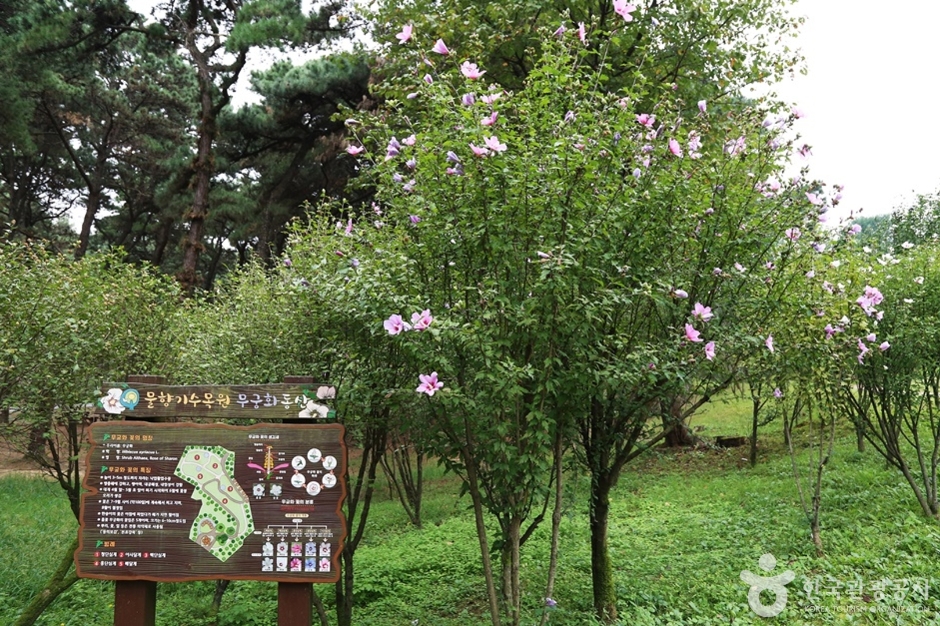
Mulhyanggi Arboretum, located in front of Osan University Station on Line 1, is one of Gyeonggi-do's representative arboretums visited by over 350,000 people annually. Its name originates from the local name Sucheong-dong [水淸洞], meaning a place with clear flowing water. Established as a Gyeonggi-do provincial arboretum with the theme of 'The Meeting of Water, Trees, and Humans,' it was developed from 2000 to 2005 and opened in May 2006. Covering an area of 34 hectares in Osan city, the arboretum includes the Mulhyanggi Forest Exhibition Hall, Water Drop Greenhouse, Subtropical Plant Garden, Bonsai Garden, Mugunghwa Hill, and a total of 24 themed gardens containing around 1,930 plant species. Facilities such as a visitor center, plant library, observatory, lawn plaza, forest rest area, and nursing room are available. The arboretum is conveniently close to the subway station, features gentle slopes, ample shade and seating areas, and has an accessible trail for people with disabilities, children, and pregnant women for comfortable walking.
优先展示路线结束后方便休息的住宿
注册成为会员,让更多人认识你的频道。
(成为会员后,在“我的页面”中设置 Instagram、YouTube、博客链接,我们会在你发表的每条评论旁一起展示。)
““住在弘大附近,晚上去了一圈咖啡馆,城市夜景和氛围都太完美了。””
以访客身份发表的评论,不会显示任何社交账号链接或个人资料卡片
分享一条关于这个地点的小贴士吧。
或者以访客身份快速留下一个评论。
请登录后再上传照片。
还没有任何评论,快来写下你的第一条感受吧!