物美海岸道路,眺望大海疾驰 in 庆尚南道 南海郡 · schedule 其他 · distance 41.6km · 6 stops · highlights Namhae German Village, Horticultural Art Village, 해사랑전복마을

穿过三千浦大桥进入南海后,从物件里到美佐里的物美海岸道路沿线,碧海如宝石般闪耀。沿着智足海峡展开的竹防渔法区被称为竹防渔场,是韩国最高产的凤尾鱼产地。沿物美海岸道路有德国村、园艺艺术村和物件里防潮渔林等多个海岸景点。
这条路线是单日行程示例。你可以直接保存,或扩展为 AI 行程。
Namhae German Village is a village where Korean miners and nurses who worked in Germany returned and settled after retirement. You can see traditional German-style houses and German expatriates live here. About 30 households offer homestay accommodations as a side business. Each home features unique interior designs and services, attracting many tourists. Right in front is the refreshing sea of Bangjo Fish Grove and Mulmi Coastal Road, the most beautiful coastal drive course on the South Coast.
Horticultural Art Village HOUSE N GARDEN was created by actors including Park Won-sook and horticulturists who shared the same vision, fulfilling their lifelong dream of making a beautiful garden and charming village. They built the house and cultivated the garden hoping that visitors would find the home and garden they had dreamed of. After years of effort, personal gardens themed with fragrance, palm trees, sculpture stone arrangements, topiary, vegetables, windmills, spas, flower roofs, and more, along with beautiful paths, ponds, observation decks, octagonal pavilions, fountains, flower paths, flower fences, and greenhouses have been completed. Although it needs a little more time to fully mature, it is presented as a green life proposal for modern people. Additionally, it is well equipped with the latest facilities such as a screening room, performance hall, exhibition hall, experience room, café, and guest house for convenience.
남해 풍경을 감상하면서 해안도로를 달리다 보면 끝자락인 미조항 조금 못 미쳐 해사랑전복마을이 나온다. 식당 문을 열고 들어서니 사면의 유리창 사이로 따사로운 햇살이 비치고 그림을 그려놓은 듯 아기자기한 풍경이 한눈에 들어온다. 우리나라 최초의 레스토랑 평가서 '블루리본 서베이'에서 블루리본 하나를 취득한 소문난 맛 집이기도 하다. 바깥주인은 50m 떨어진 곳에서 사랑해펜션을 운영 중이다.
Sangju Silver Sand Beach, with Geumsan's splendid scenery as a long folding screen, is a beach with a wide white sandy shore of silver fine sand surrounded by dense pine forests, preserving one of the few beautiful natural landscapes in the country. Located 21 km south of Namhae-eup, this place has sand with a pleasant barefoot touch, attracting up to one million visitors every summer. The 2 km crescent-shaped white sandy beach has a gentle slope and warm water temperature, making it an ideal summer retreat for families. Additionally, a Summer Festival is held in summer and a New Year's Sunrise Festival in winter. The area also features a traditional vegetable hot dog unique to this location, a popular Instagrammable cafe, and restaurants run by locals, offering abundant sights and activities.
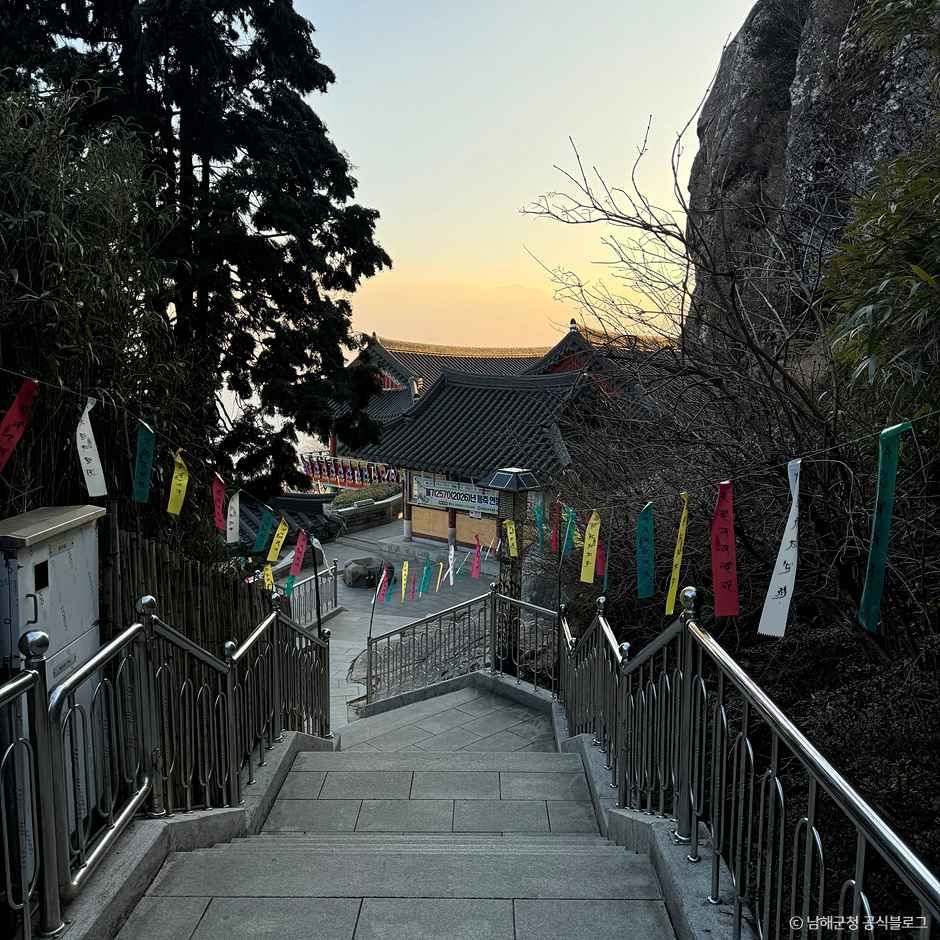
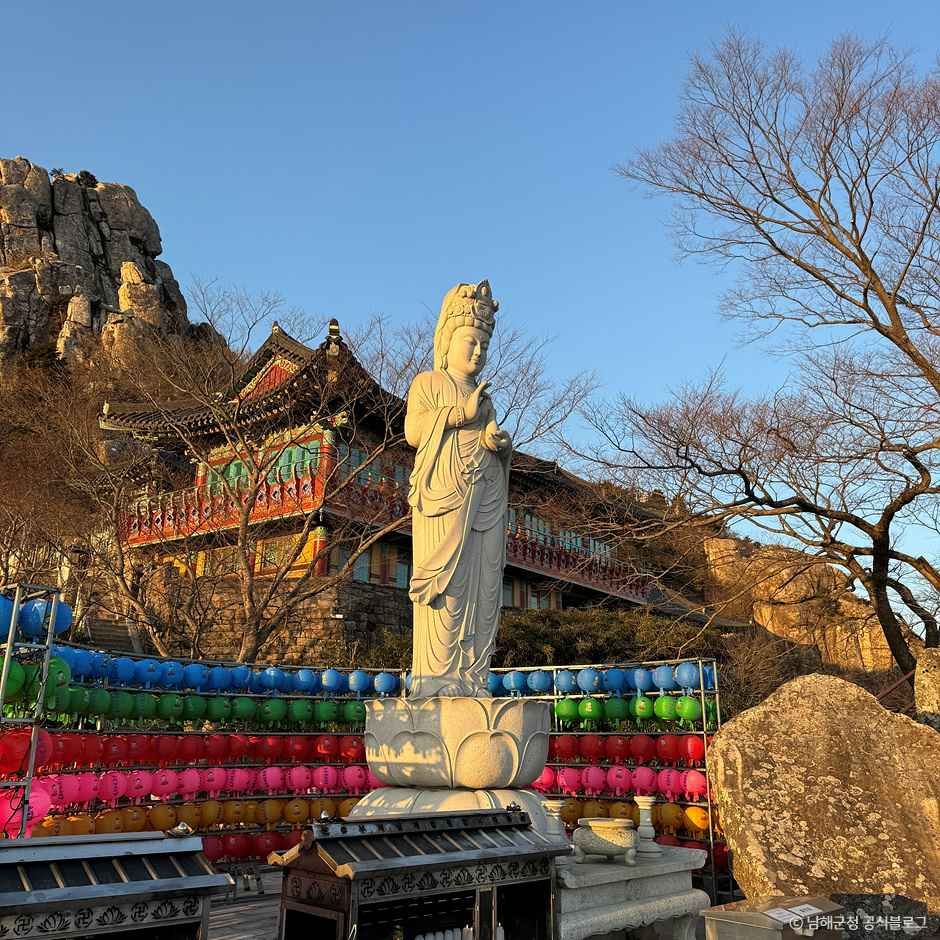
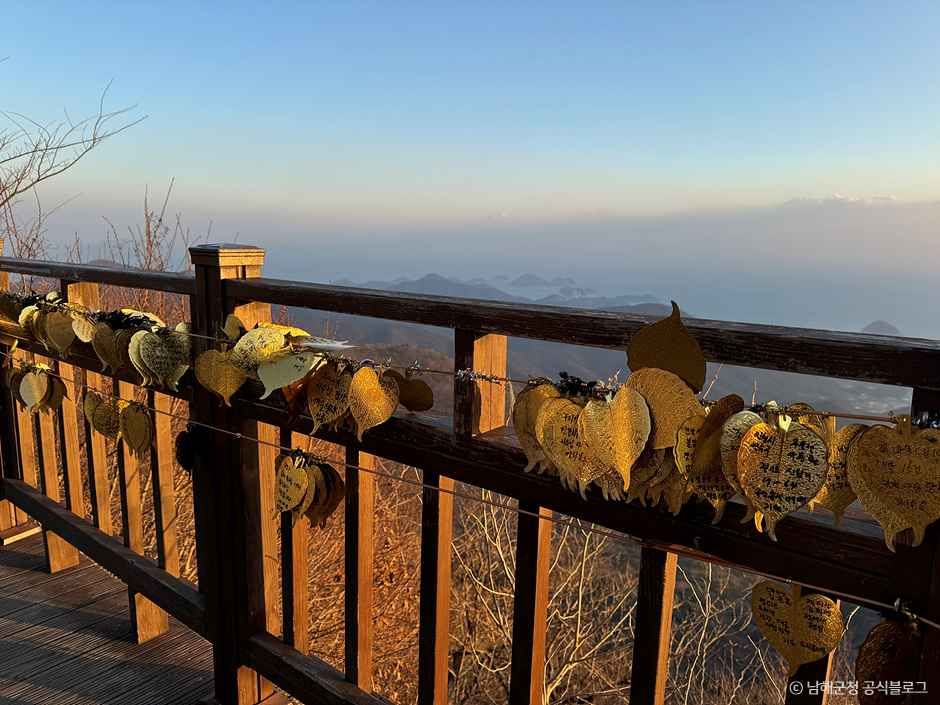
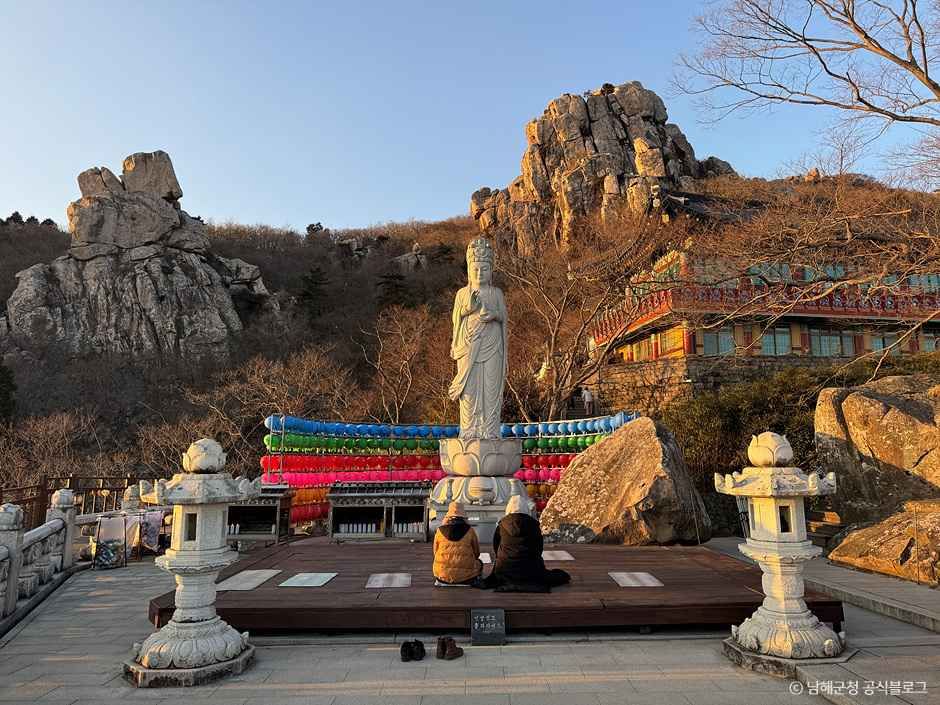
In 683, Monk Wonhyo built a small hermitage here and meditated, encountering Avalokitesvara Bodhisattva, after which the mountain was named Bogwangsan and the hermitage Bogwangsa. Later, Yi Seong-gye prayed here for one hundred days and founded the Joseon Dynasty; in gratitude, King Hyeonjong in 1660 designated this temple as a royal sanctuary, renaming the mountain Geumsan and the temple Boriam. Situated at the summit of Geumsan, Boriam offers beautiful views of the mountain’s unique rock formations and the lush Namhae scenery. Within the temple grounds, the Zaseondae rock, where Monk Wonhyo meditated, attracts attention, and nearby the Ssanghongmun rock cave is known as the best of Geumsan's 38 scenic spots. Along with Naksansa Hongyeonam in Yangyang, Gangwon-do, and Bomunsa in Ganghwa-do, it is considered one of Korea’s three major prayer sites, drawing continuous visits from worshippers. Known as the 'rock zoo' for its numerous rocks shaped like animals, Geumsan offers a harmonious view of the blue sea and green fields. At the peak of Geumsan in Hallyeohaesang National Park, the famous Boriam, founded by Monk Wonhyo and one of the top three prayer destinations in Korea, is located. Geumsan holds Buddhist legends tied to each rock, and Boriam is surrounded by striking rock formations such as Daejangbong, Hyeongriam, Hwaeombong, Ilwolbong, and Samburam. The trail from Sangju village entrance to Boriam features dense forest and Namhae sea views, making it an excellent hiking course. Watching the sunrise here after an overnight stay is breathtaking and inspires a sense of cosmic harmony. By car, roads pass through Aenggang Pass, Deungmyeon Beoksigol, and Bokgok Reservoir, leading up to Geumsan’s 8th ridge.
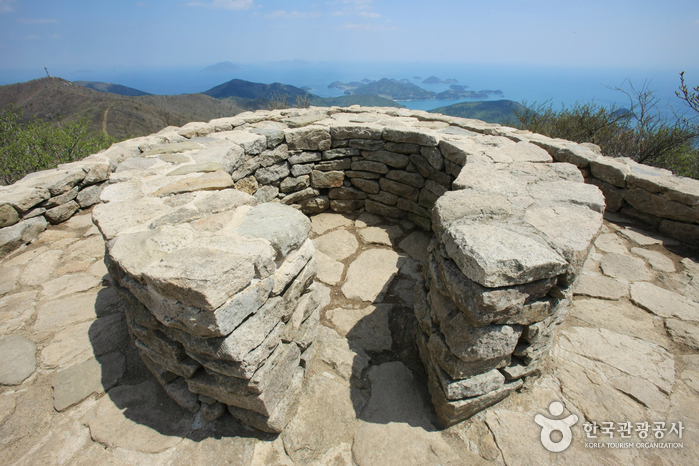
The beacon mound (Bongsu, 俸燧) was a traditional communication system that transmitted urgent messages using torches at night and smoke during the day from high mountains. Originally, this system was used for military purposes to warn of enemy invasions. Records show that the system appeared in Korea during the mid-Goryeo period (12th-13th century), but it is believed to have been used since before the Three Kingdoms era. The beacon system was systematically organized from the late Goryeo period and early Joseon period, when pirate invasions were severe. The beacon mounds were installed on mountaintops with clear visibility, spaced at fixed intervals. Normally, one flame or smoke signal was raised; two signals meant enemies appeared at sea, three signals meant enemies approached the shore, four signals indicated a sea battle, and five signals meant enemies had landed on land. This Geumsan Beacon Mound was established during King Uijong's reign (1147-1170) in the Goryeo period and used until the Joseon era. It was the southernmost beacon mound on the second beacon route (of five main routes during Joseon), connecting Dongnae with Seoul. Signals from here were relayed via Daebangsan in Changseon to Sacheon, Jinju, and then to Seoul. The Geumsan Beacon Mound is located at 681m above sea level on Geumsan mountain, with a square shape and a circumference of 26m and a height of 4.5m.
优先展示路线结束后方便休息的住宿
注册成为会员,让更多人认识你的频道。
(成为会员后,在“我的页面”中设置 Instagram、YouTube、博客链接,我们会在你发表的每条评论旁一起展示。)
““住在弘大附近,晚上去了一圈咖啡馆,城市夜景和氛围都太完美了。””
以访客身份发表的评论,不会显示任何社交账号链接或个人资料卡片
分享一条关于这个地点的小贴士吧。
或者以访客身份快速留下一个评论。
请登录后再上传照片。
还没有任何评论,快来写下你的第一条感受吧!