
古朴的文庆寺庙探访之旅 in 庆尚北道 闻庆市 · schedule 其他 · distance 41.2km · 4 stops · highlights Daeseungsa, Jinnam Maeuntang, 문경 철로자전거(레일바이크)
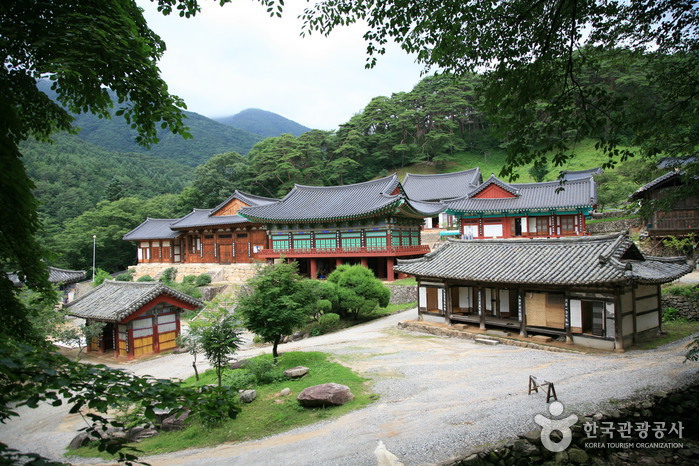
千年古刹大乘寺以大雄殿石基上的莲花和檐下的鱼、龙、花窗格闻名。斑驳的丹青展现出岁月的痕迹,体现了真正的韩国之美。乘坐20年前用于运煤的铁轨上的轨道自行车,体验环游文庆的乐趣。
这条路线是单日行程示例。你可以直接保存,或扩展为 AI 行程。
Daeseungsa is a branch temple of Jikjisa, the head temple of the 8th district of the Jogye Order of Korean Buddhism. It was renovated by Uihyeon and Jongsu in 1644 (Injo 22) and 1722 (Gyeongjong 2), and rebuilt by Gudam in 1831 (Sunjong 31). In 1922, a great fire destroyed the temple, but Uiun and Deoksan restored it. In 1956, another fire occurred, leaving only Myeongbujeon and Geungnakjeon. It was reconstructed in 1960 by Namin Daehyu and others. According to the Samgukyusa Bulsanjjo, the four-faced stone Buddha statues on the ridge of Sabulsan were consecrated in 587 (Silla Jinpyeong-wang 9) when a large silk cloth bag fell on Godeokbong, revealing the statues inside. The king visited, worshipped, built the temple, and named it Daeseungsa, assigning a wandering monk to offer prayers to the statues, with a record stating that lotus flowers bloomed on his grave after his death. The mountain was also called Sabulsan or Yeokdeoksan afterward. Daeseungsa houses the National Treasure Daeseungsa Woodblock Triple-Panel Painting (Amitabha Buddha Preaching), the Golden Avatamsaka Sutra in 7 volumes from Amitabha Temple, and a relic of the Buddha. Subsidiary hermitages include Yunpilam, Myojjeokam, Sangjeongam, Gwaneumam, and Munsuam. It is famous as the place where the Geumgangbanya Gyeong Oga Haeseolui (1415) was produced. Currently, Daeseungsa operates a temple stay at an altitude of 600 meters, where participants experience daily lives with monks, including tea ceremony, Buddhist services, visits to Yunpilam and Myojjeokam, walking around the four-faced stone Buddha, and rest. The program is designed for participants to voluntarily choose and engage to refresh their tired body and mind.
Jinnam Maeuntang has been operated since 1966, when the founder's mother (Lee Bong-seon) opened the restaurant, followed by the youngest daughter (Kim Young-hee) as the second generation, and now the third generation continues the legacy. It cooks natural freshwater spicy fish stew using a family recipe passed down. At that time, with large coal mines such as Daeseong, Bongmyeong, and Eunseong nearby, the dish was popular among the executives and workers. Although the mines have since closed, customers who cannot forget the taste still visit, and many travelers passing through the Jungbu Naeryuk Expressway come to Jinnam Gyoban, the premier scenic spot of Gyeongbuk Palgyeong, to enjoy the stew. Currently, it boasts a deep and rich flavor by combining freshwater fish such as catfish, mixed fish, and Korean snakehead caught directly from the Yeong River, homemade red chili paste, and herbal broth, known for relieving body swelling and promoting energy flow. At the terrace seats, diners can enjoy views of Gomosan Fortress, Jinnam Bridge, and Baekhwasan Mountain.
20여 년 전 석탄을 실어 나르던 철로가 이젠 관광 자원으로 변모하여 전국 최초로 철로 위를 달리는 ‘문경 철로 자전거’로 태어났다. 문경이 광산업으로 활발했던 시절에 석탄을 실어 나르던 철로를 이용하여 관광 자원으로 개발한 것으로 우리나라 최초의 철로자전거이다. 문경 팔경 중 제1경으로 꼽히는 진남교반 주변에 있으며, 영강변을 따라 이어지는 철로 위에서 주변의 산세와 풍경을 함께 감상할 수 있어 더욱 운치를 느낄 수 있다.
Gomosan Fortress, located on Ojeongsan in Sinhyeon-ri, Maseong-myeon, Mungyeong-si, is a stone fortress built for military defense during the Silla period of the Three Kingdoms era. This site witnessed fierce battles during the Three Kingdoms period and reappeared in history through the Goryeo Dynasty, the late Joseon volunteer army wars, and the Korean War. Climbing the mountain fortress along the ramparts offers expansive views and a famous spot to see the Jinnamgyoban at a glance. From Jinnammun, following the trail along the fortress walls leads to a thousand-year-old trail called Tokkibiri (a narrow path made of wood connecting cliff-blocked paths). Recently, nightscape lighting and photo zones have been added around the fortress, allowing visitors to capture unique images. The Yeongnam-daero Old Road, centered on Gomosan Fortress and Tokkibiri (a dialect term for Tokkibiri), is a tourist spot that conveys the wishes and determination of scholars who crossed the bluff above Jinnamgyoban to see the past. Gomosan Fortress is a po-gok-style (enclosed valley) mountain fortress on Gomosan (姑母山) in Sinhyeon-ri, Maseong-myeon, Mungyeong-si, with a total length of 1,646m, combining the main fortress (1,256m) and the subsidiary fortress (390m). The west wall was constructed to defend against intruders from all directions. The construction date is estimated after 156 AD, around the late 2nd century. The west and south sides are surrounded by the Yungang River, and the east side features a rugged mountain ridge extending from Jojungsan (810m). The western side uses a single-wall construction (片築式) using natural cliffs outside, while the other three sides use a double-wall style (夾築式) built inside and outside according to the terrain. ◎ Travel information to experience the charm of Hallyu – The drama uses Gomosan Fortress as the location where Hong Baektal (Mu-yeong) recalls childhood days with his older brother. Young Mu-yeong is carried on his brother’s back up steep stairs, which is exactly at Gomosan Fortress. The fortress is a large Silla stone fortress measuring approximately 1,300m in circumference. Climbing along the fortress walls awaits you with majestic and open views.
优先展示路线结束后方便休息的住宿
注册成为会员,让更多人认识你的频道。
(成为会员后,在“我的页面”中设置 Instagram、YouTube、博客链接,我们会在你发表的每条评论旁一起展示。)
““住在弘大附近,晚上去了一圈咖啡馆,城市夜景和氛围都太完美了。””
以访客身份发表的评论,不会显示任何社交账号链接或个人资料卡片
分享一条关于这个地点的小贴士吧。
或者以访客身份快速留下一个评论。
请登录后再上传照片。
还没有任何评论,快来写下你的第一条感受吧!


