
细致游览全州韩屋村及周边名胜 in 全北特别自治道 全州市 · schedule 其他 · distance 약 12km · 7 stops · highlights Jeonju Pungpaejigwan, Gajok Hoegwan, Jeonju Jeondong Catholic Church
全州韩屋村由黑瓦和石墙的韩屋组成,是一个可以体验传统文化和历史的空间。这里汇集了韩屋村内必访的名胜。沿着经过庆基殿和全东圣堂,通往五目台的路上,各个探访点依次出现。想品尝代表全州的拌饭,需要前往设有全州客舍的市中心。
这条路线是单日行程示例。你可以直接保存,或扩展为 AI 行程。
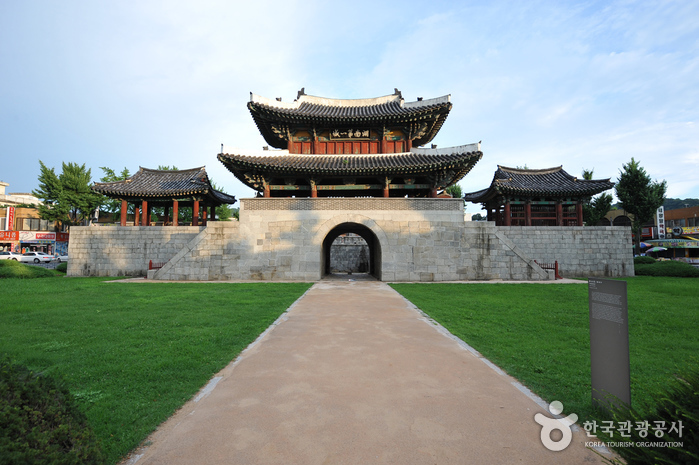
Jeonju Pungpaejigwan is a Joseon Dynasty lodging designated as Treasure No. 583, where government officials and envoys visiting Jeonju were hosted and accommodated. During the Joseon period, rituals were held facing the royal palace on the first and fifteenth days of each lunar month, and celebratory ceremonies were conducted on national occasions. The building consists of Jugwan, where the royal symbol Jeonpae was enshrined, and Ikheon, used as lodging. The large signboard reading Pungpaejigwan under the eaves of Jugwan reflects the status of Jeonju Guksa. Pungpae originates from the hometown of Liu Bang, founder of the Han Dynasty, referring to the founder's native place. Jeonju is called Pungpaejihyang as it is the hometown of Taejo Yi Seong-gye, founder of Joseon, and Jeonju Guksa is called Pungpaejigwan. Today, it serves as a relaxing resting place with a long and spacious wooden floor and has been a gathering spot for Jeonju citizens for decades. Nearby are notable attractions such as Jeondong Cathedral, Omokdae, Jaman Mural Village, and Hanok Village within 10 minutes, and the nearby Gaekridan-gil street is popular for its diverse restaurants and cafes.
Gajok Hoegwan is a bibimbap specialty restaurant that opened in 1973 and has been run by three generations. The first-generation owner Kim Nyeon-im is a traditional food master 39 designated by the Ministry of Agriculture, Food and Rural Affairs and a bibimbap skill holder of Jeollabuk-do intangible cultural heritage No. 39. The menu includes Jeonju bibimbap, yukhoe bibimbap, and the Gajok Hoegwan set meal, which must be reserved a day in advance. When you order bibimbap, a wooden tray with neatly arranged basic side dishes is served. More than 10 side dishes and a stone pot steamed egg dish make a generous table. Jeonju bibimbap is made from organic agricultural products produced in the Jeonbuk area, and the rice cooked with beef bone broth is coated so it doesn't harden or become stiff even when cooled. It is a place where you can enjoy a clean and light taste while also taking care of your health.
Jeonju Jeondong Catholic Church was built on the site where Catholic martyrs of the Joseon Dynasty were executed. This building was constructed outside Pungnammun Gate in Jeondong, Jeonju-si, Jeollabuk-do, where Catholics were sentenced to death. Because Jeonju had the Jeolla Provincial Office in the Joseon period, Jeondong naturally became one of the martyrdom sites in Catholic history. The first martyrs, Yoon Ji-chung (Paul) and Gwon Sang-yeon (James), were executed in 1791 during the 15th year of King Jeongjo's reign; in 1801, the first apostles of Honam, Yoo Hang-geum (Augustine) and Yoon Ji-heon (Francisco), were persecuted and executed here. During the Sin-yu Persecution (1801), Yoo Hang-geum and his brother Yoo Gwan-geum were subjected to a slow death penalty, while Yoon Ji-heon, Kim Yu-san, and Lee Woo-jip were hanged. To honor their martyrdom, Father Baudenet from France purchased the land in 1891 (28th year of King Gojong) and began construction of the church in 1908, completing it in 1914. Built during the Japanese colonial period, the church was designed by Father Pwanell who also designed Myeongdong Cathedral in Seoul and was completed after 23 years. The building, made with gray and red bricks, resembles Seoul’s Myeongdong Cathedral and is considered one of the most beautiful early Catholic churches. It combines Byzantine and Romanesque architectural styles and is counted among the most beautiful buildings in Korea. Originally built outside Pungnammun, the church was later expanded to its current location. It is the first Romanesque-style building in the Honam region, with a rectangular floor plan and brick exterior, featuring Byzantine-style bell towers in the center and on both sides. The interior ceiling is arched, with cross-shaped arched ceilings above the side aisles. Some bricks used in construction were made from soil from the dismantled Jeonju fortress by the Japanese Governor-General’s office, and stones from the fortress walls near Pungnammun were used as the church’s foundation stones.
Gyeonggijeon Shrine was built in the 10th year of King Taejong's reign (1410) to enshrine the portrait (eojin) of Taejo, the founder of the Joseon dynasty, and to hold memorial rites. Initially, the portraits enshrined in places like Jeonju, Gyeongju, and Pyongyang were called Eoyongjeon, but in the 12th year of King Taejong's reign (1412) it was renamed Taejo Jinjeon, and in the 24th year of King Sejong's reign (1442), each location was named individually: Jeonju's Gyeonggijeon, Gyeongju's Jipgyeongjeon, and Pyongyang's Yeongsungjeon. Gyeonggijeon was destroyed during the Japanese invasions of 1597 (the 30th year of King Seonjo's reign) but rebuilt in 1614 (the 6th year of King Gwanghaegun's reign). The shrine comprises a sacred stone marker requiring visitors to dismount from horses, a red-painted Hongsalmun gate, the outer and inner Shimmuns (spiritual gates), and the main hall housing the portrait. As a royal shrine, its gates are called Shimmuns. When passing through the gates inside the Hongsalmun, one must enter from the east (right) and exit from the west (left), called 'dong-ip seo-chul,' because the center is the 'Shindo,' an area for Taejo's spirit to enter and leave. Gyeonggijeon’s significance is heightened by the installation of the Jeonju Historical Archives (Sago) in 1439 (Sejong 21). Within the compound are Gyeonggijeon (a tangible cultural asset), which houses Taejo's portrait, and Jogyeongmyo (also a tangible cultural asset), enshrining the memorial tablets of Silla’s Sikonggong Lee Han and his wife, the 22nd generation ancestor of the Jeonju Lee clan. Particularly notable is the Eojin Museum on site, preserving the royal portraits (including Taejo's national treasure) of the Joseon dynasty. One reason Gyeonggijeon has long been beloved by tourists and locals is its old-world ambience and lush trees in the city center; it hosts a variety of tree species. (Source: Jeonju City Culture and Tourism website) ◎ Travel information to experience the charm of Korean Wave: Located in the city center, this Joseon-era traditional space features the main hall, stone walls, and bamboo groves that evoke a historical drama atmosphere. It’s within Jeonju Hanok Village, which offers rich food and entertainment options, making it convenient to visit alongside Jeondong Catholic Church. Many hanbok rental shops are nearby, so wearing hanbok while visiting is recommended.
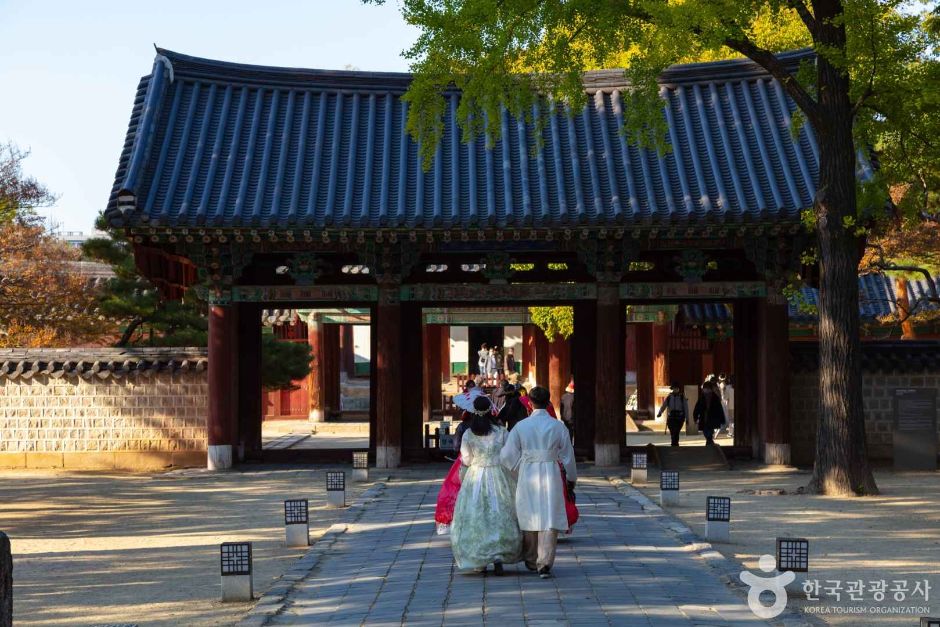
Jeonju Hanok Village is the largest traditional hanok village in Korea, with over 700 hanoks clustered around the Pungnam-dong area. It is the only urban hanok complex nationwide. Established starting in 1910, it is an important space in the development of modern Korean residential culture. Significant cultural assets such as Gyeonggijeon Shrine, Omokdae, and Hyanggyo, along with more than 20 cultural facilities, are scattered throughout. Walking along Hyanggyogil, Choi Myeonghigil, and Gyeonggijeongil allows visitors to experience the beautiful alleyways and the charm of hanoks. At night, the streetslight by angel lanterns on Taejo-ro and lighting accentuating the hanok walls offer a romantic nightscape. Unique travel spots like Jeonju Nanjang, Jaman Mural Village, the night market, and Youth Mall can also be found. The beauty of hanok lies in its rooflines, with eaves slightly turned upward, which is distinctive and elegant. The structure is mainly divided into annaechae and sarangchae. Another feature of hanok is the ondol room. Since Koreans mostly sit on the floor, ondol heating is installed beneath. The structure has a furnace outside the room, and when fire is lit under the floor flues (gudeul), the room warms. The key feature of ondol is that it stays cool in summer and warm in winter. There is a Hanok Life Experience Center in the village where visitors can try living in hanok rooms like seonbi bang and gyusu bang with ondol heating. Traditional Korean food served in nabcheong yuggi [納淸鍮器] enhances the experience. Jeonju Hanok Village offers both living experience and a chance to taste the famous Jeonju bibimbap.
Jeonju Traditional Hanji Workshop faithfully reproduces the traditional hanji making techniques and produces pure Korean hanji imbued with a millennium of spirit. Over 80% of the hanji produced here is exported to Japan, with the remainder consumed domestically. Unlike other papers, hanji is a precious heritage imbued with the craftsmanship of ancestors, making hanji itself a work of art. Visitors can learn the hanji production process such as sheet making, patterning, and drying. Within a 5-minute walk are Jeonju Hanok Village History Museum, Jeonju Embroidery Museum, and Jeonju Fan Culture Center, making it convenient to visit along with Jeonju Traditional Hanji Workshop.
Omokdae, built on a cliff-like hill along the four-lane road north of Hanbyeokdang and Jeonju Hyanggyo, was established in the 6th year of King U of Goryeo (1380) when Yi Seonggye, returning victorious after defeating Japanese forces at Hwangsan in Unbong, stopped here to celebrate the victory at the place where his ancestor Mokjo lived. Later, Emperor Gojong personally wrote the Taegogohwang Jejupil Yujibi stele here. Across the pedestrian bridge from Omokdae is Imokdae, located at the foot of Seungamsan Mountain where the Catholic sacred site Chimyeongjasan is located. Imokdae is 70m above Omokdae, while at 80m below it there is a stele and pavilion. The stele bears the inscription Mokjodaewang Gugeoyuji, personally written by Emperor Gojong. Mokjo, the 5th ancestor of King Taejo who founded the Joseon dynasty, is known to have lived here playing military strategy games as a child, as described in Yongbieocheonga. Due to conflicts with the then magistrate of Jeonju, Mokjo moved to Hamgyeongdo from here, which eventually led Yi Seonggye to found the Joseon dynasty, considered a sign of heaven’s will.
优先展示路线结束后方便休息的住宿
注册成为会员,让更多人认识你的频道。
(成为会员后,在“我的页面”中设置 Instagram、YouTube、博客链接,我们会在你发表的每条评论旁一起展示。)
““住在弘大附近,晚上去了一圈咖啡馆,城市夜景和氛围都太完美了。””
以访客身份发表的评论,不会显示任何社交账号链接或个人资料卡片
分享一条关于这个地点的小贴士吧。
或者以访客身份快速留下一个评论。
请登录后再上传照片。
还没有任何评论,快来写下你的第一条感受吧!




![Jeonbuk Jeonju Hanok Village [Slow City] 1](https://tong.visitkorea.or.kr/cms/resource/44/3479244_image2_1.jpg)
![Jeonbuk Jeonju Hanok Village [Slow City] 2](https://tong.visitkorea.or.kr/cms/resource/46/3479246_image2_1.jpg)
![Jeonbuk Jeonju Hanok Village [Slow City] 3](https://tong.visitkorea.or.kr/cms/resource/47/3479247_image2_1.jpg)
![Jeonbuk Jeonju Hanok Village [Slow City] 4](https://tong.visitkorea.or.kr/cms/resource/48/3479248_image2_1.jpg)


