
内藏山的红叶与东学革命的炽热愿望的井邑 in 全北特别自治道 井邑市 · schedule 其他 · distance 50.8km · 3 stops · highlights Jeongeup Hwangtohyeon Battlefield, Jeongeup Naejangsan Tourist…
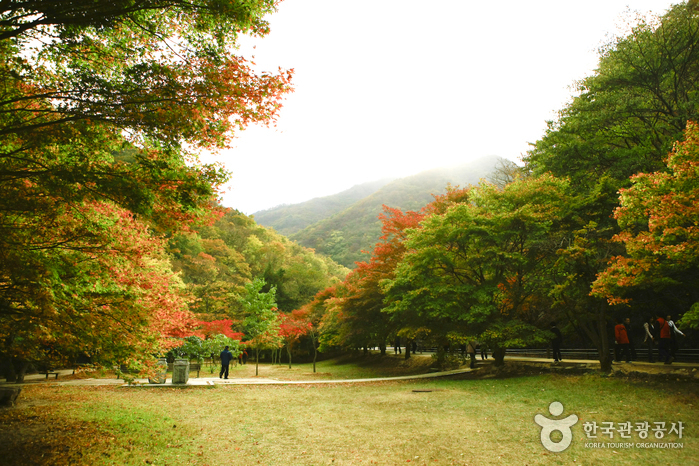
井邑以美丽的内藏山红叶闻名,也是这片土地上的民众为新世界而爆发的东学革命炽热愿望的历史现场。在欣赏如火燃烧般的内藏山红叶时,铭记当年为新世界奋起的民众的炽热愿望。
这条路线是 2 天行程示例。你可以直接保存,或扩展为 AI 行程。
A small hill covered with ocher soil, this site marks a major victory for the Donghak Peasant Army over the government forces during the 1894 Gabo Donghak Revolution. In early April 1894, when the government army pursued the peasant army, the peasants lured them here and fought fiercely from the night of April 6 to the early dawn of April 7, securing a significant victory. On that day, they captured the Gobu government office and later took control of Heungdeok, Gochang, and Mujang, spreading the flames of the peasant revolution to Gyeongsang and Chungcheong regions. Today, atop the ridge of Hwangtohyeon is the Gabo Donghak Revolution Memorial Tower, and at the southeastern foot of the tower is the Hwangtohyeon Battlefield Memorial Hall. Sitting with your back to the tower, the red earthen mound and fields across the road leave a strong impression.
Naejangsan, located about 11 km from Jeongeup city center, is renowned for its blazing red autumn foliage of deciduous trees, making it Korea's top fall foliage destination. The name Naejangsan means 'mountain with infinite hidden treasures' and has been called the Geumgang of Honam since the Joseon Dynasty. The Naejangsan Tourist Area includes Naejangsan mountain, Naejangsa temple, a cable car, an observatory, the Naejangsan Autumn Foliage Tunnel, and Uhwa-jeong pavilion on a lake that reflects the crimson leaves like a watercolor painting. Near the Naejangsan public terminal, restaurants, motels, and pensions gather to assist tourists. Naejangsan’s main peak is Sinseonbong at 763 m, surrounded by nine peaks forming a horseshoe shape, creating a mystical atmosphere. It boasts beautiful scenery, listed as one of the nation’s top eight sights, with famous valleys including Geumseon Valley with Geumseon and Dodeok waterfalls, and Baegam Valley. There are over 10 hiking trails ranging from 1.5 to 14 km, allowing selective trekking based on fitness and preference. For easier access, a 3.6 km flat nature trail is available. Visitors can also take a cable car from the ticket office to the observatory.
Pihyangjeong Pavilion, widely known as the finest pavilion in Honam, originally had two ponds named Sangyeonji and Hayeonji in front and behind it, creating a beautiful scenery. However, Sangyeonji was filled in during the Japanese colonial period, and only Hayeonji (Taechangje) remains today. It was named Pihyangjeong because when lotus flowers bloom in the pond, the fragrance fills the surroundings. There is a legend that during the Silla period, scholar Choe Chiwon, while serving as governor of Taesan, composed poems here, but the exact date of the pavilion's construction is uncertain. The current pavilion is a mid-Joseon Dynasty wooden structure, open on all four sides and surrounded by railings. It is an important cultural heritage that showcases mid-Joseon wooden architectural style, serving as valuable material for architectural history research. Nearby tourist attractions include Taein Hyanggyo Confucian School, Taein Dongheon, Jeongtosa Temple, and the Old House Cultural Experience Center, making it ideal for linked sightseeing.
优先展示路线结束后方便休息的住宿
注册成为会员,让更多人认识你的频道。
(成为会员后,在“我的页面”中设置 Instagram、YouTube、博客链接,我们会在你发表的每条评论旁一起展示。)
““住在弘大附近,晚上去了一圈咖啡馆,城市夜景和氛围都太完美了。””
以访客身份发表的评论,不会显示任何社交账号链接或个人资料卡片
分享一条关于这个地点的小贴士吧。
或者以访客身份快速留下一个评论。
请登录后再上传照片。
还没有任何评论,快来写下你的第一条感受吧!


