在智异山麓享受露营旅行 in 庆尚南道 咸阳郡 · schedule 其他 · distance 39km · 5 stops · highlights 점심식사(옥연가 함양점, 경상도집), Odojae and Jirisan View Park, Jirisan National Natural…

咸阳是怀抱智异山的地区。从咸阳到智异山麓的路上,智异山始终相伴。越过智安峙和五道峙,可以在智异山眺望公园尽享智异山的壮丽景色。到达马川面后,经过西岩精舍和壁松寺,智异山环山路延续,融入雄伟的智异山怀抱。
这条路线是 2 天行程示例。你可以直接保存,或扩展为 AI 行程。
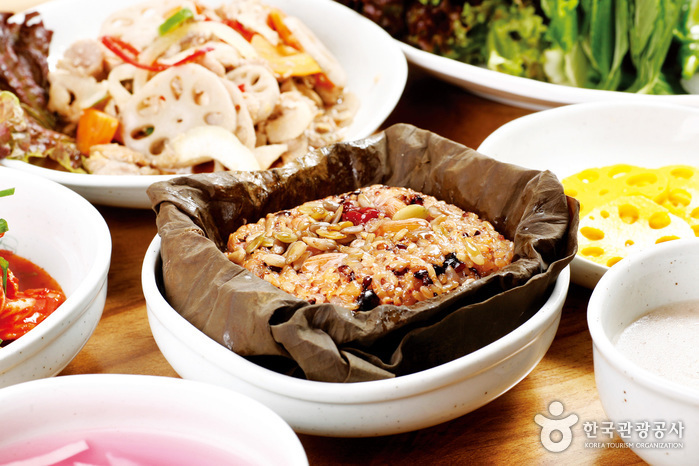
[옥연가 함양점] 무공해식품인 연잎을 이용해 만든 밥. 연잎밥이 이집의 메인이다. 연잎밥은 남녀노소가 즐길 수 있는 영양식으로 남성의 스태미너 뿐만 아니라 어린이나 수험생들의 피로회복 및 정신안정, 여성의 피부미용, 노화 예방 등에 좋은 음식이다. 이집에선 찹쌀, 흑미, 조, 수수, 율무, 잣, 대추, 검정콩, 팥, 호두, 해바라기씨 등 11가지의 잡곡을 더 넣어 그 영양이 한 층 더 업그레이드되었다. [경상도집] 닭백숙에 인삼, 향기, 대추, 마늘, 밤, 녹두, 표고버섯, 참깨를 사용한 한방식. 특이한 요리와 닭볶음탕, 소라고둥무침, 찌짐류 등이 유명하며, 상림숲의 자연산 도토리를 이용한 도토리묵이 특이하다.
Odojae is a mountain pass between Guyang-ri in Machon-myeon, Hamyang-gun, Gyeongsangnam-do, and Guryong-ri in Hamyang-eup. According to legend related to its name, those who ascend this path attain enlightenment, and it is said that many Confucian scholars and practitioners crossed this pass. Opened in 2004, the road serves not only as a route but also as a new attraction with its snake-like winding path, becoming a popular tourist spot. Based on Hamyang-gun’s geographical and historical features, Jirisan View Park was created at Odojae to provide an efficient viewing space of Jirisan. Through the establishment of Jirisan’s First Gate and the expansion of lodging infrastructure, the area aims to offer sights to tourists visiting Hamyang and Jirisan. In the past, two Bangjang First Gates stood at the top of Odojae, but the wooden gate burned during the Korean War, and only part of the stone gate remains. In early 2005, a stone monument and a seven-character poem about Bangjang First Gate were discovered on Geumdaesan beside Odojae, proving the historical significance of Jirisan’s First Gate. Consequently, on November 1, 2006, Hamyang-gun newly completed Jirisan First Gate at the summit of Odojae.
Jirisan Natural Recreation Forest is located in Samjeong-ri, Eumjeong, Macheon-myeon, Hamyang-gun. To the south of the recreation forest are Baeksoryeong (1,392m), Hyeongjebong (1,433m), and Samgakgoji, which are main ridges of Jirisan. To the east, centered on a large ridge, is Baekmudong Valley, and to the west, bordering Sannae-myeon, is Samjeongsan (1,413m). The forest is 31km from Saengcho Interchange on the Daejeon-Tongyeong Expressway and 20km from Jirisan (Inwol) Interchange on the Gwangju-Daegu Expressway, accessible within 30 minutes from the expressways, offering good accessibility, though public transport is somewhat inconvenient. The forest features an ancient forest with old-growth trees; located within a primeval forest, it presents distinct seasonal changes and diverse scenery due to the altitude difference. In spring, under the lingering snow of Baeksoryeong, the beauty of mountain cherry blossoms and sap from Gorosoe and Geoje trees can be enjoyed. The clear, cold water flowing in the valley is abundant, making it ideal for summer retreats. Autumn brings colorful foliage in the Jirisan valleys, and visitors can combine hiking on main ridges of Jirisan with sightseeing. In winter, Jirisan’s snowy landscape provides emotional stability and a quiet resting space. There are hiking trails in Jirisan National Park such as Baekmudong, Chilseon Valley, and Baeksoryeong, and nearby attractions include Daewonsa Temple in Sancheong, Ssanggyesa Temple in Hadong, Hwaeomsa Temple in Gurye, and hot spring complexes, making this an excellent tourism course linked with the use of the natural recreation forest.
Seoam Jeongsa, located at the entrance of Chilseon Valley, one of Korea's three great valleys known for its beauty and grandeur, is a temple harmoniously integrated with natural rock formations. It was built by Monk Won-eung, who reconstructed Byeoksongsa Temple devastated during the Korean War, and over more than ten years completed a carved hall depicting countless Buddha statues and the ideal Buddhist paradise of the Pure Land on natural rock, set against the majestic mountain scenery of Jirisan. At the temple entrance stands Daebang-gwangmun, symbolizing entry into the Buddhist truth. Passing the carved Four Heavenly Kings on rocks and entering the courtyard, the main Buddha Amitabha presides in the stone grotto hall representing the Pure Land. On the upper side of the courtyard are Gwangmyeongundae, where countless Buddhas reside, and Saja Cave, a meditation place for monks.
Byeoksongsa Temple is a subsidiary temple of Haeinsa Temple, the 12th district of the Jogye Order of Korean Buddhism. The exact date of its founding is unknown, but based on a three-story stone pagoda behind the temple believed to have been built at the time of its establishment, the period is estimated to be late Silla or early Goryeo. It is said that in 1520, the Great Monk Byeoksong Jieom rebuilt the temple and named it Byeoksongsa. Before Seosan Dae Sa Cheongheo Hujeong, monks such as Byeokgye Jeongsim, Byeoksong Jieom, Buyong Yeonggwan, Hwanseong Jian, and Seoryong Sangmin—eight great Zen masters who illuminated the Joseon Zen tradition—all practiced asceticism at Byeoksongsa, signifying a special connection between Korean Seon Buddhism and the temple. The temple was destroyed by fire in 1704, the 30th year of King Sukjong's reign, and later rebuilt by the Great Monk Hwanseong Jian. It was restored again in 1850 by Seoryongdang Sangmin but was destroyed during the Korean War in 1950. In 1960, Monk Won-eung Gu-han reconstructed the fallen temple buildings, which have remained until today.
优先展示路线结束后方便休息的住宿
注册成为会员,让更多人认识你的频道。
(成为会员后,在“我的页面”中设置 Instagram、YouTube、博客链接,我们会在你发表的每条评论旁一起展示。)
““住在弘大附近,晚上去了一圈咖啡馆,城市夜景和氛围都太完美了。””
以访客身份发表的评论,不会显示任何社交账号链接或个人资料卡片
分享一条关于这个地点的小贴士吧。
或者以访客身份快速留下一个评论。
请登录后再上传照片。
还没有任何评论,快来写下你的第一条感受吧!