装载阿拉伽耶历史的时间胶囊 in 庆尚南道 哈曼县 · schedule 其他 · distance 18.5km · 4 stops · highlights Haman Maryisan Tumuli Cluster, Mujinjeong, Daegu Sikdang
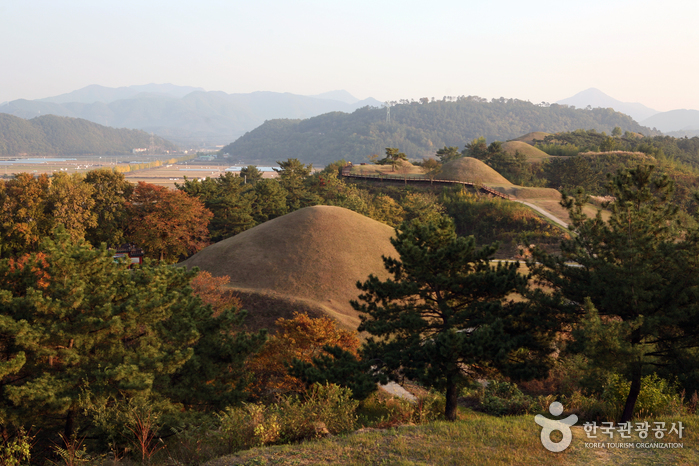
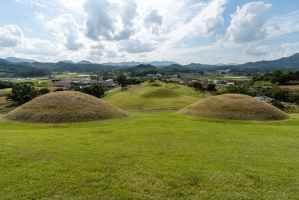
由于咸安是一个不太熟悉的旅行地,马伊山古坟群也显得非常陌生。马伊山古坟群是与金冠伽耶并列代表伽耶文化的阿拉伽耶遗址。提到伽耶文化,人们通常会首先想到金海或高灵,但咸安马伊山古坟群是一个不逊色于庆州古坟群的露天博物馆。
这条路线是单日行程示例。你可以直接保存,或扩展为 AI 行程。
The Haman Maryisan Tumuli Cluster was managed as Dohang-ri Tumuli Cluster (Historic Site No. 84) and Malsan-ri Tumuli Cluster (Historic Site No. 85), but based on excavation results, the tombs of the same era were integrated and redesignated as Historic Site No. 515 on July 28, 2011. It boasts one of the largest scales among Gaya period tumulus sites, located in Dohang and Malsan-ri areas of Gaya-eup, which was the capital of Ara Gaya, and vividly shows the splendid Gaya culture. About 100 large tumuli, believed to be the tombs of Ara Gaya kings, are aligned on a high place, with around 1,000 medium and small tumuli distributed below. The cluster was first investigated during the Japanese colonial period; the then No. 34 tumulus was the largest royal tomb with a mound diameter of 39.3m and height of 9.7m. Recently, horse armor similar to those depicted in Goguryeo tomb murals was excavated from Magap-chong at the northern end of the cluster, and No. 8 tumulus, where the skeletal remains of five sacrificed attendants were confirmed, became more famous through investigation.
Mujinjeong is a pavilion built on a hill to enjoy elegant leisure activities. This pavilion was established by the descendants of Mu Jin (無盡), Jo Sam (趙參), in the 22nd year of King Myeongjong of Joseon (1567) to commemorate his virtue, and it was named Mujinjeong after his pen name. Mu Jin passed the jin-sa exam in the 14th year of King Seongjong (1483) and passed the civil service exam in the 2nd year of King Jungjong (1507). He served as a magistrate of Hamyang, Changwon, Daegu, Seongju, and Sangju, and held positions such as Jipui (執義) of Saheonbu (司憲府) and editor of Chunghugwan (春秋館). Every year, the Haman Nakwhanoori, a traditional folk game unique to Haman, is held around Mujinjeong to pray for the people's well-being. The Haman Nakwhanoori is a fireworks display where fireworks made of oak charcoal powder are hung between lanterns, ignited, and scattered over the water like pollen. *Shape and Structure of Mujinjeong* The building has three bays in the front and two bays on the side with a hipped-and-gabled roof resembling the shape of the number eight on the sides. The middle bay on the front is a wooden-floored room (not an ondol heated room), and the pavilion floor is entirely raised in the manner of a wooden floor. The pillars have no decorations or carvings, making the building simple and unadorned, exemplifying the pavilion style of early Joseon. The current building was reconstructed in April 1929, maintaining the simple, unadorned eight-shaped hipped roof style, showing the early Joseon pavilion form as is. It has three bays front and two bays side, with extended eaves front and back, and a heated ondol room arranged in the central one bay.
In the old Haman marketplace, there is Gukchon Village that specializes in Gyeongsang-style beef soup with rice. This place has been operated by two generations for over 40 years. Its distinctive feature is the inclusion of a small amount of seonji (blood curd), with broth made from beef leg bones, brisket, shank, innards, and round cut. Radish, bean sprouts, and green onions blend in, creating an umami flavor typical of the original Gyeongsang-style beef soup house. The softness of boiled pork dipped lightly in soy sauce with chili is also a special dish here.
Located at San 122, Seochon-ri, Daesan-myeon, Haman-gun, Akyangru is a pavilion on a cliff north of Akyang village, said to have been built in 1857 (the 8th year of King Cheoljong's reign of Joseon). Akyangru (岳陽樓) is situated in a place with an excellent view, with the Namgang River flowing below the pavilion and broad fields along with the embankment of Beopsu-myeon stretching ahead. The pavilion's name is said to be taken from the famous Chinese scenic spot 'Akyang.' In the past, there was a signboard called 'Giduhon (倚斗軒),' but now only the 'Akyangru' signboard written by Cheongnam O Jaebong (菁南 吳濟峰) remains. It was designated as a cultural asset on October 21, 1992. At the entrance of Akyangru, there is a monument for the song 'Virgin Boatman.' The pavilion was restored after the Korean War and repaired in 1963, remaining until today. The building has 3 bays at the front and 2 bays at the side, with a roof shaped like the Korean traditional paljakjibung (hip-and-gable roof) forming an eight-character (팔) shape from the side view.
优先展示路线结束后方便休息的住宿
注册成为会员,让更多人认识你的频道。
(成为会员后,在“我的页面”中设置 Instagram、YouTube、博客链接,我们会在你发表的每条评论旁一起展示。)
““住在弘大附近,晚上去了一圈咖啡馆,城市夜景和氛围都太完美了。””
以访客身份发表的评论,不会显示任何社交账号链接或个人资料卡片
分享一条关于这个地点的小贴士吧。
或者以访客身份快速留下一个评论。
请登录后再上传照片。
还没有任何评论,快来写下你的第一条感受吧!