遇见八公山麓佛陀的慈悲 in 庆尚北道 庆山市 · schedule 其他 · distance 15km · 4 stops · highlights Wonhyoam, 솔매기식당, Seonbonsa Temple

八公山道立公园涵盖了庆山市的一部分,内有被称为“갓바위”的观峰石造如来坐像,据说虔诚祈愿可逐一实现。此外,还有历史悠久的佛屈寺、禅本寺、元曉庵等古刹,体现了千年的历史。这里是体验佛教遗迹探访的好去处。登上能实现愿望的갓바위,许下心中的一个愿望。
这条路线是单日行程示例。你可以直接保存,或扩展为 AI 行程。
Wonhyoam is a temple said to have been founded by Wonhyo Daesa (617–686) of the Unified Silla period. It is a branch temple of Eunhaesa, the head temple of the 10th district of the Jogye Order of Korean Buddhism, located on the slopes of Palgongsan in Wachon-myeon, Gyeongsan-si. Behind Wonhyoam is a spring that produces cold water throughout the year, so it is also called Naengcheonsa. If you follow the mountain path north behind Wonhyoam, you will find the seated Buddha carved in stone at Gyeongsan Wonhyoam, designated as a tangible cultural property of Gyeongsangbuk-do. In 1980, the main Buddha hall (Daeungjeon) and Samsingak were constructed. After a large fire in 1986, the Geungnakjeon and Sanryeonggak were rebuilt. In 2016, a ceremony was held in Geungnakjeon, which enshrined only the Amitabha Buddha statue, to install the Amitabha Samjonbul including accompanying statues of Gwanseum Bosal and Daeseji Bosal as guardian bodhisattvas.
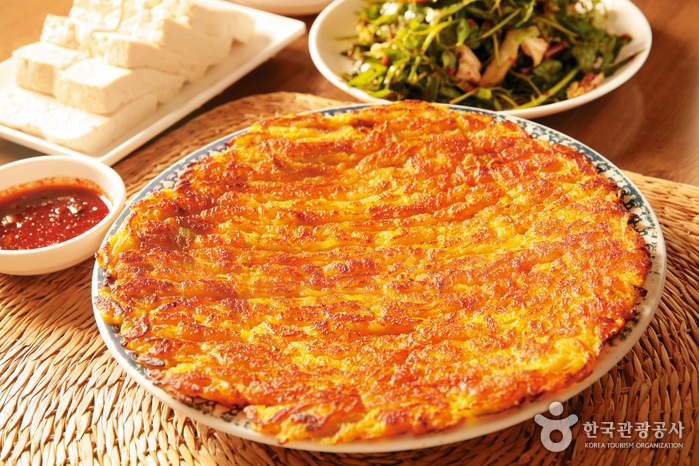
팔공산 주변에서 '호박전으로 유명한 곳!' 하면 바로 이곳이다. 노릇노릇하게 구워져 나온 따근한 호박전 한 입 꿀꺽 한 뒤 맛보는 촌두부와 미나리무침의 향연. 먹어본 사람은 안다. * 문의/안내 : 053-852-5566
Seonbonsa Temple is a directly managed temple of the Jogye Order of Korean Buddhism, located below Gwanbong of Palgongsan in Daehan-ri, Wachon-myeon, Gyeongsan-si, Gyeongsangbuk-do. This place is more widely known by the name 'Palgongsan Gatbawi Buddha' rather than the temple's name. Therefore, the Gatbawi Buddha to the east of the temple attracts continuous worshippers despite the steep mountain terrain. Seonbonsa Temple is situated on a cozy mountain slope of Palgongsan overlooking the Gatbawi Buddha. Although many mountains and rivers across Korea have long been Buddhist sacred sites, Palgongsan holds an especially significant position in the early history of Korean Buddhism. Additionally, Seonbonsa offers one-day, rest-type, and experience-type temple stay programs.
Palgongsan is a mountain with an elevation of 1,192 meters that spans Daegu Dong-gu, Gunwi-gun, Gyeongsangbuk-do Gyeongsan-si, Yeongcheon-si, and Chilgok-gun. Designated as a provincial park in May 1980, it was elevated to a national park in 2023, becoming the 23rd national park in South Korea. Palgongsan is highly regarded for its natural ecosystem, scenic beauty, and cultural landscapes. It is home to 5,296 species of wildlife, including 15 endangered species such as the red bat, hawk, and otter. Natural scenic resources include 39 mountain peaks, 10 unique rock formations, and 19 valleys. The park also contains abundant cultural assets, including 30 nationally designated cultural properties, 61 provincially designated cultural properties, and 1 registered cultural asset. Palgongsan National Park Gatbawi Area is visited year-round and features a viewpoint in front of Gatbawi where visitors can see the mountain range of Palgongsan at a glance, with the Gwanbong Seokjo Yeorae Jwasang statue at the summit. This statue, believed to be the second most mysterious Buddha statue after Seokguram, was carved from a natural rock on Palgongsan peak by the monk Uihyeon during the Unified Silla period to pray for his deceased mother. The statue is called Gatbawi because it wears a natural stone shaped like a traditional Korean gat hat on its head. The rock on its head was not originally formed together but is said to have been carved with a lotus-patterned crown and placed there during the Goryeo Dynasty. There is a legend that sincerely praying to this statue will grant one wish, attracting many visitors.
优先展示路线结束后方便休息的住宿
注册成为会员,让更多人认识你的频道。
(成为会员后,在“我的页面”中设置 Instagram、YouTube、博客链接,我们会在你发表的每条评论旁一起展示。)
““住在弘大附近,晚上去了一圈咖啡馆,城市夜景和氛围都太完美了。””
以访客身份发表的评论,不会显示任何社交账号链接或个人资料卡片
分享一条关于这个地点的小贴士吧。
或者以访客身份快速留下一个评论。
请登录后再上传照片。
还没有任何评论,快来写下你的第一条感受吧!