1930年代的群山时间旅行 in 全北特别自治道 群山市 · schedule 其他 · distance 16.4km · 4 stops · highlights Old Gunsan Customs House, Jinpo Marine Theme Park, 채만식 문학관

让我们踏上前往1930年代群山的时间旅行。以位于群山内港的群山近代历史博物馆为起点,参观曾是物流流通中心的海洋物流历史馆和近代生活馆,体验1930年代的日常生活。这将是一段有趣的旅行。
这条路线是单日行程示例。你可以直接保存,或扩展为 AI 行程。
The old Gunsan Customs main building was completed in 1908, making it a modern-style building constructed by the Korean government before the Japanese colonial period began. The old Gunsan Customs was responsible for taxing and collecting duties on goods passing through Gunsan Port from the Japanese colonial era. As such, it is historically significant as a witness to the exploitation history of the Korean Peninsula by Japanese imperialism, which used Gunsan Port as a gateway for the extraction of rice and other resources. The building, made with red bricks imported from Belgium, is of European style and similar in style to Seoul Station and the Bank of Korea headquarters. The roof is made of lotus-shaped copper plates and features three pointed towers. The exterior is brick, while the interior is wooden. It was designed by an unnamed German. Gunsan Customs was established under the jurisdiction of Incheon Customs on May 1, 1899, with the building planned in 1906 and completed on June 20, 1908. It served as the main customs office for 85 years until 1993, when the neighboring old surveillance building was demolished to build a new office. Currently, it operates as the Honam Customs Museum, displaying records such as the Customs Guinness Book, Gunsan Customs in films, former customs directors, and 100 years of Gunsan Customs history. The museum offers two daily cultural tourist interpretation tours.
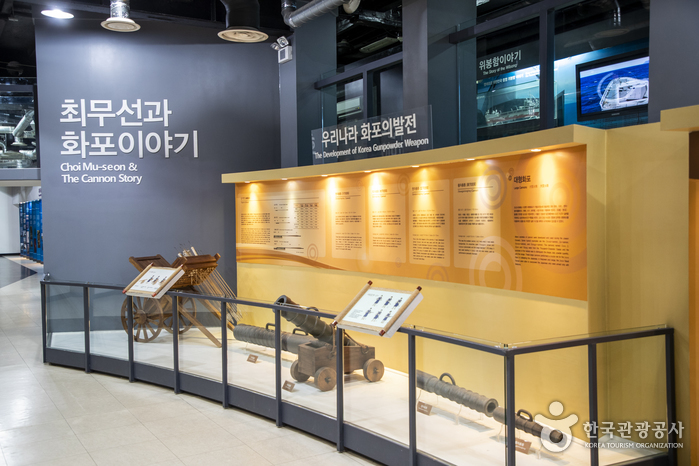
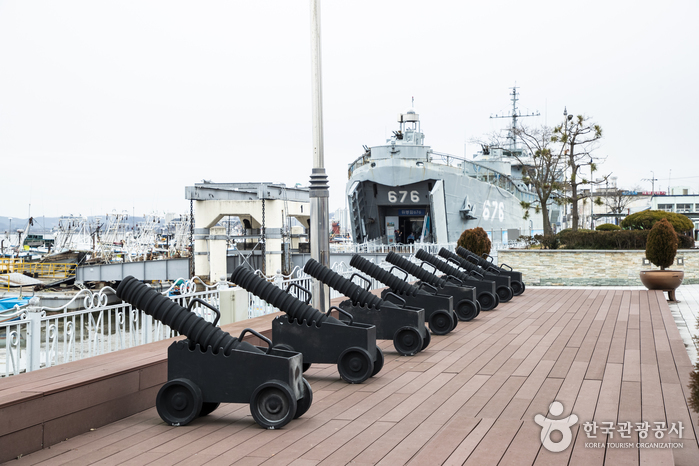
Jinpo Marine Theme Park is a marine park opened in 2008 to commemorate the Jinpo Naval Battle where General Choe Mu-seon of the late Goryeo period created cannons to repel over 500 Japanese ships. Set against the vast sea beside the harbor, visitors can see 16 military equipment units of 13 different types no longer in use. Exhibits include the navy ship Wibong, deployed in the Vietnam War, as well as armored vehicles, self-propelled guns, fighter jets, and army, navy, and air force equipment retired after frontline service in defense of the country. Visitors can enter inside the military equipment for hands-on boarding experiences. Inside Wibong, there is an exhibition hall displaying a model of the Jinpo Naval Battle, weapons used at the time, stories about the cannons made by General Choe Mu-seon, and a naval barracks life experience.
채만식선생의 문학적 업적을 기리기 향토문학 예술발전 등 이를 널리 알리기 위해 금강하구둑에 위치한 채만식문학관을 건립 내부시설 및 단지 조성이 완료되어 개관하였으며 오페라 [탁류]를 제작하여 군산 시민문화회관에서 6회에 걸쳐 성공적으로 공연하였다.
This villa house was built by Kumamoto Rihei, a large Japanese landlord who managed a large-scale farm in Gunsan during the Japanese colonial period. It served as a temporary residence during spring and harvest visits to the farm and features a mix of Western, Korean, and Japanese architectural styles. After liberation, it became known as Lee Young-chun House when Dr. Lee Young-chun, a pioneer in rural health and hygiene in Korea, resided there. Due to its beautiful exterior, it has been used as a filming location for many movies and dramas such as Bingjeom, Hourglass, and The Rustic Period. Dr. Lee Young-chun, called the Schweitzer of Korea, had the pen name Ssangcheon (雙川), meaning two streams that heal physical illness and the soul. Born in Yonggang-gun, Pyeongannam-do in October 1903, he became director of Jahye Clinic at the young age of 33 in April 1935, introduced by his homeroom teacher Watanabe from Gyeongseong Imperial University while studying law at Pyeongyang High School. He cared for over 20,000 tenant farming families affiliated with the Kumamoto farm in Gaejeong, Jeonbuk, and implemented Korea's first school nurse system and health insurance association.
优先展示路线结束后方便休息的住宿
注册成为会员,让更多人认识你的频道。
(成为会员后,在“我的页面”中设置 Instagram、YouTube、博客链接,我们会在你发表的每条评论旁一起展示。)
““住在弘大附近,晚上去了一圈咖啡馆,城市夜景和氛围都太完美了。””
以访客身份发表的评论,不会显示任何社交账号链接或个人资料卡片
分享一条关于这个地点的小贴士吧。
或者以访客身份快速留下一个评论。
请登录后再上传照片。
还没有任何评论,快来写下你的第一条感受吧!