军山银波旅游区之旅 in 全北特别自治道 群山市 · schedule 其他 · distance 11.4km · 4 stops · highlights Mosanbang, Eunpa Mulbit Bridge, Eunpa Lake Park
银波湖公园以湖泊为中心,是一个可以骑自行车和欣赏莲花自然生长的美丽公园。特别是银波水光桥的夜景展现出难得一见的五彩斑斓景象。此外,拥有悠久传说的银迹寺和宁静的玉龟乡校也不可忽视。
这条路线是单日行程示例。你可以直接保存,或扩展为 AI 行程。
Mosanbang is a traditional Korean meal restaurant located behind Sanbuk Elementary School in Sanbuk-dong. The small flower bed and yellow earth house style made Mosanbang once famous as a vegetarian buffet restaurant but it is currently operated as a hanjeongsik restaurant. Prioritizing health, the simple table setting includes various salad dishes that highlight the essence of vegetarian cuisine, with side dishes that are neither too salty nor spicy, and the food is neat and delicious. The restaurant has a large hall inside, making it suitable for small group events such as first birthday parties or family gatherings, and private rooms are also available for quiet personal meetings.
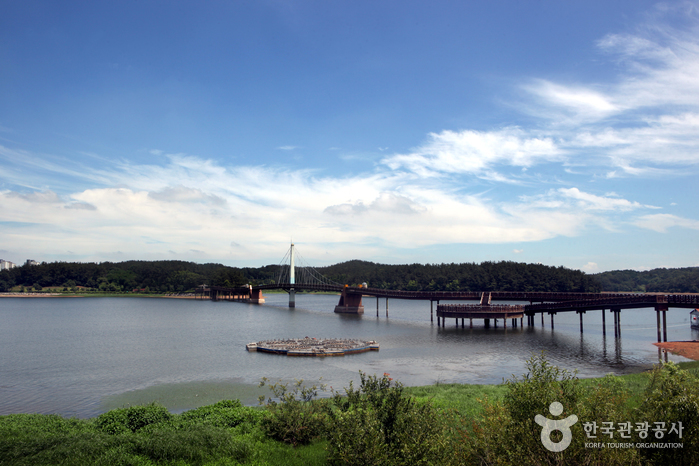
With a length of 370m and a width of 3m, this is Korea's only pedestrian suspension bridge. From the bridge crossing Eunpa, visitors can leisurely view the natural reflections on the lake and, at night, enjoy the beauty of lights created by illumination. It offers a peaceful and subtle resting place and visual attraction through water and light. The name Eunpa combines Eun (銀), meaning the light of love (hope), and Pa (波), symbolizing abundant water. Inspired by the beautiful legend of love from the Gunsan area called the Jungbau Legend, the bridge shapes Aegibau, Jungbau, and Gaebau, recreating a meaningful landscape through the artistic expression of nature and historical-cultural elements. The bridge is designed in sections: the entrance playground, the midsection command tower (main tower), and the endpoint Love Road (water tunnel). Overall, the entire bridge is designed to represent the shape of a dragon. Currently, connected with beautiful lighting, the Mulbit Bridge provides a fantastic night view and atmosphere.
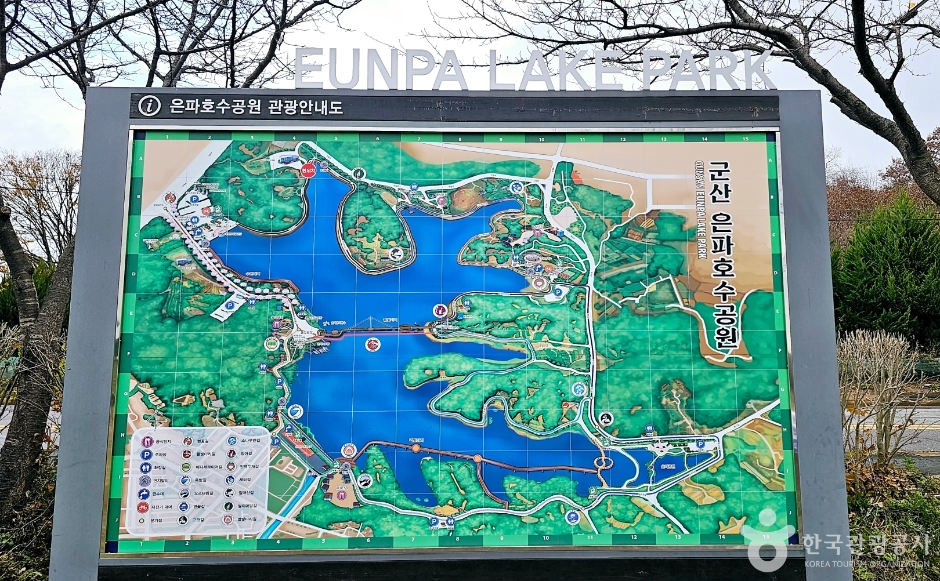
Called 'Eunpa' because of the beautiful shimmering waves at sunset, this place dates back to before the Joseon Dynasty and is marked on the Daedongyeojido by the scholar Kim Jeong-ho, indicating its deep historical roots. Centered around the Mi-je reservoir, it is a vast national tourist site spanning over 700,000 pyeong. Originally an agricultural reservoir, Eunpa Tourism Site was designated a national tourist site in 1985, including nearby small mountains, and with the completion of a circular road, visitors can tour all ninety-nine bends by car. The wide, tranquil lake was used as a rowing venue during the National Sports Festival and features a meeting plaza of about 23,000 pyeong with a memorial tower for independence patriots from Gunsan and Okg-gu, where over 100 zelkova trees are planted, further establishing its status as a national tourist destination. The fountain, shaped like flower petals reflecting Eunpa’s characteristics and image, creates a beautiful, fantastic scene connecting the lake and the Water Light Bridge. The fountain’s petal form enhances its beauty. The Water Light Bridge is shaped after the ‘Jungbau Legend’ related to the Eunpa reservoir, symbolizing Aegibau, Jungbau, and Gaebau based on local folklore, recreating a meaningful landscape through the integration of natural and historical cultural elements. Visitors can leisurely enjoy the natural reflections on the lake from the bridge crossing Eunpa and at night experience the beauty of light illuminated by lighting, offering a peaceful and subtle resting place provided by water and light.
Okguyanggyo is a local educational institution from the Joseon Dynasty established to perform memorial rites for Confucius and other sages, and to provide education and moral guidance to the local people. Located in Okgueup, Gunsan-si, Jeollabuk-do, it was first built in 1403 during the 3rd year of King Taejong's reign. It was relocated to its current site in 1646, the 24th year of King Injo's reign. The building layout follows the Jeonhak-Humyo style, with the Myeongnyundang lecture hall at the front and the Daeseongjeon shrine for memorial rites at the back. In front of Myeongnyundang grows a crepe myrtle tree that blossoms in summer. Passing through the outer gate of the hyanggyo, the Myeongnyundang is situated, evoking the scholarly atmosphere for students. Okguyanggyo also includes Dangunmyo, a shrine dedicated to Dangun. The Munchangseowon, housing a portrait of Choi Chi-won, is located within the hyanggyo as well. A monument to honor King Sejong the Great and its pavilion are also present, making it a notable feature. Including Oksan Seowon, the site is a space where various historical elements coexist.
优先展示路线结束后方便休息的住宿
注册成为会员,让更多人认识你的频道。
(成为会员后,在“我的页面”中设置 Instagram、YouTube、博客链接,我们会在你发表的每条评论旁一起展示。)
““住在弘大附近,晚上去了一圈咖啡馆,城市夜景和氛围都太完美了。””
以访客身份发表的评论,不会显示任何社交账号链接或个人资料卡片
分享一条关于这个地点的小贴士吧。
或者以访客身份快速留下一个评论。
请登录后再上传照片。
还没有任何评论,快来写下你的第一条感受吧!