军山近代遗产之旅,探寻米粮掠夺的痕迹 in 全北特别自治道 群山市 · schedule 其他 · distance 24.7km · 7 stops · highlights 월명공원 채만식문학비(해망굴), Gunsan Sinheung-dong Japanese-style House, Do…

军山是1899年开港的港口城市,是日据时期米粮掠夺的象征性城市。这里不仅有海望窟、军山海关、岛谷金库、临陂驿等掠夺象征性的文化遗产,还有日据时期建造的广津家屋和李永春家屋,以及韩国唯一的日式寺庙东国寺。位于岛谷金库所在的发山小学校内,还保存着岛谷收集的文化财产,令人感慨万分。
这条路线是单日行程示例。你可以直接保存,或扩展为 AI 行程。
서울의 남산공원처럼 군산의 상징인 월명공원에서는 사방으로 군산 시가지를 조망할 수 있다. 해망굴 옆 흥천사 입구에 차를 대고 114개의 계단을 오르면서 월명공원 산책이 시작된다. 수시탑이나 전망대에서는 군산 앞바다를 오가는 작은 어선과 대형 선박들, 금강 건너편의 장항 일대가 시원스레 내려다보이고 바다조각공원에 가면 다양한 작품들을 감상할 수 있다. 조각공원에서 조금 더 산책로를 따라 걸으면 채만식문학비와 만나게 된다.
The Gunsan Sinheung-dong Japanese-style House (former Hirotsu House) is a two-story wooden Japanese-style house built during the Japanese colonial period by a Japanese person who ran a dry goods store and a small farm in Gunsan and served as a member of the Gunsan District Council. Known as the residence of Hirotsu Keisaburo, it is an architectural example that clearly shows the characteristics of Japanese-style houses and represents the upper-class Japanese residences in Gunsan during the colonial era. After liberation in 1945, it became a property of Korean flour mill Han-guk Jebun, having been previously owned by the former Honam Flour Mill. Since its designation as National Registered Cultural Heritage No. 183 on June 18, 2005, it has been managed by Gunsan City and opened to the public. It has been used as a filming location for movies such as "General's Son" and "Tazza," making it well known to the general public. The Gunsan Sinheung-dong Japanese-style House is located facing southwest inside a residential area on the southwestern edge of Gunsan’s original downtown, Sinheung-dong. It is a large two-story wooden structure with walls finished in plaster and wooden shingle siding, and a roof topped with tiles combining gable and hip-and-gable roof styles. The roof framing rests on slender square pillars set on square stone foundations placed on a natural stone base. The entrance roof is a combination of gable and hip roof styles with an added eave shade covered with tin below the eaves. The second-floor roof is hip-and-gable style with an additional shed roof at the front. There are two L-shaped connected buildings with a decorated Japanese garden between them, featuring a large stone lantern. The first floor includes ondol heated rooms, a kitchen, dining area, and bathroom, while the second floor contains Japanese tatami rooms and a tokonoma alcove, reflecting the lifestyle of Japanese landlords during the colonial period and revealing their historical exploitation of rural areas. Behind the main building, the backyard contains auxiliary buildings, a well, and a toilet.
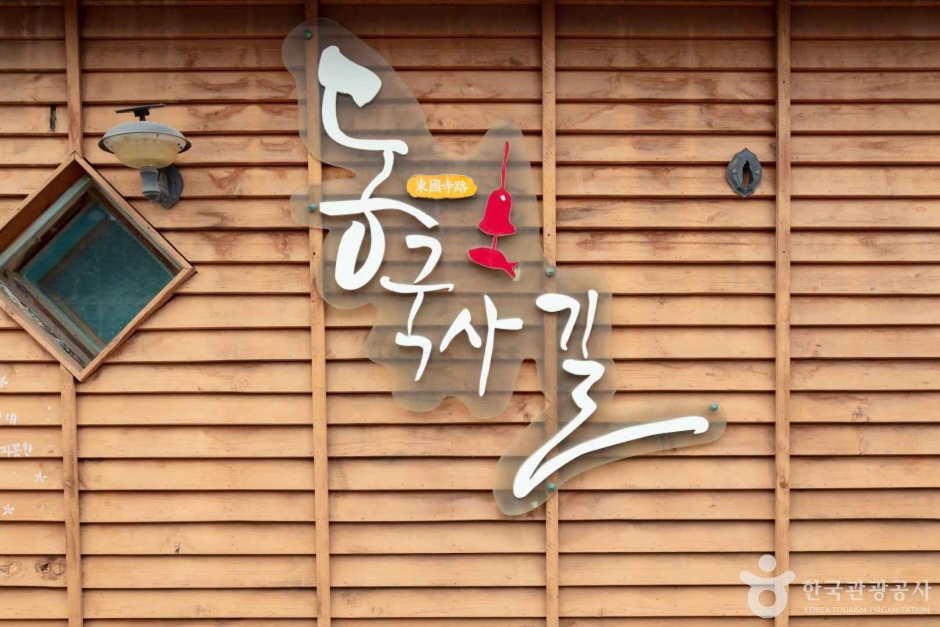
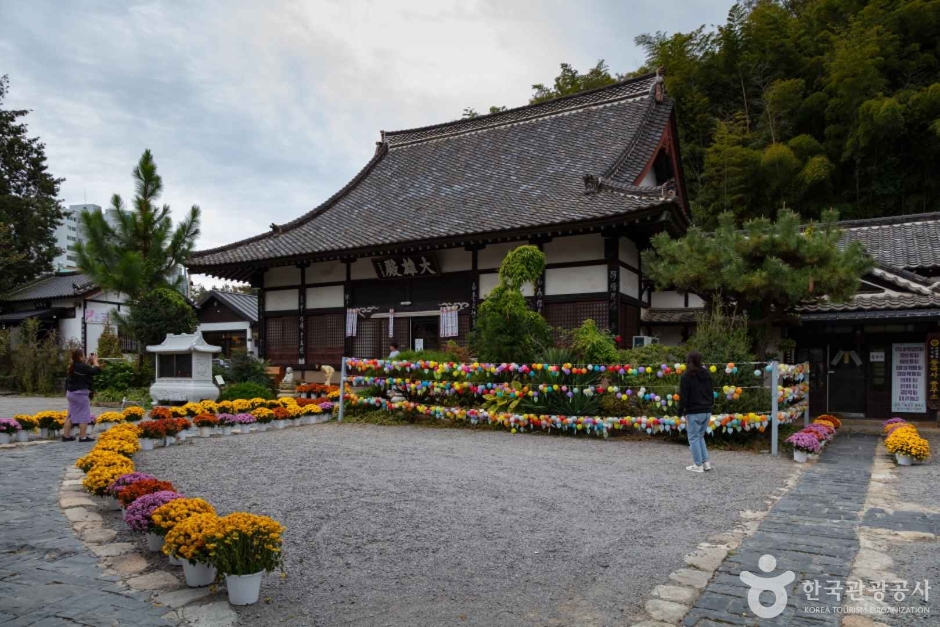
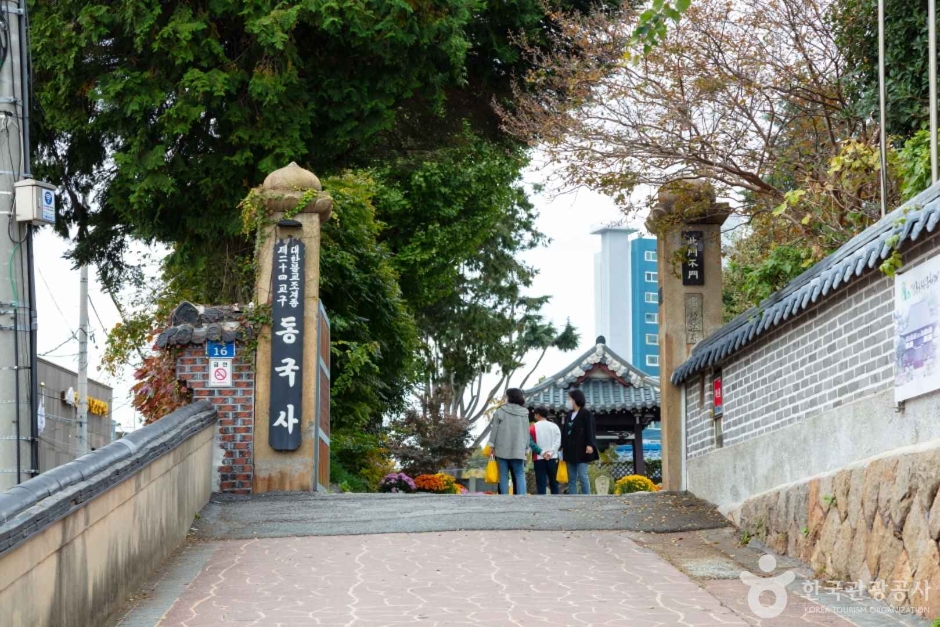
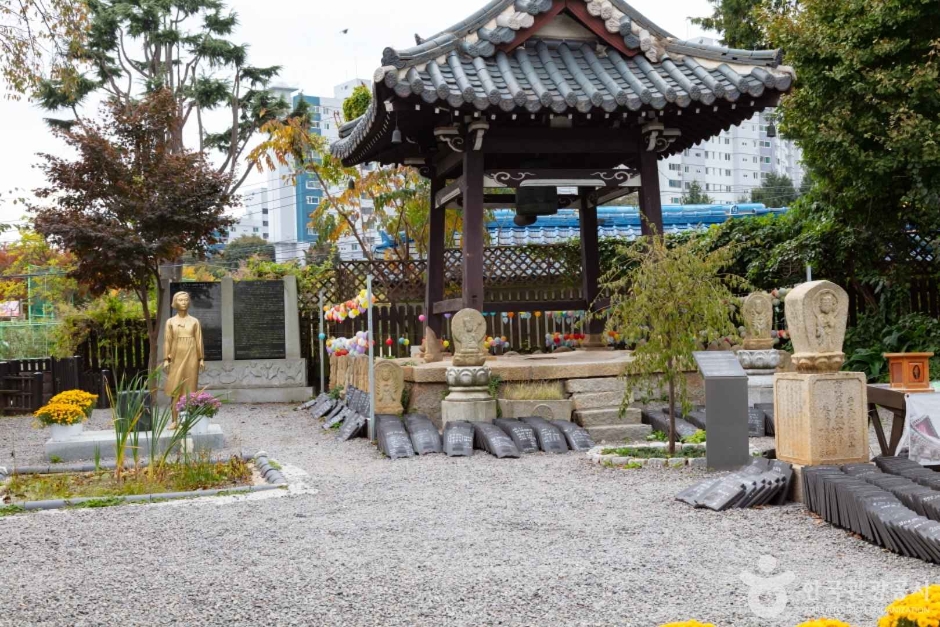
Dongguksa (東國寺) was founded in 1909 by the Japanese monk Seoneungbulgwan, and operated by Japanese monks during the 36 years of the Japanese colonial period. It bears the painful history of returning to Korea on August 15, 1945. It has existed through the Korean Empire and the Japanese colonial era to the present. It is the only remaining Japanese-style temple in Korea, characterized by the Daeungjeon and monks' quarters connected by an indoor corridor. Unlike Korean temples with ornate dancheong, Dongguksa features undecorated eaves and many windows on the Daeungjeon exterior, showing typical Japanese temple traits. A branch temple of Seonunsa in Gochang in the Jogye Order's 24th district, Dongguksa's Daeungjeon was designated a National Registered Cultural Heritage site in July 2003. Its original name was Geumgang Seonsa, founded in 1909 by the Japanese monk Naejeonbulgwan, establishing a proselytizing site in Gunsan for the Jodong sect. Japanese Buddhism entered Korea in 1877 following the opening of Busan, initially by the Jodojin sect Daegok faction establishing sites from 1904, followed by the Ilyeon sect. The Japanese government's intent was to assimilate Korea, not just propagate Buddhism. The Japanese Government-General issued the Temple Ordinance on June 3, 1911, promoting Japanese Buddhism throughout Korea by building branch temples and missions. Before Geumgang Seonsa's founding, Gunsan had Bonwonsa, Gunsansa, and Anguksa temples. Naejeonbulgwan, 77 years old in 1909, opened the proselytizing site in a house in Iljotong, Gunsan, then moved it in July 1913 to the current location and constructed today's Dongguksa.
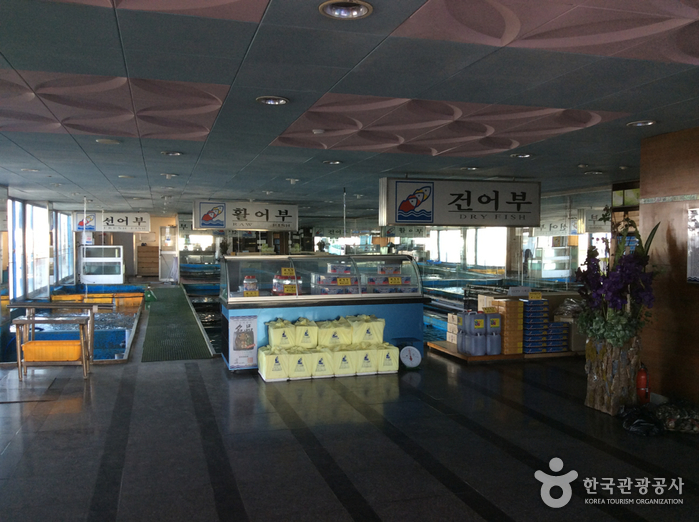
[군산횟집] 군산횟집은 회정식 전문점이다. 1층 전체를 활어 수족관으로 사용하는 것이 인상적인 곳이다. [궁전꽃게장] 꽃게요리를 전문으로 하는 궁전 꽃게장. 전통의 맛을 계승시켜 현대인의 입맛에 맞고 먹음직스럽게 양념된 꽃게살이 껍질 안을 꽉꽉 채우고 있어 살이 부드럽고 달콤하여 남녀노소 누구나 즐길 수 있는 다양한 꽃게 메뉴가 준비되어 있다.
This villa house was built by Kumamoto Rihei, a large Japanese landlord who managed a large-scale farm in Gunsan during the Japanese colonial period. It served as a temporary residence during spring and harvest visits to the farm and features a mix of Western, Korean, and Japanese architectural styles. After liberation, it became known as Lee Young-chun House when Dr. Lee Young-chun, a pioneer in rural health and hygiene in Korea, resided there. Due to its beautiful exterior, it has been used as a filming location for many movies and dramas such as Bingjeom, Hourglass, and The Rustic Period. Dr. Lee Young-chun, called the Schweitzer of Korea, had the pen name Ssangcheon (雙川), meaning two streams that heal physical illness and the soul. Born in Yonggang-gun, Pyeongannam-do in October 1903, he became director of Jahye Clinic at the young age of 33 in April 1935, introduced by his homeroom teacher Watanabe from Gyeongseong Imperial University while studying law at Pyeongyang High School. He cared for over 20,000 tenant farming families affiliated with the Kumamoto farm in Gaejeong, Jeonbuk, and implemented Korea's first school nurse system and health insurance association.
Shimatani Safe is a safe-building constructed in the 1920s by Shimatani Yasoya, a representative farmer in the Gunsan area during the Japanese colonial period. Shimatani was a figure interested in collecting cultural assets of the Korean people and illegally collected numerous artworks, including the Balsan-ri Stone Lantern and the Five-story Stone Pagoda. This building was a place where the antiques collected by Shimatani were stored. The building is a three-story concrete structure with an iron safe door at the entrance and windows secured with iron bars and steel plates as a double locking device. Shimatani Yasoya, who created a farm on the site of the current Balsan Elementary School, was from Kukagun, Yamaguchi Prefecture, Japan. After accumulating wealth in the brewing business in Japan, he came to Gunsan looking for cheap rice, the raw material for Japanese sake. In December 1903, he started creating a farm by purchasing land near Balsan-ri with 70,000 won. By 1909, he owned 486 jeongbo of farmland across two other myeon in addition to Impi and became a farm owner. Shimatani was unusually obsessed with land; after liberation, to protect his farm, he applied for naturalization as a Korean to the U.S. military government. Even after other Japanese left, he refused to return to Japan, earning the nickname of the last Japanese farmer in Gunsan. However, eventually, he was forcibly encouraged by the U.S. military government to leave and boarded the last repatriation ship at Busan Port with only two suitcases. This building forms a single unified structure with a semi-basement first floor and two above-ground floors, with wooden floors dividing each inside floor. The windows leading outside are barred and have steel doors on the outer side as a double security measure. The entrance door features a distinct USA mark, indicating it was imported from the United States before World War II. The semi-basement safe contained textiles and food, the second floor stored important farm documents and cash, and the third floor housed many ancient Korean artworks.
Impi Station, located in Sulsan-ri, Impi-myeon, Gunsan-si, is a building constructed around 1936 as a railway station on the Gunsan Line. The station was originally supposed to be built in Impi-eup, but folklore says local Confucian scholars opposed it for geomantic reasons, leading to the line passing through Sulsan-ri. During the Japanese occupation, the Gunsan Line was an important route for transporting agricultural products from Jeollanam-do and Jeollabuk-do to Japan via Gunsan Port, carrying a painful history of exploitation. Impi Station showcases a typical architectural style and technique of small rural station buildings and is relatively well preserved, making it valuable architecturally and historically in railway terms. It was downgraded to an unattended station on April 1, 1995, and freight services stopped on September 30, 2005. Currently, it features a passenger car exhibition hall, Sisilli Square, and Bangjuk Park, along with traditional restrooms, a well site, and an Opo platform, attracting tourists through stories connected to the works of novelist Chae Mansik, a native of this area.
优先展示路线结束后方便休息的住宿
注册成为会员,让更多人认识你的频道。
(成为会员后,在“我的页面”中设置 Instagram、YouTube、博客链接,我们会在你发表的每条评论旁一起展示。)
““住在弘大附近,晚上去了一圈咖啡馆,城市夜景和氛围都太完美了。””
以访客身份发表的评论,不会显示任何社交账号链接或个人资料卡片
分享一条关于这个地点的小贴士吧。
或者以访客身份快速留下一个评论。
请登录后再上传照片。
还没有任何评论,快来写下你的第一条感受吧!