享受高城独特的传统文化 in 江原特别自治道 高城郡 · schedule 其他 · distance 30km · 6 stops · highlights 청간정, Ayajin Beach, Cheonhakjeong / Munampo Port
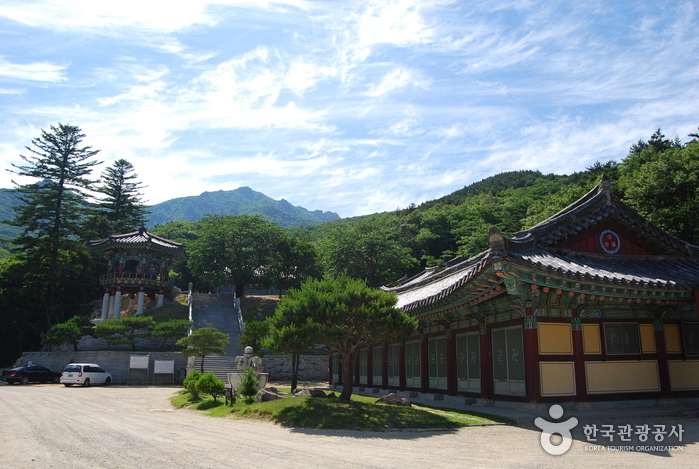
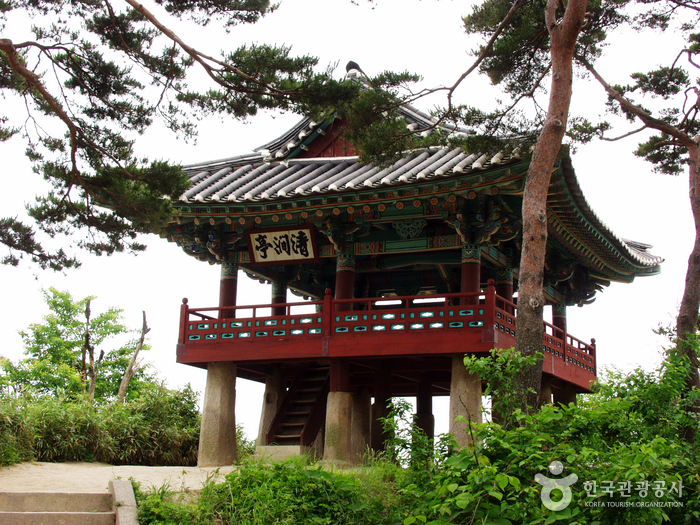
高城位于江原道最北端,是一个传统文化生机勃勃的地方。这里有为躲避寒冷而建造的独特传统民居,以及宋江郑哲先生的《关东别曲》中出现的青澗亭。漫步于依山而建的村庄和民居,眺望碧蓝的大海,能够自然感受到高城的独特魅力。
这条路线是单日行程示例。你可以直接保存,或扩展为 AI 行程。
토성면 청간리 동해안 산록에 있는 청간정(淸澗亭)은 설악산 골짜기에서 흘러내리는 청간천과 만경청파가 넘실거리는 기암절벽 위에 팔각지붕의 중층누정으로 아담하게 세워져 있으며, 이곳에서 바라보는 일출과 월출시의 장엄함과, 밀려오는 파도가 마치 뭉게 구름이 일다가 안개처럼 사라져 가는 황홀경으로 관동팔경중 수일경으로 손꼽히고 있다.
Ayajin Beach is a place with beautiful surrounding scenery, where large and small rocks, clear sea, and clean white sand come together, making it suitable as a family vacation spot. The beach is covered with fine sand, and the water depth is about 1.5m to 2m up to 30 meters from the shore, allowing safe swimming. It is temporarily operated every year in cooperation with the military unit. Also, visitors can enjoy both fishing and swimming, leading to an increasing number of vacationers each year.
Besides the well-known Cheongganjeong famed for its coastal scenery in Goseong-gun, there is the lesser-known Cheonhakjeong, located about a 10-minute drive north from Cheongganjeong, crossing Ayajin Hill to a village called Gyoam-ri. Cheonhakjeong was established in 1931 through the initiative of local leaders Han Chi-eung, Choi Soon-mun, and Kim Seong-woon. It is a single-story pavilion with two bays in the front and side, featuring a hip-and-gable octagonal roof. The pavilion's front bears a plaque with the name Cheonhakjeong, and inside are plaques with the Cheonhakjeong record and, to its left, a Cheonhakjeong poem plaque. Cheonhakjeong sits atop coastal cliffs carved with mysterious rock formations facing the East Sea, surrounded by pine trees over 100 years old, adding to its scenic beauty. This place is a well-known sunrise spot. Unlike the typical East Coast sunrise sites like Naksansa Uisangdae, this pavilion rests on high rocky cliffs, with dense pine forests around, creating a magnificent sunrise view. After enjoying the sunrise at Cheonhakjeong, it is also good to visit Munam-ri harbor along the coastal road heading north. Munam-ri port is a small harbor where jagged rocks extend into the sea, offering a peaceful fishing village atmosphere. The sunrise viewed from Neungpadae at Munam Port is as beautiful as any beach on the East Coast. It is a good choice to visit Munam Port to appreciate a quiet morning sunrise.
The Eomyeonggi Old House located in Goseong-gun, Gangwon-teukbyeoljachi-do, was purchased in the 1860s by the current owner Eomyeonggi’s great-grandfather Eomyongsu. The house originally settled on this site about 400 years ago but was burned down in a fire. It was restored to its former appearance around 1750 (26th year of King Yeongjo) by Eotaejun. Situated on a sloping hillside, the house occupies a wide plot with an L-shaped main building. To the left is a mill, to the right is a haengnangchae (auxiliary quarters), and at the back is a barn. The main building contains both the anchae (inner quarters) and sarangchae (men’s quarters) in one structure. It measures four rooms wide and three rooms deep with a three-row stacked structure. On the left side of the building is a large kitchen and cowshed; the center houses the anbang (main room), woodanbang (opposite room), and daecheong (main hall); and on the right are three sarangbang (men’s rooms) arranged vertically. The kitchen and cowshed protruding forward is a typical floor plan often seen in Goseong-gun. A roof is installed between the kitchen and cowshed, and behind them is a fixed grain storage cupboard (dwijoo) attached for storing grain. The sarangbang at the front serves as the owner's daily living space, while the two sarangbang behind are for receiving guests. A notable feature of this house is the 'deogeumae,' a space appearing between the roof and ceiling visible in the anbang, woodanbang, and middle room. It serves as storage when needed and also blocks cold air descending from the roof.
Wangkok Village is located about 1.5 km inland from the coast and is surrounded by five hills shaped like peaks about 200m above sea level and the lagoon Songjiho (circumference 4km, area 200,000 pyeong), forming a basin in the shape of a 'gol' isolated from the outside. To the east of the village is Golmusang, to the southeast Songjiho, to the south Hogunsan and Jegoksan, to the west Jinbangsan, and to the north Oeumsan. Oeumsan, located north of the village, extends southwest through the village along the Wanggokcheon stream, forming a settlement with deep longitudinal shape. Houses are naturally arranged along the village road that follows the stream in the village center, characterized by relatively wide vegetable gardens between houses without separate fences, separating the houses by the garden boundaries. The house structure of Wangkok Village includes an anbang (main room), dojangg (storage room), sarangbang (men’s quarters), maru (wooden floor room), and kitchen all in one building, with the kitchen attached to a livestock pen in a combined house structure. The front yard, directly connected to the village road, serves as a communal work space open to outsiders, while the backyard, surrounded by relatively high walls, is a private space for women and not open to others. Only the roof of the backyard is visible, reflecting a design considerate of women's activity space. The traditional houses of Wangkok Village, full of history and tradition, also offer lodging experiences. One can escape modern urban life and spend quiet, relaxed time in a place where time seems to have stopped, living just as 200 years ago.
Songjiho Observation Tower is a four-story observation tower with an area of 278.47㎡, opened on July 5, 2007. Since March 2024, it has operated a beachcombing exhibition & experience center utilizing marine debris. Taking the elevator to the fifth floor allows visitors to enjoy a cafe with a panoramic space. Additionally, Songjiho, newly transformed into a comprehensive tourism leisure town, offers various attractions and activities nearby including Songjiho Beach, Wanggok Village, an auto camping site, and a deep sea water complex, making it popular as a family-themed experiential tourist destination.
优先展示路线结束后方便休息的住宿
注册成为会员,让更多人认识你的频道。
(成为会员后,在“我的页面”中设置 Instagram、YouTube、博客链接,我们会在你发表的每条评论旁一起展示。)
““住在弘大附近,晚上去了一圈咖啡馆,城市夜景和氛围都太完美了。””
以访客身份发表的评论,不会显示任何社交账号链接或个人资料卡片
分享一条关于这个地点的小贴士吧。
或者以访客身份快速留下一个评论。
请登录后再上传照片。
还没有任何评论,快来写下你的第一条感受吧!