
绕行茂岳山下四大宗教圣地 in 全北特别自治道 吉姆杰市 · schedule 其他 · distance 17.8km · 3 stops · highlights Geumsan Church, Geumsansa Temple, Geumpyeong Reservoir
茂岳山位于金堤和完州的交界处,宛如母亲温暖的怀抱包容一切。茂岳山下保留着佛教、新教、天主教和证山教等宗教圣地。代表佛教的金山寺和鬼神寺,新教的金山教会,天主教的水流圣堂,以及证山教的东谷药房。由于宗教不同,参观时的感受和风景也各有特色。摒弃宗教偏见后,这是一段极为美丽的旅程。
这条路线是单日行程示例。你可以直接保存,或扩展为 AI 行程。
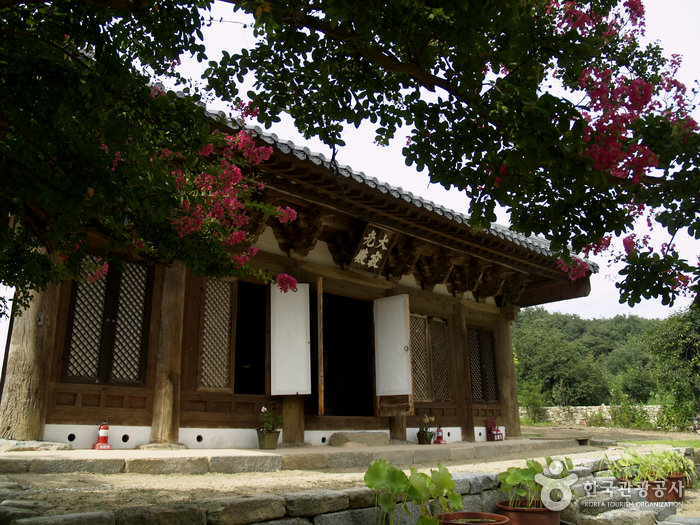
Geumsan Church is a hanok church built in 1908 by missionary Lewis Boyd Tate of the Jeonju line. According to the historical records of the Joseon Jesus Presbyterian Church, the original church was built in 1905 with five kan, but it was moved and rebuilt at its current location in 1908. Next to Geumsan Church, a new church building and parsonage were constructed in 1988. The building is five kan long in the north-south direction, with two additional kan extended eastward, forming an inverted L shape. The interior is open with a pulpit installed where the five-kan north-south section meets the two-kan east section, separating seating for men to the south and women to the east. This layout is a unique feature of early Korean church architecture, addressing traditional Korean social gender separation by providing separate worship spaces within an L-shaped building. The church harmoniously combines traditional Korean architectural styles with Western church features, serving as an important structure for studying the indigenization process of early Korean church architecture. The preservation status of each structure is good, and it is designated and conserved as a cultural asset.
Geumsansa Temple was founded during the Baekje period and has a history of over 1,400 years, keeping its Buddhist light shining to this day as a historically significant temple. It is located on the western foothills of Moaksan Mountain, which rises prominently in the Honam Plain. The temple suffered hardships such as complete destruction of all buildings and about 40 hermitages inside the mountain due to arson by Japanese troops during the Imjin War. However, many cultural properties have been established thereafter and are preserved to the present day. (Source: Geumsansa homepage)
Geumpyeong Reservoir is an agricultural irrigation reservoir located in Geumsan-ri, Geumsan-myeon, known for never drying up due to water flow from Moaksan Mountain. It is situated on the road from Geumsan-myeon office heading toward Geumsansa Temple. The area around Geumpyeong Reservoir, called Orialteo, features a wildflower complex and well-developed walking trails. The name Orialteo was given following a prophecy by Doseon, a geomancer from the late Silla period, who predicted it would become a place where ducks lay eggs. As part of the Moaksan mountain beautification project, facilities like the Geumpyeong Side Path Trail have been constructed, making it both a sightseeing spot and a resting area. The total 3.5 km Geumpyeong Side Path Trail consists of three courses (Section 1, Section 2, Section 3) and an embankment path, with a total walking time of about one hour. Section 1 includes a 1 km waterside deck road and waterside ecological forest, Section 2 a 0.8 km waterside deck road, Section 3 a 1.2 km waterside deck road and natural forest road, and the embankment path is a 0.5 km concrete paved road. A pavilion by the waterside allows visitors to rest and cool down in the shade of lush trees. The reservoir has clean water due to few pollution sources nearby and is also famous as a winter migratory bird site in Korea.
注册成为会员,让更多人认识你的频道。
(成为会员后,在“我的页面”中设置 Instagram、YouTube、博客链接,我们会在你发表的每条评论旁一起展示。)
““住在弘大附近,晚上去了一圈咖啡馆,城市夜景和氛围都太完美了。””
以访客身份发表的评论,不会显示任何社交账号链接或个人资料卡片
分享一条关于这个地点的小贴士吧。
或者以访客身份快速留下一个评论。
请登录后再上传照片。
还没有任何评论,快来写下你的第一条感受吧!


