
达山所爱的休憩地 in 全罗南道 康津县 · schedule 其他 · distance 6.61km · 3 stops · highlights Geumneung Gyeongpodae, Muwisa Temple, Gangjin Dawon
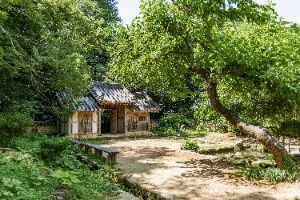
位于江津的白云洞别墅庭园是秋季最美的地方之一。它是湖南三大民间庭园之一,由朝鲜中期隐士李淡路设计并居住的别墅庭园。
这条路线是单日行程示例。你可以直接保存,或扩展为 AI 行程。
Wolchulsan, counted among the three great rocky mountains along with Seoraksan and Juwangsan in Cheongsong, spans north to Yeongam-gun and south to Gangjin-gun along its main ridge. Among the many valleys of Wolchulsan, the Geumneung Gyeongpodae valley in Wollam-ri, Seongjeon-myeon, Gangjin-gun is famous for its beauty. Named because the stream flowing from Cheonhwangbong and Gujeongbong on Wolchulsan looks like a long strip of unbleached cotton fabric, this valley has clear water winding between large and small rocks. Compared to other valleys on Wolchulsan, it generally has a gentle slope and cold water, making it perfect for summer retreats. The course from Gyeongpodae Exploration Support Center along the Gyeongpodae valley to Baramjae and then to Cheonhwangsa takes about 4 hours. Nearby, Seollok Tea Garden Gangjin, tea fields, and Baegundong Garden are also nice to visit.
According to the historical records of Muwisa, the first major reconstruction was carried out in 875 (Heon-gangwang 1) by Dosun Guksa, who founded it as Garoksa Temple. Shortly after, in 905 (Hyogongwang 9), Seongak Guksa Hyeongmi (864–917), a Seon master of the Gajisanmun lineage, stayed at Muwigapsa at the request of Goryeo's founder King Taejo Wang Geon, reconstructing the temple and widely spreading teachings gaining popular support. Thus, Muwisa was founded as Muwigapsa before the early 10th century when Hyeongmi resided there. However, the records state that in 946 (Jeongjong 1), Hyeongmi renamed the temple Moyoksa during a third reconstruction, but 946 was 30 years after Hyeongmi's death and the year the stele for the Goryeo State Muwigapsa Seongak Dae-sa Pyeon-gwang Yeong-tap was erected, making this unlikely. This is probably a later misunderstanding of Hyeongmi's major reconstruction with Wang Geon's support and his propagation of Buddhism. It is clear that Muwisa was founded before the early 10th century, reconstructed by Hyeongmi, and was a Seon temple of the Gajisanmun branch.
Gangjin Dawon is a tea plantation operated by 'Taepyeongyang Dawon,' a leader in Korea's tea production industry, covering an area of 33.3 hectares. The plantation features gentle curves and vibrant greenery, creating a perfect harmony with the towering rocks of Wolchulsan. Wolchulsan is known for its mountain range surrounded by large rocks resembling folding screens, and tea trees have been cultivated here since ancient times around various temples. The renowned scholar Dasan Jeong Yak-yong once praised the tea from Wolchulsan as the second best in the world. Each early May, the foothills of Wolchulsan are painted a dazzling blue-green. In May, Gangjin Dawon has become a tourist attraction not only for tea ceremony enthusiasts but also for general visitors. Guests can enjoy more than sightseeing and photography—they can indulge in the subtle aroma of tea and try a unique experience of picking green tea leaves. While the lush green tea fields are beautiful, the winter scenery of Dawon also offers a new perspective for appreciating the tea fields.
优先展示路线结束后方便休息的住宿
注册成为会员,让更多人认识你的频道。
(成为会员后,在“我的页面”中设置 Instagram、YouTube、博客链接,我们会在你发表的每条评论旁一起展示。)
““住在弘大附近,晚上去了一圈咖啡馆,城市夜景和氛围都太完美了。””
以访客身份发表的评论,不会显示任何社交账号链接或个人资料卡片
分享一条关于这个地点的小贴士吧。
或者以访客身份快速留下一个评论。
请登录后再上传照片。
还没有任何评论,快来写下你的第一条感受吧!


