
玉浦路与头流公园 in 大邱广域市 达城郡 · schedule 其他 · distance 35.7km · 5 stops · highlights Mabijeong Mural Village, Inheung Village, Daegu Arboretum
每年四月,大邱市的樱花盛开。无论是八公山环山路、水城游园地、前山公园,还是玉浦路和头流公园路,市区和山中处处都是樱花。玉浦路的樱花行道树以其独特的姿态著称,头流公园的樱花路是大邱市民和游客的休憩场所。走在密集盛开的樱花树下,微风吹过时,花瓣如雨般飘落,宛如画卷。樱花隧道中央,两侧分别是步行专用的田间小路和绕行道路的花道。夜晚,83塔和多彩灯光交相辉映,夜樱节景色壮观。
这条路线是 2 天行程示例。你可以直接保存,或扩展为 AI 行程。
Mabijeong Village (馬飛亭) in Bonri 2-ri, Hwawon-eup, Dalseong-gun, Daegu, which holds a sad legend about horses, has recently transformed into a 'mural village' through the Green Rural Experience Village Project, becoming a prominent tourist attraction not only in Daegu but nationwide. It is also known as a filming location for the popular SBS variety show Running Man, drawing many domestic and international visitors. The entire village is decorated with murals depicting the nostalgic rural landscape of the 1960s and 70s, using earthen walls and stone walls. Visitors can enjoy murals while experiencing nature, including the nation's only connected tree + intertwined tree love tree, the oldest lacquer tree in Korea, bamboo tunnel paths, and ipap tree tunnel paths.
The entry of the descendants of Samudang (三憂堂) Mun Ik-jeom (文益漸), known as the progenitor of the Nampyeong Mun clan, to Daegu is said to have occurred roughly 500 years ago. They settled in this area of Inheung during the time of his 18th descendant, Insanjae (仁山齋) Mun Gyeong-ho (文敬鎬, 1812~1874). He planned to create a village solely for the Mun clan, establishing it on the site of the original Inheungsa, a great Goryeo temple. The first building constructed in the ancestral home area was Yonghojae (龍湖齋), a study room built around 1820, located now where Gwanggeodang stands. The residence buildings began in the late 1800s, initially with thatched roofs, and the present settlement took shape over the following 100 years. Currently, more than 70 tile-roofed houses are neatly arranged within the village. Although the architecture is less than 200 years old, it preserves the traditional framework of Yangban houses in the Yeongnam region. This village is notable for its unique composition and harmony with the surrounding landscape, rarely seen elsewhere.
Daegu Arboretum is a representative case of environmental restoration that transformed a site where Daegu citizens' household waste of 4.1 million tons was buried from 1986 to 1990 into a natural ecological space on an area of about 74,000 pyeong. Construction began in 1997, and it opened in May 2002, becoming an urban arboretum that restores natural ecological environments and offers citizens a space for rest and learning. The arboretum consists of 21 zones, including coniferous forest, broadleaf forest, flower and tree garden, wildflower garden, medicinal plant garden, and dye garden. It planted about 60,000 trees of over 400 species and about 130,000 herbaceous plants of 800 species across 1,100 flower beds. Additionally, it exhibits around 300 bonsai pieces of 40 species, 2,000 cacti of 200 species, and about 300 unique stones, providing visitors with diverse opportunities to appreciate plants. Currently, about 1,750 species of plants are displayed. Composed of 25 themed gardens and located close to the city center, this arboretum is cherished as an urban arboretum where citizens can observe nature, participate in tours and learning, and enjoy leisure.
Duryu Park is located in Dalseo-gu, the center of Daegu Metropolitan City, and is the largest park in Daegu. In 1977, Daegu city created this 500,000-pyeong park, which features a large outdoor concert hall, a cultural arts center, library, sports facilities such as a baseball stadium, tennis courts, and a swimming pool, as well as memorial facilities like the 2.28 Memorial Tower and the Person Hill. The 83 Tower, located at the summit of Duryusan, is a landmark of Daegu with an observation deck 200 meters high offering panoramic views of Daegu city. Seasonal events include a cherry blossom festival in spring, cooling amenities such as fountains and a swimming pool in summer, autumn foliage viewing spots in fall, and an ice skating rink within the park for winter enjoyment. From the north entrance, Duryu Station on Subway Line 2 is about 500 meters away, and from Seobu Jeongryujang Station on Line 1, it is about 600 meters to Seongdang Pond in the southwest edge of the park, making accessibility excellent.
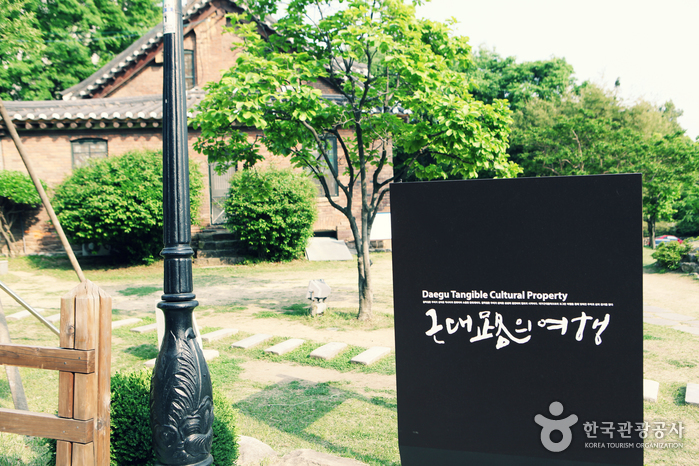
Modern Culture Alley was selected as a Korean Tourism Star in 2012 and has been listed in Korea's Top 100 Tourist Attractions for three consecutive years, making it one of the most popular spots that led alley tours to become a nationwide tourism content. This alley has many photogenic points at key locations, and travel reviews are actively shared through internet blogs and SNS. It is recognized as a representative tourist attraction that introduced the concept of tourism to Daegu, which was once a tourism desert. When visiting Modern Culture Alley, you can encounter the coexistence of Daegu's past, present, and future and experience a special journey where dialogue, understanding, communication, and empathy between generations occur.
优先展示路线结束后方便休息的住宿
注册成为会员,让更多人认识你的频道。
(成为会员后,在“我的页面”中设置 Instagram、YouTube、博客链接,我们会在你发表的每条评论旁一起展示。)
““住在弘大附近,晚上去了一圈咖啡馆,城市夜景和氛围都太完美了。””
以访客身份发表的评论,不会显示任何社交账号链接或个人资料卡片
分享一条关于这个地点的小贴士吧。
或者以访客身份快速留下一个评论。
请登录后再上传照片。
还没有任何评论,快来写下你的第一条感受吧!


