游览奉化的药水旅游地 in 庆尚北道 奉化郡 · schedule 其他 · distance 58.1km · 3 stops · highlights Bonghwa Bukjiri Seated Buddha Carving, Ojeon Mineral Spring, Bonghwa Daksi…
位于庆尚北道北部,东接蔚珍郡,西邻英州市,南靠安东市和英养郡,北接江原道宁越郡、三陟市和泰伯市。这里介绍了位于奉化的清澈药水路线。
这条路线是单日行程示例。你可以直接保存,或扩展为 AI 行程。
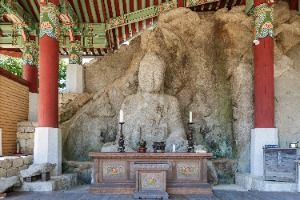
The Bonghwa Bukjiri Seated Buddha Carving is made by carving a large chamber-like space into a natural rock face to house the Buddha statue, in which a 4.3m tall Buddha image is prominently carved. The wide and large face is richly proportioned and wears a slight smile on the front, showing a vivid expression. The shoulders appear somewhat hunched but the figure is dignified, and the robe draped over both shoulders forms thick U-shaped folds across the chest and extends down the arms, covering the pedestal on which the statue sits. The hands are depicted with the right hand raised to the chest and the left hand resting on the knee, enhancing the solemn elegance of the statue. The aureole behind the Buddha is divided into the head aureole and body aureole, featuring small Buddhas sculpted in various places, with a delicate lotus pattern engraved at the center of the head aureole. Considering the softness of the face and body expressions, the statue is estimated to have been made in the late 7th century and together with the Yeongju Gahung-dong Triad Buddha Carving and Seated Buddha (Treasure) represents the Buddhist sculpture style of the Yeongju-Bonghwa area at that time, leaving a significant mark in the history of Silla Buddhist sculpture.
The natural village where Ojeon Mineral Spring is located is called Muljip Village. Ojeon Mineral Spring was discovered by a peddler during the Joseon Dynasty and was selected as the top mineral spring at the national mineral spring contest during the reign of Seongjong, the 9th king of the Joseon Dynasty. It is said that during the 11th king Jungjong's reign, Jusebung, the magistrate of Punggi-gun, often visited this spring, and four praise poems are said to have been passed down. The village where Ojeon Mineral Spring is located was formerly called Aejun, meaning mugwort field. The name originates from the fact that the spring water was effective for skin diseases, and leprosy patients drank and bathed in the mineral water, then used the local mugwort to apply and drink as treatment, curing their illnesses, hence the name Mugwort Field.
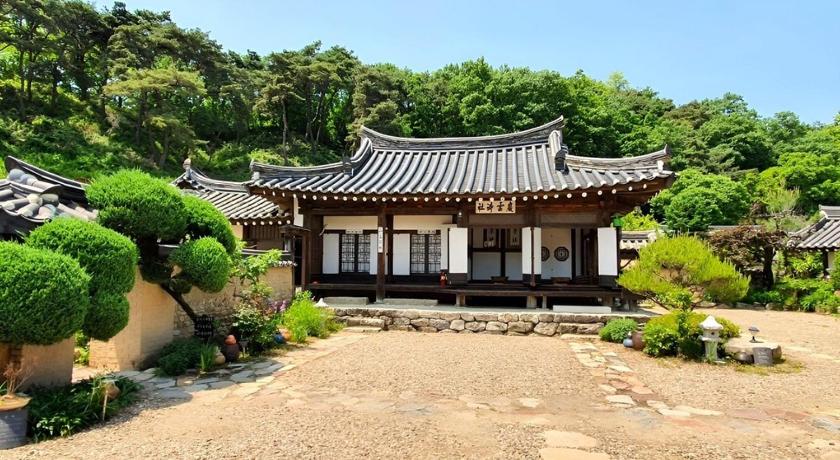
According to the theory of pungsu (geomancy), Daksil Village is named for its shape resembling a golden rooster sitting on its eggs, called Geumgye Poranhyeong. This place was where Chungjae lived in seclusion, and his descendants have formed a clan village for 500 years. Related treasures such as Cheongamjeong, Samgye Seowon, Chungjae Diary, Geunsarok, rare books, and old documents are preserved in the Chungjae Relics Museum. The surrounding mountains, dense pine forests, large rocks, and clean water make it an ideal spot for family outings. Mid-Joseon scholar Lee Jung-hwan praised it as one of Korea's top scenic spots in his book Taekriji. In Seokcheon Valley, there is Seokcheon Jeongsa, built by Chungjae Kwon Beol's eldest son Cheongam Kwon Dong-bo to commemorate his father's virtues. Climbing from Seokcheon Valley to Daksil Village, there are the remains of Chungjae Kwon Beol, and this area is designated as Historic and Scenic Site No. 3. (Source: Bonghwa County Office)
优先展示路线结束后方便休息的住宿
注册成为会员,让更多人认识你的频道。
(成为会员后,在“我的页面”中设置 Instagram、YouTube、博客链接,我们会在你发表的每条评论旁一起展示。)
““住在弘大附近,晚上去了一圈咖啡馆,城市夜景和氛围都太完美了。””
以访客身份发表的评论,不会显示任何社交账号链接或个人资料卡片
分享一条关于这个地点的小贴士吧。
或者以访客身份快速留下一个评论。
请登录后再上传照片。
还没有任何评论,快来写下你的第一条感受吧!