
安东河回村,世界文化遗产 in 庆尚北道 安东市 · schedule 其他 · distance 18km · 3 stops · highlights Buyongdae, Andong Hahoe Village [UNESCO World Heritage], Byeongsan Seowon…
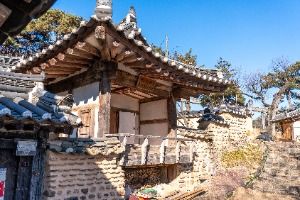
河回村是列入世界文化遗产的传统村落,可以看到北村宅、杨晋堂、忠孝堂等历史悠久的古宅。这里还有供奉西厓柳成龙的丙山书院、美丽的洛东江风景和布容台,以及风景优美的万亭松林,这些都是不可错过的名胜。
这条路线是单日行程示例。你可以直接保存,或扩展为 AI 行程。
Buyongdae is a representative tourist attraction of Andong where you can see the entire view of Hahoe Village at a glance. Buyongdae means a lookout point for lotus flowers and is the best place to view Andong Hahoe Village, which resembles a lotus flower. You can enjoy the view of the Nakdong River winding around the village and the Taebaek Mountain Range surrounding Hahoe Village like a folding screen all at once. It is recommended to visit Buyongdae when traveling to Hahoe Village. ◎ Travel information to experience the charm of Korean Wave - It was the place where the cast of variety show Season 16 enjoyed a mat date. After each took their spot by the Nakdong River and opened up, the date ended with taking couple photos with Buyongdae in the background.
Hahoe Village is a typical clan village where the Pungsan Ryu (柳) family has lived for generations, embodying the beauty of traditional Korean houses. It is also the birthplace of prominent Joseon Dynasty Confucian scholars Gyeomam Ryu Un-ryong and Seoae Ryu Seong-ryong. On April 21, 1999, Queen Elizabeth II of the United Kingdom visited on her third day in Korea, making it even more famous as a place of Korean tradition. The name Hahoe (河回) originates from the Nakdong River flowing eastward in an S-shape, surrounding the village. To the east is Hwasan, a branch of the Taebaek Mountains, whose ridges extend to the village forming low hills. Houses are arranged facing lower ground around the hills, resulting in their orientations varying in all directions (east, west, south, and north). At the village center stand large tile-roofed houses of the Ryu family, surrounded by well-preserved thatched-roof houses. The Nakdong River flows leisurely in front of the village, with the strikingly steep Buyongdae cliff, an endless white sandy beach, and dense pine forests creating a magnificent landscape. In front of Buyongdae, the waterway opens again, allowing the use of ferries. Hahoe Village offers the Hahoe Byeolsingut Talnori mask dance as a permanent performance and holds the annual Andong International Mask Dance Festival every autumn. Nearby attractions include Bongjeongsa Temple, Gosan Seowon Academy, Gwiraejeong Pavilion, Gye-myung Mountain Natural Recreation Forest, Hakga Mountain Natural Recreation Forest, and Waryongsan Mountain, offering various sights. Notably, on July 31, 2010, Andong Hahoe Village and Gyeongju Yangdong Village were inscribed as 'Historic Villages of Korea' on the UNESCO World Cultural Heritage list. With their inclusion, Korea's world heritage sites number ten, following Seokguram and Bulguksa, Haeinsa Janggyeong Panjeon, Jongmyo Shrine (1995), Changdeokgung Palace, Suwon Hwaseong Fortress (1997), Gyeongju Historic Areas, Gochang, Hwasun, and Ganghwa Dolmen sites (2000), Jeju Volcanic Island and Lava Tubes (2007), and Joseon Royal Tombs (2009). Representative local foods in Hahoe include Andong soju, Heotjesatbap (a banquet-style rice dish emerging from the many renowned seowon academies), Andong salted mackerel, and Andong noodles. ◎ Travel Information to Experience the Charm of Hallyu - In the drama , numerous sparks approach while sliding down a rope from a 64m cliff. Egg-shaped fires float gently down the river, and with the shout 'Nakhwa!', large fireworks cascade like a waterfall below the cliff. The Korean-style fire festival Seonyu Julbulnori is a grand purification ritual embodying the wishes of those gathered. Gusanyeong, determined to live by her own will and not for anyone else, smiles brightly amid the starlit hopes at a moment of visual peril.
Byeongsan Seowon originated from Pungak Seodang (豊岳書堂), an educational institution in Pungsan, Andong dating back to the mid-Goryeo period. It was a place where local Confucian scholars gathered to study. During the late Goryeo period, when King Gongmin traveled through Pungsan amidst the Hong Geon-jeok rebellion, he was deeply moved to see the students devoted to learning despite the turmoil and generously gave many books and a grant of land to encourage them. After 200 years, as more houses and roads appeared nearby causing noise, the scholars sought a new location. Seoae Ryu Seong-ryong, after the death of his father and while residing in Hahoe, recommended Byeongsan as the best site. Following his advice, in 1575 (8th year of King Seonjo), the Seodang was relocated and renamed Byeongsan Seowon. In 1614 (6th year of King Gwanghae), disciples including Ubok Jeong Gyeong-se, Changseok Lee Jun, Dongni Kim Yun-an, and Jeongbong An Dam-su built Jondeoksa to commemorate Seoae's scholarship and virtue, enshrining his spirit tablet. The spirit tablet was moved in 1620 (12th year of Gwanghae) to Yeogang Seowon (dedicated to Toegye Yi Hwang), but was returned to Byeongsan in 1629 (7th year of King Injo). There were debates over whether to enshrine Seoae's tablet in both Yeogang and Byeongsan Seowons or in only one, but following the precedent of Zhu Xi, it was deemed acceptable to honor it in two seowons in the same area. In 1662 (3rd year of King Hyeonjong), the spirit tablet of Seoae’s third son, Suam Ryu Jin (1582–1635), was also enshrined. Byeongsan Seowon played a vital role in local education and produced many scholars. It was one of the 47 seowons that survived the 1868 order by Heungseon Daewongun to abolish seowons. (Source: Byeongsan Seowon website)
优先展示路线结束后方便休息的住宿
注册成为会员,让更多人认识你的频道。
(成为会员后,在“我的页面”中设置 Instagram、YouTube、博客链接,我们会在你发表的每条评论旁一起展示。)
““住在弘大附近,晚上去了一圈咖啡馆,城市夜景和氛围都太完美了。””
以访客身份发表的评论,不会显示任何社交账号链接或个人资料卡片
分享一条关于这个地点的小贴士吧。
或者以访客身份快速留下一个评论。
请登录后再上传照片。
还没有任何评论,快来写下你的第一条感受吧!


![Andong Hahoe Village [UNESCO World Heritage] 1](https://tong.visitkorea.or.kr/cms/resource/32/3542032_image2_1.jpg)
![Andong Hahoe Village [UNESCO World Heritage] 2](https://tong.visitkorea.or.kr/cms/resource/34/3542034_image2_1.jpg)
![Andong Hahoe Village [UNESCO World Heritage] 3](https://tong.visitkorea.or.kr/cms/resource/64/4059764_image2_1.jpg)
![Andong Hahoe Village [UNESCO World Heritage] 4](https://tong.visitkorea.or.kr/cms/resource/65/4059765_image2_1.jpg)
![Byeongsan Seowon [UNESCO World Heritage] 1](https://tong.visitkorea.or.kr/cms/resource/51/3575951_image2_1.jpg)
![Byeongsan Seowon [UNESCO World Heritage] 2](https://tong.visitkorea.or.kr/cms/resource/52/3575952_image2_1.jpg)
![Byeongsan Seowon [UNESCO World Heritage] 3](https://tong.visitkorea.or.kr/cms/resource/53/3575953_image2_1.jpg)
![Byeongsan Seowon [UNESCO World Heritage] 4](https://tong.visitkorea.or.kr/cms/resource/54/3575954_image2_1.jpg)


