静かな栄光を巡る1泊2日の旅行コース in 全羅南道 栄光郡 · schedule 1泊2日 · distance 68km · 7 stops · highlights Bulgap Reservoir Waterfront Park, 불갑다향, Baeksu Coastal Road

清浄な自然環境と千年の歴史が息づく都市、栄光で過ごす旅行コースです。ハルメボリパプやプルガプ貯水池の水辺公園を通り、プルガプダヒャンで文化体験をします。ペクス海岸道路で美しい夕日を眺めながらドライブを楽しめます。ポプソンポ、スッチェイ公園、スッチェイ花の丘で自然の美しさを満喫し、百済仏教最初到来地やウォルボンジェを経て、ムムル山幸福の森の裸足の黄土道、栄光香校まで続く旅行コースでは、美味しい食事や体験、自然の中で癒やしの時間を過ごせます。
このコースは2日間の旅程サンプルです。そのまま保存するか、AI日程に拡張できます。
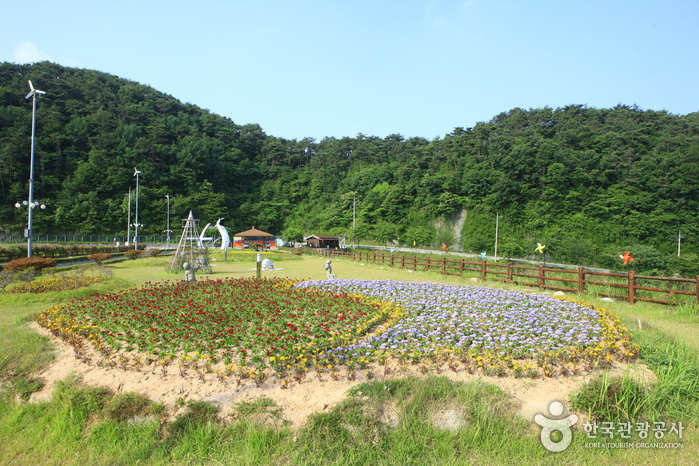
Boasting the largest scale freshwater reservoir in Gwangju and Jeonnam, this waterfront park developed as a tourist attraction is well maintained with various flowers that bloom seasonally and landscaping. There are well-developed waterfront walking paths and park garden trails around Bulgap Reservoir for healing strolls, with sculptures and photo zones scattered throughout the park. Along the waterfront walkway, colorful tourist wind-powered streetlights are installed in an eco-friendly manner, providing beautiful and vibrant sights for visitors enjoying the autumn atmosphere. From April to October every year, a fountain in the waterfront park operates according to schedule. As part of the resource development project of Bulgap Reservoir, facilities to increase fishery resources (floating-type spawning grounds, underwater spawning grounds, waterfront spawning grounds) and a complex stream facility have been installed to protect native fish. Additionally, the Korea Rural Community Corporation manages water quality and IT safety monitoring to maintain the reservoir's water quality. Nearby, Bulgapsa Temple is located 4 km from Bulgap Reservoir Waterfront Park.
불갑다향은 관광두레를 통해 농촌교육, 예절교육, 다도체험 등을 개발한다. 불갑다향의 강현식 대표는 군산대학교 산업도예를 전공했고, 국가 중요무형문화재 백산 김정옥 선생의 전수자로 현재까지 영광군 불갑면에서 도예가로 활동한다. 불갑다향 사업장 주위에는 불갑사, 권역사업 상사화피는마을, 불갑수변공원 등의 영광군 대표 관광지가 있다.
Baeksu Coastal Road extends 16.8 km from Gilyong-ri to Baegam-ri Seokgumi Village in Baeksu-eup, Yeonggwang-gun. It is a representative drive route along the West Coast where dramatic rock formations, vast mudflats, and blazing sunsets create a magnificent landscape. Especially notable is the 3.5 km Sunset Coast Trail, a wooden deck walkway below the coastal road, allowing visitors to walk near the sea and enjoy beautiful scenery. It was selected as one of Korea's 100 Beautiful Roads by the Ministry of Construction and Transportation in 2006 and won the grand prize at the 1st Korea Natural Scenic Award by the Ministry of Land, Transport and Maritime Affairs in 2011, reflecting outstanding evaluations. It also features Korea’s only Sunset Exhibition Hall, along with various pensions and restaurants. (Source: Yeonggwang-gun Culture and Tourism)
Beopseong was known as a good place to live because it was not only a major fish market (pasi) due to the abundant croaker caught in the Chilseon sea but also had a warehouse that stored grains from 12 different counties, with 715 households in 1895, larger than Yeonggwang-eup. Inside the fortress, there were Confucian schools (hyanggyo), three gate towers, Dongjoru, a military flag repository (gungi-go), Jinchang, Hwansanggo, Jobokgo, Bingheojeong, Bokgochang, and Gungichang. However, after numerous upheavals including the Donghak Peasant Revolution and the Imjin War, most structures burned down, leaving only traces of the fortress surrounding Jinnae-ri village, the roof of the military flag repository at the pier, and two wells. Beopseong was an important naval base and a key point for tax collection and transportation during the Joseon Dynasty, with many historical events preceding this era.
Supjaengi is a forest formed by zelkova trees planted as an extension of Beopseongjinseong, built during the reign of King Jungjong of Joseon, which have grown for over 100 years. It serves as the main stage for the annual Beopseongpo Dano Festival, is designated as National Scenic Site No. 22, and was selected as one of Korea's beautiful forests in 2006. Located where Supjaengi Park connects to Baekje Buddhism's first arrival site, Supjaengi Flower Garden offers walking paths between flowers and trees, allowing visitors to enjoy the beautiful scenery of Beopseongpo. It is recommended as a healing travel destination to visit with family. (Source: Yeonggwang-gun Cultural Tourism Homepage)
The spread of Buddhism on the Korean Peninsula during the Three Kingdoms Period is clear in Goguryeo (in the 2nd year of King Sosurim under the Jin general Buyeon) and Silla (during King Nulji Maripgan with the monk Mukhoja), with clear routes of transmission and initial preaching sites, but the transmission route and first arrival site of Baekje Buddhism were unclear. It has been orally passed down that the Indian monk Marananta Jonja came to Beopseongpo in Yeonggwang, preached Buddhism, and founded Beopgapsa Temple, marking the start of Baekje Buddhism. In 1998, academic verification by Yeonggwang-gun (Dongguk University) established that Yeonggwang land is the first arrival site of Baekje Buddhism. Beopseongpo Jawoo-du is the place where Indian monk Marananta first set foot in Baekje in A.D. 384, coming via the Eastern Jin dynasty of China, and it is being developed as a tourist attraction to commemorate this. The 'Beop' (法) in Beopseongpo refers to Buddhism, and 'Seong' (聖) refers to the saint Marananta. * Site area - 45,439㎡ (13,745 pyeong)
Hyanggyo are educational institutions established by the state to honor great Confucian scholars and to provide Confucian education and moral cultivation for local residents. Yeonggwang Hyanggyo, built during the reign of King Gongmin of Goryeo (1351–1374), was repaired in the 15th year of Seonjo (1582). It was destroyed by fire during the Japanese invasions of 1592 but was restored afterward, with the current buildings believed to date from the late Joseon period. The extant buildings include Daeseongjeon, Dongmu, Seomu, Myeongnyundang, Dongjae, and Seojae. The site follows the common hyanggyo layout of jeonmyo-huhak, with the ancestral ritual space centered on Daeseongjeon in front and the learning space centered on Myeongnyundang in the rear. According to tradition, the layout of this hyanggyo was referenced during the reconstruction of Seoul Munmyo, which burned down in the 2nd year of Jeongjong (1400). In the Joseon dynasty, the state provided land, slaves, and books to support students, but after the Gabo Reform of 1894, it ceased educational functions and now holds rituals only in spring and autumn. (Source: Cultural Heritage Administration)
会員登録して自分のチャンネルも一緒に紹介してもらう
(会員になると、マイページで設定した Instagram・YouTube・ブログのリンクが、あなたのコメントと一緒に表示されます。)
“「弘大近くに滞在して、夜のカフェ巡りをしました。街の夜景も雰囲気も最高でした。」”
ゲストとして投稿したコメントには、SNSリンクやプロフィールカードは表示されません。
この場所についてのちょっとしたコツや感想をシェアしてください。
ゲストとして、気軽にひとことコメントを残すこともできます。
写真の添付はログイン後に利用できます。
まだレビューがありません。最初の感想を投稿してみましょう!