清浄な気を宿す例川への1泊2日の旅 in 慶尚北道 イェチョン郡 · schedule 1泊2日 · 8 stops · highlights Hoeryongpo, 예천삼강문화단지, 용궁순대

例川は美しい自然とアーチェリーの情熱が共存する都市である。千年の古刹から内陸に作られた神秘的な島村、生態資源に特化した観光地の村、さらに空に届きそうな公園や世界で最も美しいアーチェリー専用競技場まで、どの場所も心と目を惹きつける魅力的なスポットが揃っている。充実した例川の旅を楽しめる。
このコースは2日間の旅程サンプルです。そのまま保存するか、AI日程に拡張できます。
Hoeryongpo is a place where Naeseongcheon, a tributary of the Nakdong River, winds around forming a sandy beach in Daeun-ri, Yongmun-myeon, Yecheon, and a village is located within it. The river, which used to flow leisurely, suddenly turns direction, making a round circle and flowing upstream, creating a peculiar scenery selected as one of Yecheon’s 8 scenic spots. To see this scenery properly, you need to go up to Jangan-sa Temple in adjacent Hyangseok-ri. From Hoeryongdae Pavilion in front of Jangan-sa, built in 1998, you can see at a glance Naeseongcheon winding like a water circle, along with the island-like village inside. Hoeryongpo Village is a small and quiet village with only a few households left as most have moved to the city, and it takes less than an hour to make a round trip. To enter the village, you must cross the village’s symbol, the Ppyongppyong Bridge, which is made of perforated construction site structures; when the water level is high, water spurts through the holes, hence the name. Originally a temporary bridge, it became a famous feature of Hoeryongpo and was not removed, with another vehicle-accessible bridge built on the opposite side. Nearby attractions include Jangan-sa on Biryongsan across the village, Wonsanseong Fortress, Yongmun-sa Temple, and Seoksongnyeong.
예천 삼강문화단지는 정부의 3대문화권 문화생태관광기반 조성사업의 일환으로 추진된 관광지 조성사업으로서, 낙동강 연안의 우수한 강문화와 생태자원을 관광자원으로 특화하고 기존관광자원과 연계하여 다양한 볼거리와 함께 전시, 체험, 교육이 하나의 공간에서 가능하도록 조성된 새로운 가족형 문화체험 관광지구이다.
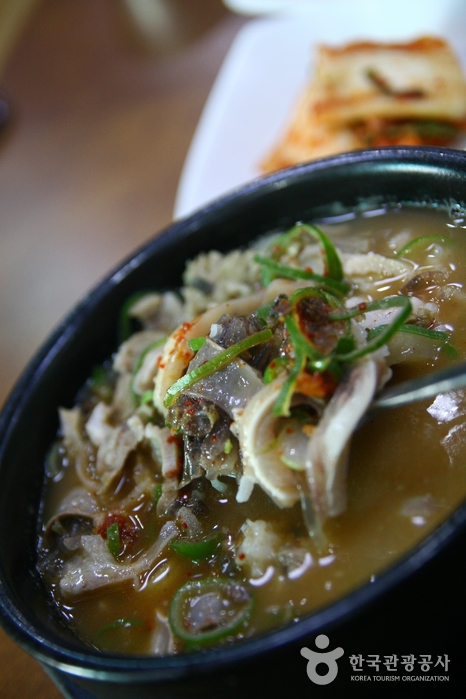
용궁순대는 40여 년 전통으로 대를 잇는 식당이다. 용궁순대는 천안의 병천순대나 용인의 백암순대와 함께 3대 순대로도 불리며, 예천군 용궁면에서 만들어졌다고 해서 용궁순대가 됐다고 한다. 여느 순대들과 비교해 용궁순대가 특별한 것은 두툼한 돼지 막창으로 만든다는 점이다. 돼지의 소창이나 대창을 사용하는 일반적인 순대와 달리 막창으로 순대피를 만드는 용궁순대는 그 식감이 더 풍부하고 깊다.
Named because it resembles lotus flowers floating on water, Geumdangsil Village is located in Sanggeumgok-ri, Yongmun-myeon, Yecheon-gun, Gyeongsangbuk-do. It is an experiential village where you can stay in traditional Hanok guesthouses among six restored thatched-roof houses and seven tile-roofed houses. The village preserves many cultural relics including the site of Yangjudagam Iyuuin's 99-room mansion, the ancestral home and Choganjeong of Chogan Kwon Munhae, Yongmun Temple, Geumgok Confucian Academy, Chuwonjae, Sagwaedang old house, and Bansongjae old house in memory of Kim Bin, a royal secretary from King Sukjong of Joseon’s era. A stone wall path connects about ten old houses like a maze, maintaining the village's original appearance. Another attraction is Choganjeong and the pine forest to the northwest of Geumdangsil, designated as a natural monument. About 900 pine trees covering approximately 800 meters from beneath Geumdangsil Omibong to in front of Yongmun Elementary School form a naturally twisted forest around 200 years old, 13-18 meters high. Created for flood prevention and wind protection, today it serves as a resting and event space for the village.
Choganjeong is a pavilion built by the Joseon Dynasty scholar Chogan Kwon Munhae (1534-1591) after he retired from office for the cultivation of his mind and body. Kwon Munhae was a disciple of Toegye Yi Hwang, passed the civil service exam, and served as Daegu Governor and Left Vice Minister, and authored Korea's first encyclopedia, 『Daedong Yunbu Gunok (大東韻府群玉)』. Originally built in 1582 (15th year of King Seonjo), Choganjeong burned down in 1592. Kwon's son Kwon Byeol rebuilt it in 1626 (4th year of King Injo), but it was destroyed by fire again in 1636 (14th year of Injo). The current building was moved slightly west from its original site and built in 1740 (16th year of King Yeongjo) by Kwon Bongui, a descendant of Kwon Munhae, and renovated by descendants in 1870 (7th year of King Gojong). The signboard named 'Choganjeongsa' was written by Sogo Park Seung-im and was lost multiple times due to fires; legend says it was found buried in the swamp in front of the pavilion, where a bright light had shone. The pavilion stands on a stone terrace built on a rocky base, with three bays facing front and two bays on the side. The left two bays at the front are equipped with heated ondol rooms, and the rest is a wooden floor with railings on all sides. The roof features a double eave hipped-and-gabled style. Choganjeong harmonizes with the surrounding beautiful scenery and is currently recognized as a tourist attraction and a filming location for movies and dramas.
Sobaeksan Sky Ridge Park is located at an altitude of 730 meters on Maebong slope in Yongmun-myeon. Within the park, there are an observatory, walking trails, resting areas, various sculptures, and photo zones. The path to the observatory is made of a deck trail, making it accessible for anyone to easily climb. The observatory at Sky Park is designed with the motif of the Milky Way in the night sky, depicting starlight flowing down Sobaeksan. Following the spiral staircase of the observatory, visitors can enjoy a 360-degree panoramic view of the slopes of Sobaeksan.
Yongmunsa Temple is a branch temple of Jikjisa, the 8th district of the Jogye Order of Korean Buddhism. It is said to have been founded in 870 (the 10th year of King Gyeongmun of Silla) by the monk Duun. When King Taejo Wang Geon of Goryeo was on his way to conquer Silla, he visited this temple, but heavy mist obscured the path, and two blue dragons appeared out of nowhere to guide the way, thus it was named 'Yongmunsa.' During the reign of King Myeongjong of Goryeo, the name was changed to 'Yongmunsa Changgisa,' but in the Joseon era, it was renamed Seongbulsa Yongmunsa after enshrining the placenta stone of Queen Sohyeon, wife of King Sejong. It was later renamed Sobaksan Yongmunsa when the placental shrine of Crown Prince Munhyo was placed here during King Jeongjo's reign. Within the precincts are Daejangjeon, Eungjinjeon, Myeongbujeon, Jinyeongdang, Iljumun, Jaunru, and the Seongbo Museum. The museum houses over ten cultural heritage items including Korea's only remaining Yunjangdae – a revolving sutra repository. Additionally, the wooden panel paintings made during King Sukjong's period of Joseon are known to be the oldest in Korea. Especially, turning the Yunjangdae where the Tripitaka Koreana woodblocks were stored is believed to dispel worldly desires and accumulate merit, fulfilling wishes, attracting continuous visitors since ancient times.
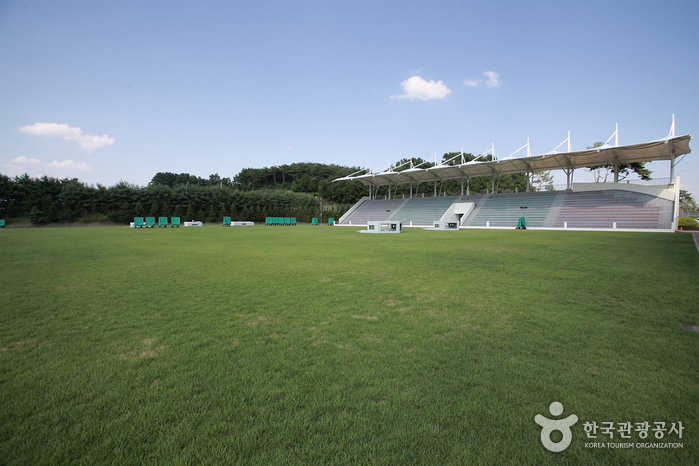
예천진호국제양궁장은 세계에서 가장 아름다운 양궁 전용 경기장으로 예천 출신 김진호 선수와 김수녕, 윤옥희, 장용호 선수 등 이름만 들어도 알 수 있는 국가대표 양궁선수를 배출한 곳이다. 국제양궁대회와 국내양궁대회 등 매년 수많은 대회를 개최하여 양궁의 메카 예천을 알리는데 큰 몫을 하고 있다.
コース後に休みやすい宿を集めました
会員登録して自分のチャンネルも一緒に紹介してもらう
(会員になると、マイページで設定した Instagram・YouTube・ブログのリンクが、あなたのコメントと一緒に表示されます。)
“「弘大近くに滞在して、夜のカフェ巡りをしました。街の夜景も雰囲気も最高でした。」”
ゲストとして投稿したコメントには、SNSリンクやプロフィールカードは表示されません。
この場所についてのちょっとしたコツや感想をシェアしてください。
ゲストとして、気軽にひとことコメントを残すこともできます。
写真の添付はログイン後に利用できます。
まだレビューがありません。最初の感想を投稿してみましょう!