赤い紅葉に魅せられ、銀色のススキに酔う in ウルサン広域市 ウルジュ郡 · schedule その他 · distance 66.9km · 5 stops · highlights Ulju Daegok-ri Bangudae Petroglyphs [UNESCO World Heritage]…

10月末になると、紅葉の波は「嶺南アルプス」があるカジサンまで続く。カジサンにあるソクナムサは赤い絨毯をまとい、山頂の峠は銀色のススキの波が揺れる。パンギュデの岩刻画も紅葉の名所として知られている。秋の終わりに咲いた紅葉が岩刻画へ向かう道を華やかに彩る。樹木が茂る小道を軽くトレッキングするのに適している。
このコースは2日間の旅程サンプルです。そのまま保存するか、AI日程に拡張できます。
In Daegok-ri, Eonyang-eup, Ulju-gun, Ulsan, there is the scenic Bangudae, where a ridge of Yeongosan extends down and ends abruptly in striking rock formations, resembling the shape of a turtle lying flat, hence the name Bangudae (盤龜臺). The clear waters flowing down from Cheonjeon Valley in Doodong-myeon gather here to form a lakeside, celebrated as a place of exceptional beauty. Since ancient times, poets and scholars from various regions visited to enjoy the scenery through poetry. Petroglyphs are pictures carved into rocks by prehistoric people, depicting various events from their daily lives. Typically made on large rocks or sacred sites, these places were likely gathering spots for rituals. The Ulju Daegok-ri Bangudae Petroglyphs are located at the so-called "Geonneo Gakdan," a tributary of the Taehwa River called Daegokcheon, with the main rock face measuring 10m wide and 3m high. Numerous images are also found on surrounding rocks, totaling about ten sites with petroglyphs. These carvings are believed to have been made over multiple periods from the Neolithic era, showing stylistic differences by era. They are divided into two techniques: the area-chiseling method, where entire interiors are carved out, and the outline-chiseling method, where only contours are engraved. The depicted subjects include sea animals, land animals, humans, and tools. Sea animals include whales, seals, and turtles; land animals include deer, tigers, wild boars, and dogs. Human figures appear as faces only, standing frontally or sideways, and riding boats. Tools depicted include boats, fences, nets, harpoons, and crossbow-like objects. These images are thought to represent prehistoric hunting activities, carved with the hope for successful hunts and abundant game. Expressing animals and hunting scenes vividly and realistically, these petroglyphs serve as both hunting and religious art, offering invaluable insight into prehistoric life and customs. As the earliest whale hunting record and the first prehistoric art on the Korean Peninsula, the Bangudae Petroglyphs and the Cheonjeon-ri epigraphy and petroglyphs along the approximately 3km "Banguchon Petroglyphs" were inscribed as a UNESCO World Heritage site on July 12, 2025, representing a premier historical tourism resource of Korea.
Deung-eok Hot Spring is a large-scale hot spring complex located in Deung-eok-ri, Sangbuk-myeon, Ulju-gun, Ulsan Gwangyeoksi at the foot of Sinbulsan, known as the Alps of Yeongnam. Its official name is Deung-eok Oncheonwon Protection Area and it is also called Sinbul-san Oncheon. The hot spring water is alkaline bicarbonate water containing calcium, emerging from 600 to 800 meters underground. It is effective for various skin inflammations, neuralgia, digestive disorders, bronchitis, high blood pressure, and skin beauty, and especially serves as mineral water that can be drunk. Nearby tourist attractions include Jasujeong Cave Country, Jakcheonjeong, the Silla temple Seoknamsa, and Tongdosa, and it is connected to Yeongchuksan, Gajisan, and Jaeyaksan mountains, offering the enjoyment of hiking and relaxation together. The main road in front of the hot spring complex is actually a downhill slope, but due to a visual illusion caused by snow, it appears to be an uphill slope, known as a goblin road. At the point where the START sign is located, if you put the car in neutral and stop, the car seems to slide uphill on this slope.
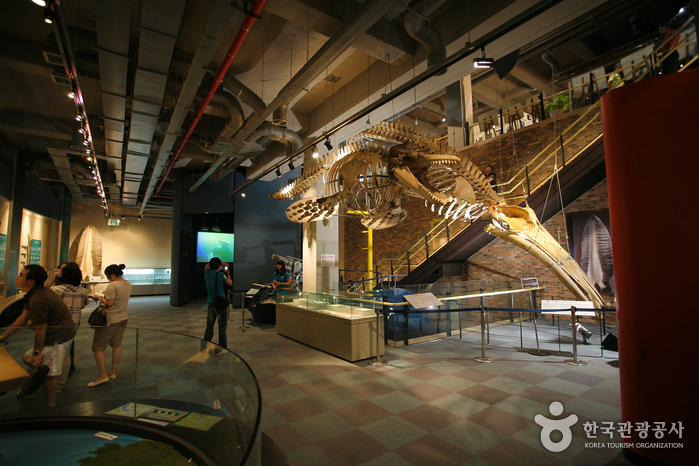
옛 고래잡이 전진기지였던 장생포에 국내 유일의 고래 박물관을 2005년 5월 31일 개관하였다. 1986년 포경이 금지된 이래 사라져가는 포경유물 250여 점을 수집, 보존, 전시하고 있으며 고래뱃속길, 바닷속여행 등 어린이 체험관, 브라이드 고래 골격, 범고래 골격, 귀신 고래 전문관, 복원 포경선 등 다양한 볼거리를 제공하고 있다.
Located in Nam-gu, Ulsan Metropolitan City, the Jangsaengpo Whale Cultural Special Zone is a themed tourist destination with the country's only whale tourism infrastructure. It features the Whale Museum and the Whale Ecology Experience Center, the nation's first dolphin aquarium, allowing visitors to broadly experience whale ecology and culture. In July 2009, Korea's first 'Whale Sea Travel Ship' was launched, and in April 2013, it was replaced with a cruise-class vessel, marking the beginning of the full-scale whale tourism era. In May of the same year, a spectacular scene was captured starting with a minke whale followed by thousands of Pacific white-sided dolphins appearing in succession. Riding the Whale Sea Travel Ship offers a special experience of enjoying sea scenery along the coast and exploring real whales. The ship is equipped with various amenities such as a large banquet hall, performance stage, VIP room, meeting rooms, coffee shop, and convenience store, enhancing tourist convenience.
Daewangam Park is the location of Daewangam, where the sun rises the earliest in Korea along with Ganjeolgot in Ulju-gun. Daewangam Park, located at the pointed end extending toward the East Sea from the southeastern tip of Korea, is also famous for the Ulgi Navigation Lighthouse that guides ships in the East Sea. The 600-meter path from the park entrance to the lighthouse is shaded by a dense pine forest, offering coolness and coziness under tall century-old pine trees. Beyond the pine woods, the open coastal cliffs resemble a cluster of gigantic rocks, evoking the illusion of prehistoric dinosaur fossils lying in the blue sea. Legend tells that after the death of Queen Munmu, wife of King Munmu who unified the Three Kingdoms of Silla, she became a guardian dragon and sank under Daewangam in the East Sea of Ulsan. Besides Daewangam, the park is filled with sights such as Namgeun Rock, oddly shaped and said to nearly cause harm when attempts were made to topple it, Tanggeon Rock, Suicide Rock, the rocky islet floating near the shore, and Cheonyeobong. On the right side of the rocky coast is the old Bangojin Fisheries Middle School, founded by the late Lee Jong-san, and beneath it extends about 500 meters of pebble beach that enhances the charm of the rocky coastline.
コース後に休みやすい宿を集めました
会員登録して自分のチャンネルも一緒に紹介してもらう
(会員になると、マイページで設定した Instagram・YouTube・ブログのリンクが、あなたのコメントと一緒に表示されます。)
“「弘大近くに滞在して、夜のカフェ巡りをしました。街の夜景も雰囲気も最高でした。」”
ゲストとして投稿したコメントには、SNSリンクやプロフィールカードは表示されません。
この場所についてのちょっとしたコツや感想をシェアしてください。
ゲストとして、気軽にひとことコメントを残すこともできます。
写真の添付はログイン後に利用できます。
まだレビューがありません。最初の感想を投稿してみましょう!
![Ulju Daegok-ri Bangudae Petroglyphs [UNESCO World Heritage] 1](https://tong.visitkorea.or.kr/cms/resource/84/3507484_image2_1.jpg)
![Ulju Daegok-ri Bangudae Petroglyphs [UNESCO World Heritage] 2](https://tong.visitkorea.or.kr/cms/resource/86/3507486_image2_1.jpg)
![Ulju Daegok-ri Bangudae Petroglyphs [UNESCO World Heritage] 3](https://tong.visitkorea.or.kr/cms/resource/88/3507488_image2_1.jpg)
![Ulju Daegok-ri Bangudae Petroglyphs [UNESCO World Heritage] 4](https://tong.visitkorea.or.kr/cms/resource/89/3507489_image2_1.jpg)