
金星山と神秘的な氷渓谷を歩く in 慶尚北道 義城郡 · schedule その他 · distance 45.5km · 4 stops · highlights Sanun Village, Gyeongdong Charcoal-grilled Ribs, Geumseongsan and Bib…
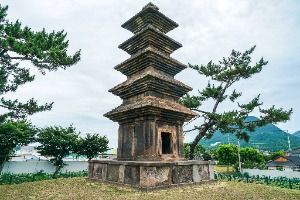
韓国初の死火山である義城の金星山は、その独特な姿に多くの伝説や物語を秘めた山である。龍になれなかったイムギが住んでいた金星山の物語の世界へ旅立とう。慶北必勝の一つである氷渓谷で涼をとることも忘れてはならない。
このコースは1日旅程のサンプルです。そのまま保存するか、AI日程に拡張できます。
Sanun Village is a traditional Bannchon called Daegam Village in Uiseong, a natural scenic Yeongcheon Lee clan[永川李氏] settlement. The village is situated on gentle hills and plains, with Geumseongsan Mountain, which holds many legends, behind it and Bibong Mountain beside it. A reservoir lies in the Geumseongsan valley by the village, with rice paddies spreading along the valley. To the south, Ssanggyegcheon Stream flows, fostering surrounding farmland. Feng shui-wise, it is a typical backs-to-mountain and fronts-to-water terrain, described as a 'fairy sitting before a mirror combing her hair.' The name Sanun[山雲] originated during the flourishing Buddhist Silla era when clouds could be seen drifting below Sujeong Valley. The scholar Lee Gwangjun, who served as Gangwon Province governor in the Joseon Seonjo period, settled here and formed the village. Later residents included Gyeongjeong Lee Minseong, who served as royal secretary during King Gwanghaegun’s reign, and Ungok Lee Heebal, Minister of Justice during King Hyeonjong’s reign. The village is a traditional settlement with many designated cultural assets and traditional houses such as Haknok Jeongsa, Uiseong Ungokdang, Uiseong Sowoodang, and Uiseong Jeomoodang. Visitors can also experience hanok stays and enjoy Sanun Ecological Park adjacent to the village.
Gyeongdong Charcoal-grilled Ribs is a restaurant located in a quiet residential area of Uiseong downtown, known more for its local regular customers than tourists, and is a famous place for beef ribs in the Uiseong area. They personally select the highest grade 1 Hanwoo ribs, trim them, and age for 24 hours. The secret to their flavor is a marinade made by mixing Uiseong garlic with seven other ingredients. The meat is trimmed by hand to reduce fat, and the mild seasoning preserves the natural sweetness of the meat. For meals, cold noodles and steamed rice are available, and when ordering steamed rice, soybean paste stew is served together.
Geumseongsan is a famous mountain in Uiseong with many legends. It stands 531m tall, occupying part of the southern Taebaek mountain range. It is also a volcanic rock complex with a Cretaceous hyangjaru-type caldera. Hiking trails are established along the Geumseongsanseong Fortress, 2,730m long and 4m high, built during the ancient tribal state period of Jomunguk in the Samhan era. Along the fortress are scenic spots such as the shaking rock, Jomun observatory rock, son and daughter rocks, caves, and Sotdae rock. Legend says that placing a tomb on the mountain top will cause drought lasting three months, but the tomb owner will gain great fortune. It is a good place for hiking while visiting the historic Sujeongsa Temple founded by Uisang during the Silla period and the Sanun Daegam village. Bibongsan, also called Jamisan, is a notable mountain formerly known as Taehaengsan or Daehangsan before the Goryeo dynasty. Viewed from the east, Bibongsan looks like a phoenix spreading its wings; from the south, it resembles a general wearing a helmet; from the north, it appears as a brave general facing Oknyobong peak. Below the northern slope lies the Nakdong River, which borders Yechon-gun Jibomyeon and looks like white silk flowing across. In all directions, there are wide plains and famous mountains such as Hakgasan, Palgongsan, Bohyeonsan, Gapjangsan, Noaksan, and Songnisan visible at once.
Binggye Valley is a valley attraction with beautiful natural scenery, designated as a county park. It consists of basalt and rhyolitic tuff formed by Mesozoic Cretaceous volcanic activity. The stream (Ssanggyecheon) flows from northeast to southwest, generally matching the direction of the fault passing through here. The main attractions are the 'ice hole' where ice forms and the 'wind hole' where cold air blows out, registered as the natural monument 'Uiseong Binggye-ri Ice Cave.' Especially, the ice hole has an average temperature of 0.3℃, more than 10℃ lower than the outside temperature, with the highest temperature throughout the year below 5℃, and it has the longest freezing period in Korea (early March to early October). This low-temperature phenomenon occurs because the columnar joints developed on the fluvial cliff create a talus slope formed by weathering and erosion. It is explained by heat exchange through air circulation, and the airflow direction formed in the talus changes with seasons because the temperature of the air stored in the talus and the outside temperature vary. In late autumn to winter, cold outside air enters the talus, continuously settling and getting trapped at the bottom. In spring to summer, cold air inside the talus exits through the bottom, blowing out more strongly while warm outside air enters the talus. Northern plant species like Jommiyokgosari and Handeulgosari appear near this area. (Source: Uiseong Geopark)
コース後に休みやすい宿を集めました
会員登録して自分のチャンネルも一緒に紹介してもらう
(会員になると、マイページで設定した Instagram・YouTube・ブログのリンクが、あなたのコメントと一緒に表示されます。)
“「弘大近くに滞在して、夜のカフェ巡りをしました。街の夜景も雰囲気も最高でした。」”
ゲストとして投稿したコメントには、SNSリンクやプロフィールカードは表示されません。
この場所についてのちょっとしたコツや感想をシェアしてください。
ゲストとして、気軽にひとことコメントを残すこともできます。
写真の添付はログイン後に利用できます。
まだレビューがありません。最初の感想を投稿してみましょう!


![[トンミョン(東明)]一軒家(49m²)| 1ベッドルーム/1バスルーム](https://pix8.agoda.net/hotelImages/35240020/0/823eb92be1ed1971436cdd0a7213dfc1.jpg?ce=0&s=800x600)