慶尚道の中心地だった尚州を訪ねる in 慶尚北道 常州市 · schedule その他 · distance 41.3km · 4 stops · highlights General Jeong Gi-ryong Historic Site, Sangju Imranbukcheon Battle S…
尚州は朝鮮時代に約200年間慶尚監営が置かれ、慶州とともに慶尚道の中心地であった。壬辰倭乱の際には倭軍と激しい戦闘が繰り広げられた臨乱北川戦跡や、陸地の李舜臣と呼ばれた鄭起龍将軍の足跡をたどることができる。慶天台と青竜寺は洛東江に沿って流れる尚州の絶景が望める展望台であり、尚州で必ず訪れるべき名所である。
このコースは1日旅程のサンプルです。そのまま保存するか、AI日程に拡張できます。
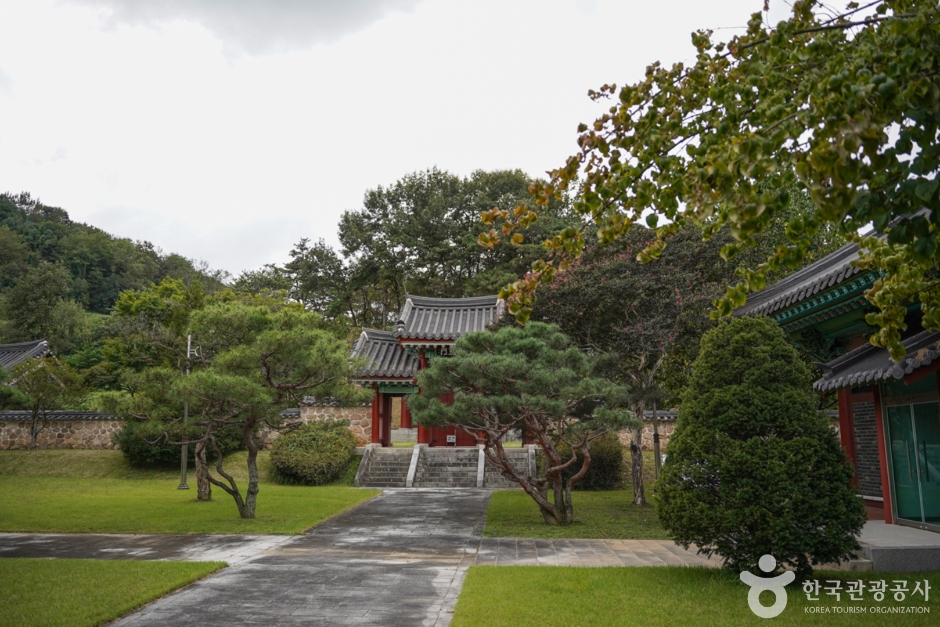
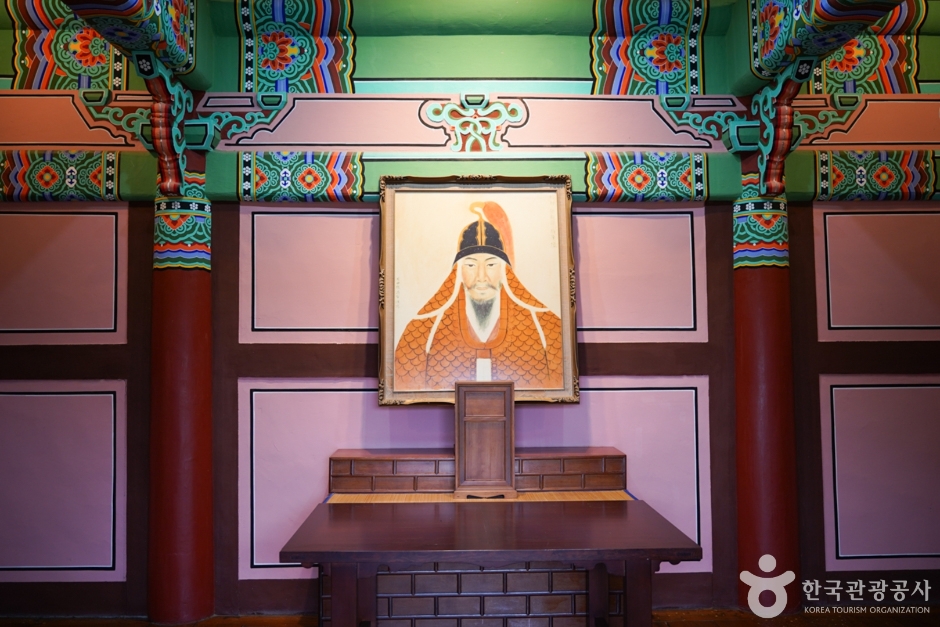
Chung-uisa is a shrine enshrining the memorial tablet of General Jeong Gi-ryong, a military commander during the reign of King Seonjo of Joseon, who achieved great feats as a master of land battles during the Japanese invasions of Korea (Imjin War). General Jeong was born in 1562 (Myeongjong 17) in Geumnam-myeon, Hadong-gun, Gyeongnam, was recommended to Sangju at age 20, passed the military examination at 25, and was renamed Gi-ryong by royal command. When the Imjin War broke out, he defeated many Japanese soldiers in more than 60 battles with a small army and reclaimed Sangju Castle after fierce fighting as Sangju Magistrate. He later served as Gyeongsang Udo Byeongma Jeoldosa, Gyeongsang-do Defense Commander, and 3-Do Tongjesa concurrently with Gyeongsang Udo Naval Commander until his death. His posthumous name is Chungui (Loyal and Resolute). The memorial stele and the general’s tomb were designated local cultural assets in 1974. In 1978, the original shrine of about 16.5㎡ was expanded to about 13,223㎡, including a shrine, exhibition hall, and administration office, in a patriotic historic site preservation project. The exhibition hall displays five treasure-level items (two royal commands, one royal decree, one memorial tablet, one jade belt) and wooden movable cultural properties (19 royal decrees and 58 woodblocks of Maehun Silgi). Every October, local residents reenact the scene of recapturing Sangju Castle during the Imjin War to promote and pass down the general’s patriotic spirit.
Sangju Imranbukcheon Battle Site is a patriotic sacred place where about 900 central and local troops of Joseon died defending against the main force of the Japanese army during the Imjin War. In 1592, when the Japanese landed at Busan, about 60 central troops of Joseon moved south to stop them. Together with Sangju magistrates Kwon Gil and Park Geol who assembled about 800 local men overnight, around 900 fought fiercely against 17,000 Japanese soldiers and all perished. To honor their patriotism, Chungnyeolsa Shrine was built, enshrining memorial tablets of the fallen including Yun Seom, Kwon Gil, Kim Jong-mu, Lee Gyeong-ryu, Park Ho, Kim Jun-shin, Kim Il, Park Geol, and an unknown martyr. Originally, only a commemorative monument (Sabi) recorded this in Sangju, but in 1990 a shrine and exhibition hall were established, relocating former Sangju government buildings to develop the site as a park. The site includes Taepyeongnu, the gate tower of Sangju Dongheon, Sangsan-gwan, a government guesthouse used by royal envoys, and Chimcheonjeong, a pavilion built in 1577 (10th year of Seonjo) outside Sangju fortress's south gate by magistrate Jeong Gonsu, used for scholars' rest and writing. Every year on June 4th (solar calendar), memorial rites are held to honor their spirits, and the site serves as a living history education center for future generations.
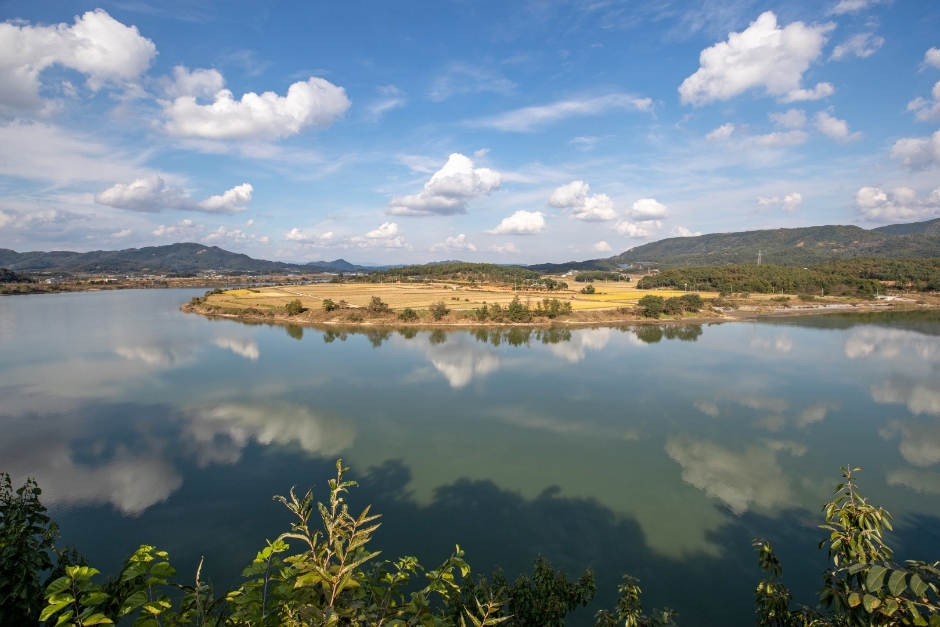
This site features a spectacular view made up of steep cliffs and old pine trees, known as Jacheondae because it was said the sky itself descended here. However, after Mr. Chae Deuk-gi inscribed the words ‘Daemyeong Cheonji (Great Bright Heaven and Earth) Sungjeong Ilwol (Revered Sun and Moon)’ it was renamed Gyeongcheondae. Muujeong, a pavilion built by the Joseon-era scholar Chae Deuk-gi from this region, is located on the cliff. Gyeongcheondae was also used for rain rituals and is associated with a legend where General Jeong Gi-ryong obtained a legendary dragon horse from the sky. Artifacts remain where Jeong carved the rock to use as a horse feeding trough. Known as a gathering place for scholars in Sangju, it was frequented by notable literati such as Kim Sang-heon, Lee Sik, and Lee Man-ryeo. From the observatory on Okjubong, visitors can view distant Juhulsan (1,106m), Hakgasan, the Nakdong River, and Baekhwasan all at once. Within Gyeongcheondae are an observatory, artificial waterfall, Gyeongcheondae Children's Land, and a camping site. Walking through the pine forest to the observatory offers a refreshing view of the Nakdong River’s waterway and surrounding scenery. The lush pine forest trail to the observatory is ideal for forest bathing. The cliff-top view overlooking the river is breathtaking, with winding Nakdong River and riverbank rock formations visible through twisted pine trees. The trail up to the observatory is shaded with pine forests, making it suitable as a forest bath site. Nearby are many cultural assets, including Jeonsabeol Royal Tomb, Jeongoryeong Gaya Royal Tomb, and Chung-uisa, designated as Gyeongsangbuk-do monuments. In autumn 2001, an outdoor marketplace set from the MBC drama was built on the southern riverbank near Gyeongcheondae, adding another attraction.
Cheongryongsa Temple is a small temple located on the mid-slope of Bibongsan in Gyeongsangbuk-do and belongs to the Daehan Buddhist Beophwa Sect. It is said to have been founded in 1674 (the 14th year of King Hyeonjong), and records related to its restoration are kept at the nearby Donam Seowon. The temple consists of the main hall Geungnakjeon, a Sanshingak, a dormitory, and a bell pavilion. Geungnakjeon is a building with a paljak-style roof, measuring three kan in front and two kan on the side, and is unpainted. Inside, there is a wooden bodhisattva statue enshrined in a lavish wooden pavilion on the second floor. The statue wears a tall crown and holds a wish-fulfilling jewel in one hand, seated on a lotus pedestal above a gilded lion statue, believed to have been created during the Japanese colonial period. To the left of the wooden bodhisattva statue on the altar is a seated Jizō Bosatsu statue about 40 cm tall, made of Gyeongju jade. Its style, wearing a hat called pimojizō and a heavenly robe, suggests that when first made, it likely held a staff in one hand and a jewel in the other. In front of Geungnakjeon are a stone pedestal more than 130 cm in diameter and a millstone of similar size, relics indicating that Cheongryongsa was once a training place for many practitioners. About 200 m away is the Cheongryongsa Observatory where visitors can view the Nakdong River. Parking is available at the Hoisang Naru tourist site near Nakdonggang Literature Museum, and it takes about 1 hour round trip to reach Cheongryongsa, which is 1.5 km away.
コース後に休みやすい宿を集めました
会員登録して自分のチャンネルも一緒に紹介してもらう
(会員になると、マイページで設定した Instagram・YouTube・ブログのリンクが、あなたのコメントと一緒に表示されます。)
“「弘大近くに滞在して、夜のカフェ巡りをしました。街の夜景も雰囲気も最高でした。」”
ゲストとして投稿したコメントには、SNSリンクやプロフィールカードは表示されません。
この場所についてのちょっとしたコツや感想をシェアしてください。
ゲストとして、気軽にひとことコメントを残すこともできます。
写真の添付はログイン後に利用できます。
まだレビューがありません。最初の感想を投稿してみましょう!