南明 曹植先生の足跡をたどって in 慶尚南道 山清郡 · schedule その他 · distance 37.7km · 4 stops · highlights Sancheong Dansoksaji East Three-Story Stone Pagoda, Namsa Yedamchon,…

山清は南明 曹植先生の遺跡が残る地域である。南明 曹植は退渓 李滉とともに嶺南学派の双頭馬車として、徹底して隠遁生活を送った儒者である。山川斎、徳泉書院、細心亭、記念館など、南明と南明学派について学べる史跡がある。山清は梅の名所としても知られている。単束寺址の正堂梅や山川斎の南明梅など、早春に気品ある姿を見せる梅を訪ねる旅も欠かせない。
このコースは1日旅程のサンプルです。そのまま保存するか、AI日程に拡張できます。
In front of the golden hall site of the old Dansoksa Temple, there are two pagodas standing east and west; the one built on the east side is this pagoda. It is a typical Silla Dynasty stone pagoda with a three-story body placed on a two-tiered base. The lower tier of the base was made simultaneously with the floor stones using L-shaped stones. On top of this, another tier of the base was added, then the body stones and roof stones were alternately stacked to form the pagoda body. At the top, part of the finial remains on a square pedestal stone. Overall, the proportions of the upper and lower parts are suitable, and the size of the pagoda body is balanced as it goes up, giving it a beautiful appearance. When compared with the western pagoda standing alongside, the scale and technique are almost identical, indicating that they are works from the same era. Along with the twin pagoda arrangement, it is a notable work that well shows the construction techniques of the late Unified Silla period. It is said that the Dansoksaji site had a famous Silla-era painting of Yuma by the painter Solgeo, but it is no longer known. The East Three-Story Stone Pagoda has a typical Silla style from the mid-Silla period or later. Especially, the base has two tiers (upper and lower), with two pillars on the lower tier and one pillar on the upper tier, which well represents the features of stone pagodas from the mid-Silla period onward.
Namsa Yedamchon, where earthen stone walls and tiled hanok houses quietly stand, is an old village retaining the spirit of a seonbi (scholar). The village is brightened by pagoda trees, symbolic of seonbi, and features a 700-year-old plum tree and a 600-year-old persimmon tree that bloom and bear fruit, giving a feeling of hometown. Namsa Yedamchon is surrounded by Nigu Mountain with the Sasu stream encircling it. The village shaped by mountains and water is crescent-shaped, and thus, since olden times, the center of the village has been left open to prevent the village fortune from becoming a full moon and then waning. Around the village, there are many stories such as Sayangjeongsa built by a descendant of Jeong Mong-ju, a loyalist of Goryeo; Yeongmojae, which houses the royal document bestowed upon Lee Je, son-in-law of King Taejo Yi Seong-gye and a founding contributor; and Sahyojae, honoring the filial piety of Lee Yun-hyeon, who protected his father with his body against the blades of bandits. ◎ Travel information to experience the charm of Hallyu - Namsa Yedamchon, featured in the drama , is a representative hanok village of Gyeongsang province where you can see the heartwarming scenes of traditional houses beyond low fences. Here, you can enjoy hanok village tours, traditional wedding experiences, pagoda tree natural dyeing, traditional game experiences, and various other traditional cultural activities, providing a great opportunity to deepen your understanding of Korea.
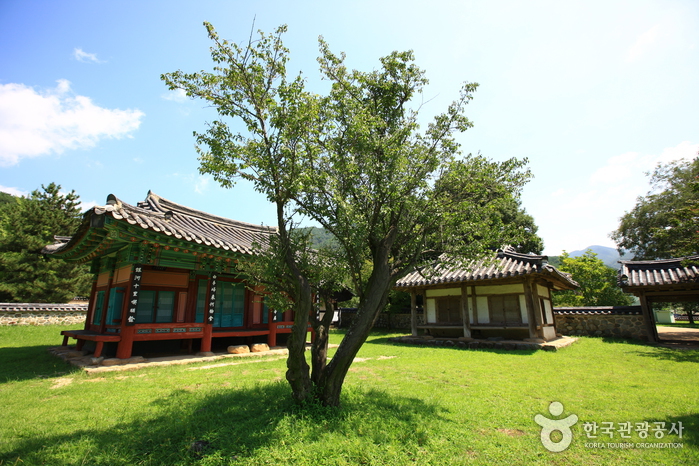
지리산 천왕봉 아래 산청군 시천면 사리에 있는 산천재의 뜰에는 남명 조식(曺植, 1501~1572)선생이 61세이던 명종 16년(1561)에 손수 심은 매화나무가 있다. 산천재는 선생이 학문을 닦고 연구하던 곳으로 명종 16년(1561)에 세웠고, 순조 18년(1818)에 고쳐졌다. 규모는 앞면 2칸, 옆면 2칸이다.
This seowon was established at the site where Nammyeng Jo Sik (1501~1572) studied to honor his scholarly virtue. It was built in the 9th year of King Seonjo of Joseon (1576) and became a state-recognized seowon with official support in the 1st year of King Gwanghaegun (1608). It was destroyed by Heungseon Daewongun's seowon abolition order during King Gojong's reign (1863~1907), but was rebuilt in the 1930s and remains to this day. The existing buildings include the shrine, sinmun, lecture hall, east and west dormitories, and outer three gates. The layout follows the jeonhak-humyo style, with study spaces in front and the shrine at the rear. Today, its educational function has ceased, leaving only its ritual functions. (Source: Cultural Heritage Administration)
コース後に休みやすい宿を集めました
会員登録して自分のチャンネルも一緒に紹介してもらう
(会員になると、マイページで設定した Instagram・YouTube・ブログのリンクが、あなたのコメントと一緒に表示されます。)
“「弘大近くに滞在して、夜のカフェ巡りをしました。街の夜景も雰囲気も最高でした。」”
ゲストとして投稿したコメントには、SNSリンクやプロフィールカードは表示されません。
この場所についてのちょっとしたコツや感想をシェアしてください。
ゲストとして、気軽にひとことコメントを残すこともできます。
写真の添付はログイン後に利用できます。
まだレビューがありません。最初の感想を投稿してみましょう!