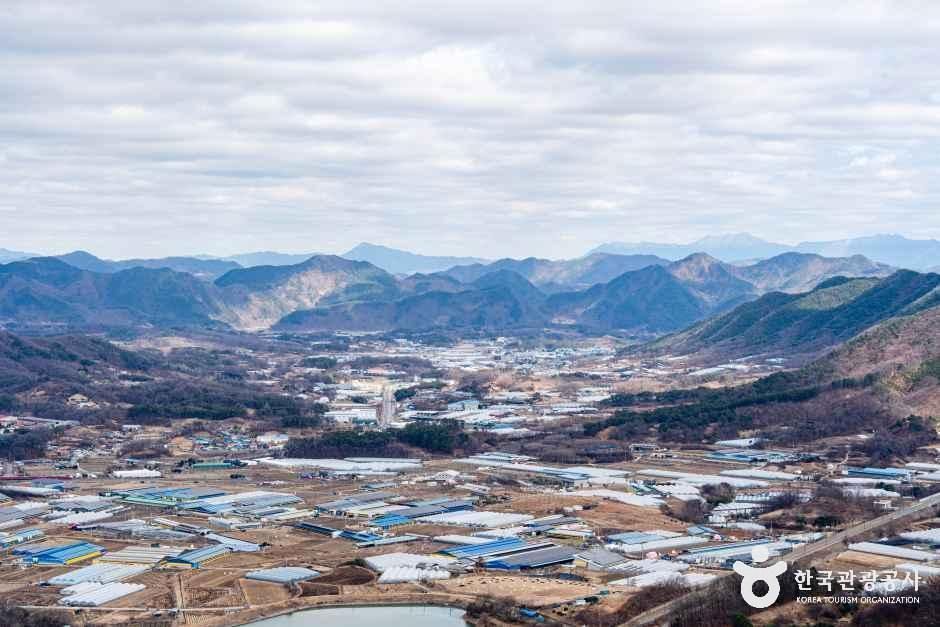
金色の波の向こうに心温まる風景 in 忠清北道 玉川郡 · schedule その他 · distance 29.9km · 4 stops · highlights 정지용 문학관, 옥천 향수 100리 자전거길(금강코스), 금강유원지
〈郷愁〉の故郷である玉川は、韓国現代詩の先駆者と呼ばれる鄭芝溶詩人の生誕地である。鄭芝溶詩人の足跡は生家と文学館を起点に100里にわたって続く。従来の郷愁30里道と錦江道を合わせて作られた郷愁100里道は、彼の作品に現れる美しい風景をたどる親しみやすい故郷の道である。
このコースは1日旅程のサンプルです。そのまま保存するか、AI日程に拡張できます。
충북 옥천군 옥천읍 하계리는 우리에게 '향수'로 잘 알려진 시인 정지용이 나고 자란 고향이다. 정지용 생가 옆에는 정지용의 삶과 문학을 이해하고 대표적인 작품을 다양한 방법으로 감상하며 체험할 수 있는 공간인 정지용문학관이 이웃해 있다. 문학전시실은 테마별로 정지용의 문학을 접할 수 있도록 지용연보, 지용의 삶과 문학, 지용문학지도, 시·산문집 초간본 전시 등 다양한 공간을 마련하고 있다.
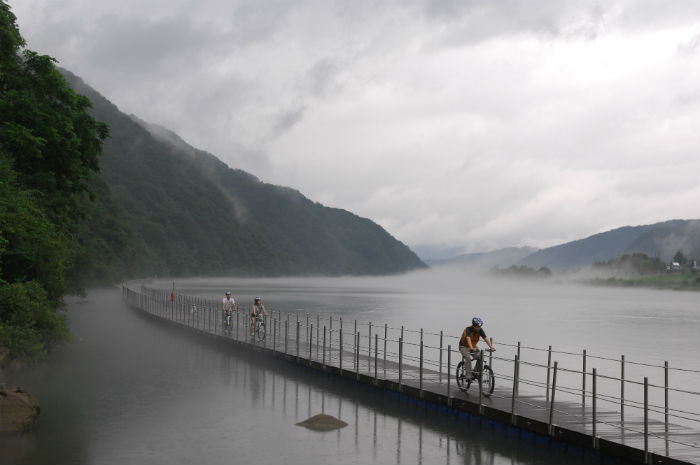
옥천 향수 자전거길은 금강이 굽이치는 대청호반의 아름다운 강변과 한국 현대시의 선구자 정지용 시인이 태어난 향수의 고장 옥천의 시문학을 함께 즐기며 도심의 바쁜 생활에서 벗어나 여유와 느림이 있는 시골 풍경과 정겨움을 느끼며 달릴수 있는 자전거길이다. 정지용 시인의 삶을 볼수 있는 정지용 생가와 문학관을 방문하고 벗꽃길로 유명한 37번 국도변을 따라 정지용시인의 시문학을 테마로 하여 조성한 멋진 신세계가 있는 장계관광지를 방문하면 시문학을 온몸에 느낄 수 있다.
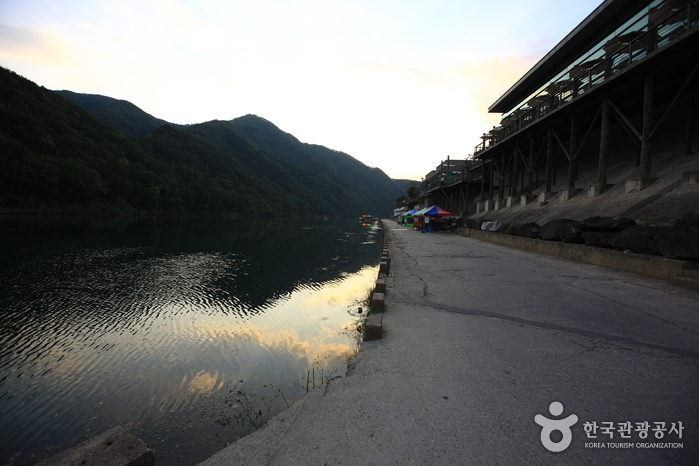
충북 옥천군 동이면 금강로 596에 자리한 금강유원지는 경부고속도로 휴게소로 유명하다. 휴게소 밑으로 펼쳐지는 강줄기가 유원지인 탓이다. 휴게소가 세워지기 전부터 이 일대를 흐르는 금강 유역을 금강유원지라 불렀다. 휴게소와 인근 마을에 전력 공급을 책임지는 소수력발전소를 돌리기 위해 라바댐을 설치했는데 그 위로 푸른 강물이 넘실댄다. 밑으로는 강을 가로지르는 다리가 나 있다. 잠수교라 불리는 다리 중간에 항상 물이 차 있어 건너갈 때 주의해야 한.
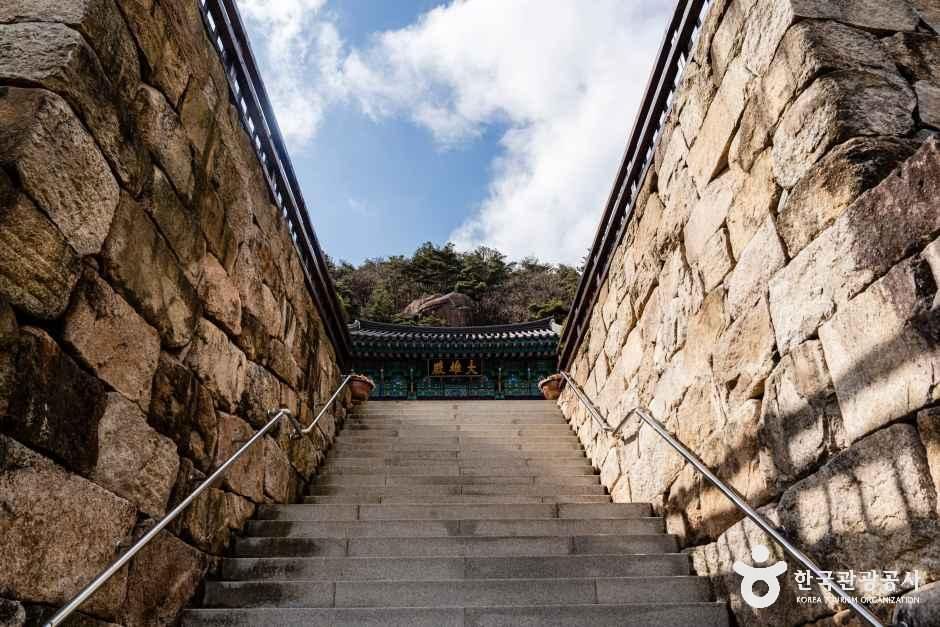
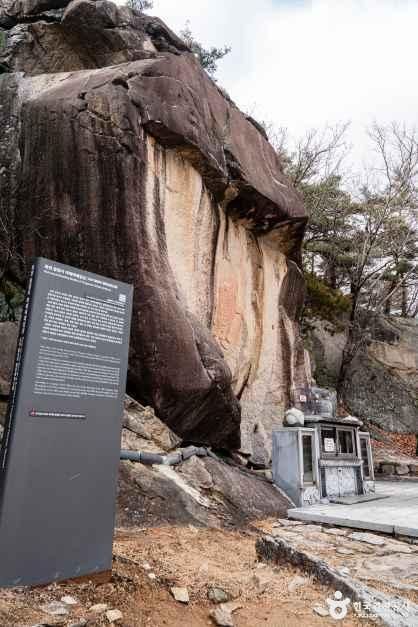
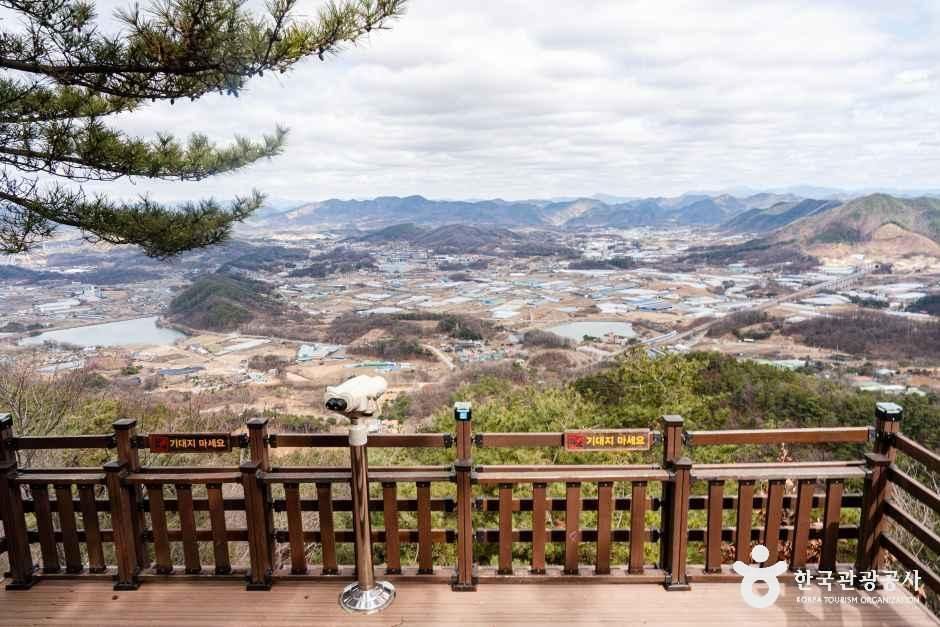
Yongamsa Temple is located on the mid-slope of Jangyongsan in Okcheon-gun and is a subordinate temple of Beopjusa, the head temple of the 5th district of the Jogye Order of Korean Buddhism. It was established by Uisin in 552 (the 13th year of King Jinheung's reign during the Silla period). The twin three-story stone pagodas at Yongamsa are uniquely situated on a low northern peak with views in all directions, unlike the usual temple layouts. These pagodas are believed to have been built following the Goryeo dynasty's sancheon bibo (mountain and river protection) belief, which involves erecting pagodas or buildings to revitalize the declining energies of the landscape. Yongamsa houses the Treasure-designated Okcheon Yongamsa Twin Three-story Stone Pagodas and the Yongamsa Rock-carved Buddha, and in the main hall (Daeseongjeon), there remains a wooden seated Amitabha Buddha statue. The twin pagodas consist of two identical stone towers standing side by side on a natural rock base, with three stories of the tower body rising proportionally without visual shortening—an unusual form. Based on the stylistic elements and simplified construction techniques of the stonework, the pagodas are estimated to have been built during the Goryeo period. Although the main hall, housing the wooden seated Amitabha statue created in 1651 (the 2nd year of King Hyojong of Joseon), and other buildings have been altered from their original forms, the twin three-story stone pagodas and the rock-carved Buddha have remained unchanged for over a thousand years. The temple buildings offer beautiful traditional architecture harmonizing with nature. To the left of the twin pagodas is a hiking trail that leads up to the summit of Jangryongsan.
コース後に休みやすい宿を集めました
会員登録して自分のチャンネルも一緒に紹介してもらう
(会員になると、マイページで設定した Instagram・YouTube・ブログのリンクが、あなたのコメントと一緒に表示されます。)
“「弘大近くに滞在して、夜のカフェ巡りをしました。街の夜景も雰囲気も最高でした。」”
ゲストとして投稿したコメントには、SNSリンクやプロフィールカードは表示されません。
この場所についてのちょっとしたコツや感想をシェアしてください。
ゲストとして、気軽にひとことコメントを残すこともできます。
写真の添付はログイン後に利用できます。
まだレビューがありません。最初の感想を投稿してみましょう!