詩人チョン・ジヨンの郷愁の中へ in 忠清北道 玉川郡 · schedule その他 · distance 42km · 4 stops · highlights Jeong Jiyong Birthplace, 점심식사(대박집), Yongamsa Temple

オクチョンは詩人チョン・ジヨンの人生と文学がそのまま残る土地である。歌手と声楽家が共に歌った歌「郷愁」は叙情的な歌詞が美しく、これはチョン・ジヨンの詩を歌詞にしたものである。チョン・ジヨンの生家と文学館を巡り、「郷愁」を味わうことができる。壬辰倭乱の際に義兵長として活躍したチョ・ホンの祠堂であるフユルダンと、日の出が壮観なヨンアムサもオクチョンの名所である。
このコースは1日旅程のサンプルです。そのまま保存するか、AI日程に拡張できます。
This is the birthplace of Jeong Jiyong, the representative poet of modern Korean poetry known for his poem 'Hyangsu,' located right next to the Jeong Jiyong Literature Museum. Jeong Jiyong was born here on November 20, 1902, and spent his childhood in this house. Although the house was demolished in 1974, it was restored to its original form in July 1996. Jeong Jiyong was a poet who wrote pure poetry while lamenting the pain of the Korean people during the Japanese colonial period. This site is an important space to understand the life and literature of Jeong Jiyong. The house is a single-story traditional hanok with a thatched roof, consisting of three bays in the front and three bays on the side. The inner quarters include a kitchen and two rooms, while the sarangchae consists of two rooms and a wooden floor. Around the birthplace, there is a statue and a commemorative stone of Jeong Jiyong, as well as a small stream flowing nearby. The Jeong Jiyong Literature Museum exhibits the poet's belongings such as his vest, brush, ink, and books, along with materials related to his life, works, and connection to Okcheon. A literary commentator is present for detailed explanations. Nearby are Janggyegwan Tourist Site, Okcheon Hyangsu 100-ri Bicycle Path, and the Yook Youngsoo Birthplace not far away.
충북 옥천에 향토 음식으로서 민물 생선을 12시간 동안 뼈째 푹 삶아 육수를 만들어 낸 색다른 음식이다. 옛 어른들이 강가에서 낚시하여 잡은 민물고기로 매운탕을 드시고 남은 국물에 소면을 넣어 먹었던 것에서 시작된 음식으로 전해지고 있는 생선국수이다. * 문의/안내 : 043-733-5788
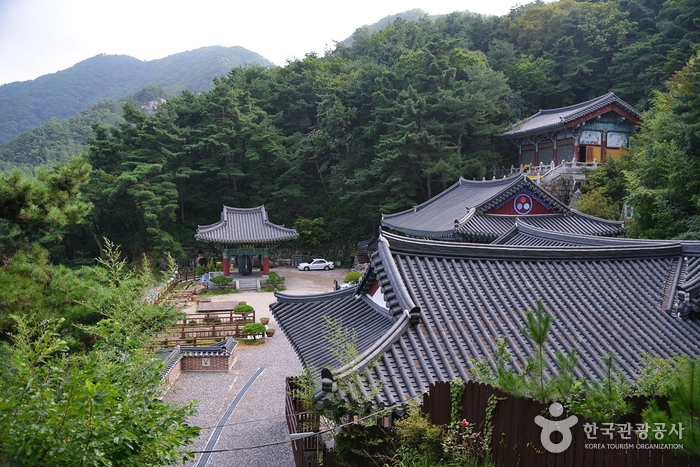
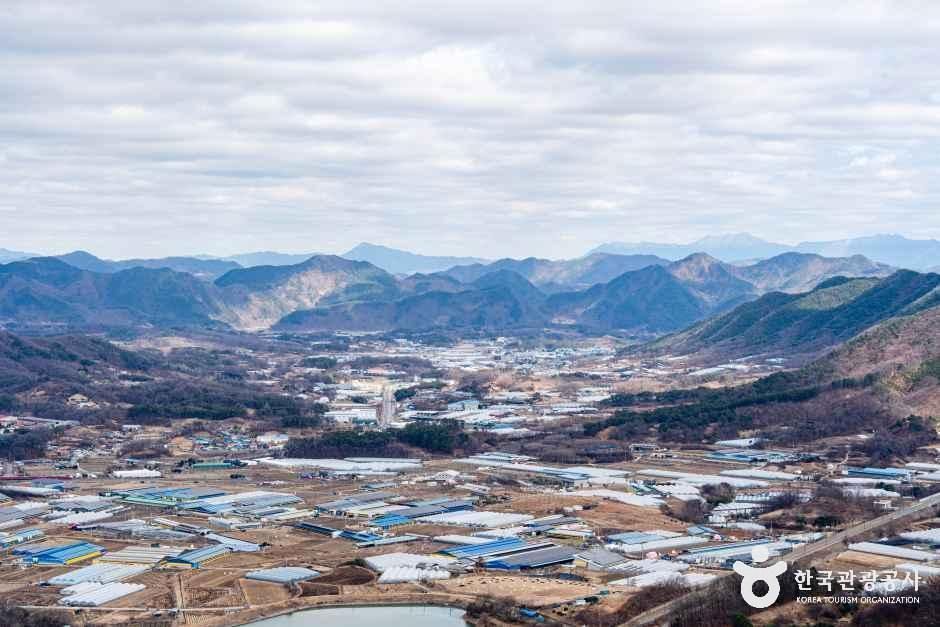
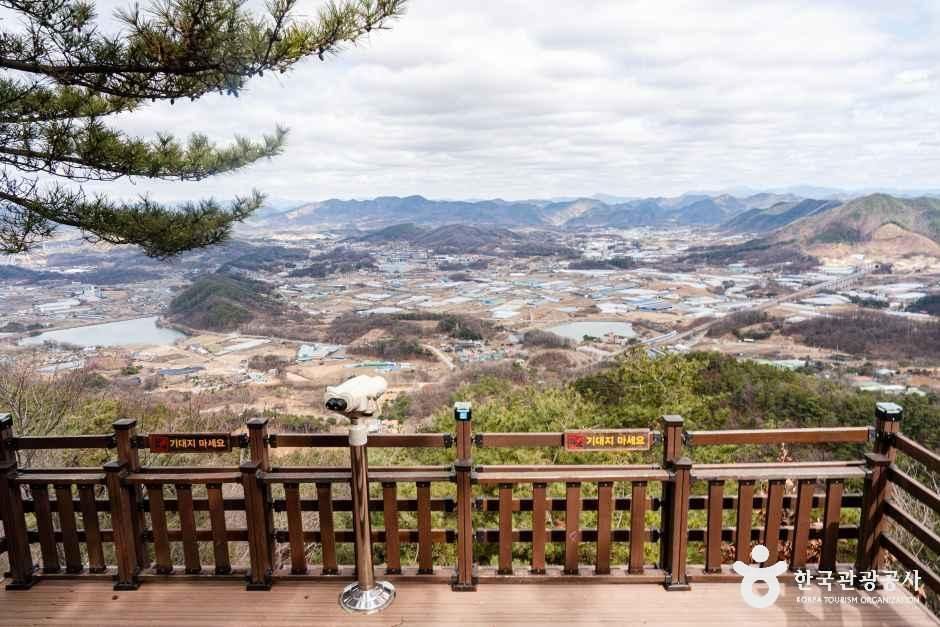
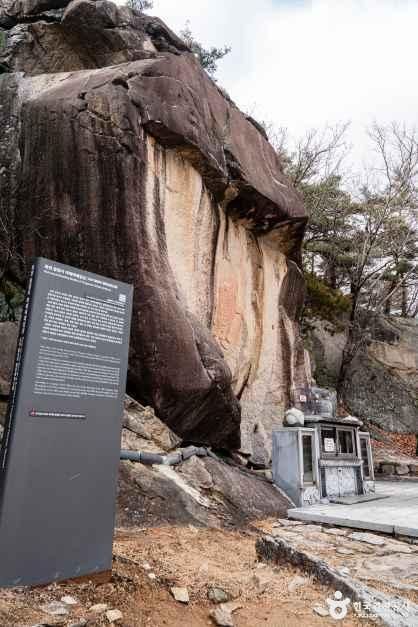
Yongamsa Temple is located on the mid-slope of Jangyongsan in Okcheon-gun and is a subordinate temple of Beopjusa, the head temple of the 5th district of the Jogye Order of Korean Buddhism. It was established by Uisin in 552 (the 13th year of King Jinheung's reign during the Silla period). The twin three-story stone pagodas at Yongamsa are uniquely situated on a low northern peak with views in all directions, unlike the usual temple layouts. These pagodas are believed to have been built following the Goryeo dynasty's sancheon bibo (mountain and river protection) belief, which involves erecting pagodas or buildings to revitalize the declining energies of the landscape. Yongamsa houses the Treasure-designated Okcheon Yongamsa Twin Three-story Stone Pagodas and the Yongamsa Rock-carved Buddha, and in the main hall (Daeseongjeon), there remains a wooden seated Amitabha Buddha statue. The twin pagodas consist of two identical stone towers standing side by side on a natural rock base, with three stories of the tower body rising proportionally without visual shortening—an unusual form. Based on the stylistic elements and simplified construction techniques of the stonework, the pagodas are estimated to have been built during the Goryeo period. Although the main hall, housing the wooden seated Amitabha statue created in 1651 (the 2nd year of King Hyojong of Joseon), and other buildings have been altered from their original forms, the twin three-story stone pagodas and the rock-carved Buddha have remained unchanged for over a thousand years. The temple buildings offer beautiful traditional architecture harmonizing with nature. To the left of the twin pagodas is a hiking trail that leads up to the summit of Jangryongsan.
충청북도 옥천군 군서면 금산리에 있는 자연휴양림으로 1994년 6월 17일에 개장했다. 해발 640m의 장령산 기슭에 있으며, 소나무와 참나무 숲 사이 계곡과 능선에 왕관바위, 포옹바위, 병풍바위 등 기암괴석이 절경을 이룬다.
会員登録して自分のチャンネルも一緒に紹介してもらう
(会員になると、マイページで設定した Instagram・YouTube・ブログのリンクが、あなたのコメントと一緒に表示されます。)
“「弘大近くに滞在して、夜のカフェ巡りをしました。街の夜景も雰囲気も最高でした。」”
ゲストとして投稿したコメントには、SNSリンクやプロフィールカードは表示されません。
この場所についてのちょっとしたコツや感想をシェアしてください。
ゲストとして、気軽にひとことコメントを残すこともできます。
写真の添付はログイン後に利用できます。
まだレビューがありません。最初の感想を投稿してみましょう!