ハムベク山マンハンジェ in 江原特別自治道 チョンソン郡 · schedule 日帰り · distance 약 8.3km · 4 stops · highlights Jeongamsa Sumano Pagoda, Samtan Art Mine, Hambaeksan

ハムベク山マンハンジェは韓国の高原ドライブコースの代表であり、車で登ることができる最も高い峠道です。マンハンジェは江原道のチョンソン、ヨンウォル、テベクの境界にある峠で、標高は1,330mに達します。南韓で6番目に高いハムベク山のすぐ下まで行ける場所です。コース情報はファバンジェからマンハンジェまで約8.3kmです。
このコースは1日旅程のサンプルです。そのまま保存するか、AI日程に拡張できます。
Jeongamsa, located in Gohan-eup, Jeongseon-gun, Gangwon Special Self-Governing Province, is an ancient temple founded by monk Jajang during the Three Kingdoms period. It can be found on the way to Hambak Mountain. Entering through the Iljumun gate, one encounters Yukhwajeongsa, Mokudang, and Beomjongnu in sequence, firmly standing on a retaining wall. Crossing Geungnakgyo, a bridge over a narrow waterway that is the habitat of the Korean trout (yeolmogeo), leads to Jeongmyeolgung and the Sumano Pagoda. The spatial arrangement was highly praised by author Yoo Hong-jun in . Especially when facing Jeongmyeolgung and the Sumano Pagoda towering on the hillside behind it, one can feel the truth of that praise. Jeongamsa Jeongmyeolgung is one of Korea’s five major Jeongmyeolbogung shrines. Monk Jajang placed the Buddha’s true relics in the Sumano Pagoda and built Jeongmyeolgung to worship them. For this reason, there is no Buddha statue inside the main hall. The Sumano Pagoda holds special value alongside Jeongmyeolgung. The Sumano Pagoda is a national treasure and a representative Buddhist cultural asset of Jeongseon. Visitors must hike for about 10 minutes up the mountain path to see it. It is a short meditative section. The approximately 9-meter-tall stone pagoda is not large but has an outstanding balanced shape, proudly displaying the neatness characteristic of stone pagodas. From in front of the Sumano Pagoda, you can look down at the Jeongamsa temple grounds below. Pausing to calm the mind as if in meditation, the temple landscape nestled warmly in the mountain offers a gift of peace to the heart.
Samtan Art Mine is located on the site where Samcheok Tanza operated from 1964 to 2001. On this ground, traces of the old closed mine have been preserved while embracing the value of culture and art. Thus, the name contains both 'Art' and 'Mine.' The first place you encounter is the Samtan Art Center main building, which was formerly the office space, communal showers for miners, and the control room for the vertical shaft. It has been transformed into a residency room, the modern art museum CAM1, and Samtan Art Mine archives. Among them, the old miners' shower room and boot cleaning room have been converted into the Mine Gallery, creating a very special exhibition atmosphere. The Rail-by-Museum is also a source of pride for Samtan Art Mine. It is located in the building where the 53-meter hoist, used by miners to move underground, is the first thing visible from the outside. The building’s interior preserves the site as it was, allowing visitors to feel the atmosphere of old Samcheok Tanza most vividly. In the outdoor park, there is Restaurant 823L, converted from the mine's machine manufacturing factory, and the Primitive Art Museum located in the former central compressor room. The exquisite harmony of old mining and art seems to transcend time between the past and present.
Hambaeksan is a mountain towering between Taebaek-si and Jeongseon-gun with an elevation of 1,572.9m. From its summit, you can view Taebaeksan, Ilwolsan, Baegunsan, and Gariwangsan. It is located in the middle of Baekdudaegan, the backbone of the Korean Peninsula, surrounded by mountains on all sides. Hambaeksan is the main mountain of Taebaek. At its summit, high-altitude plants such as yew trees and wildflowers form clusters, attracting photographers continuously. It is also a popular hiking destination for New Year's sunrise tourism routes. * Major wildflowers - Guritdae, Ganeungiruncho, Sunflower
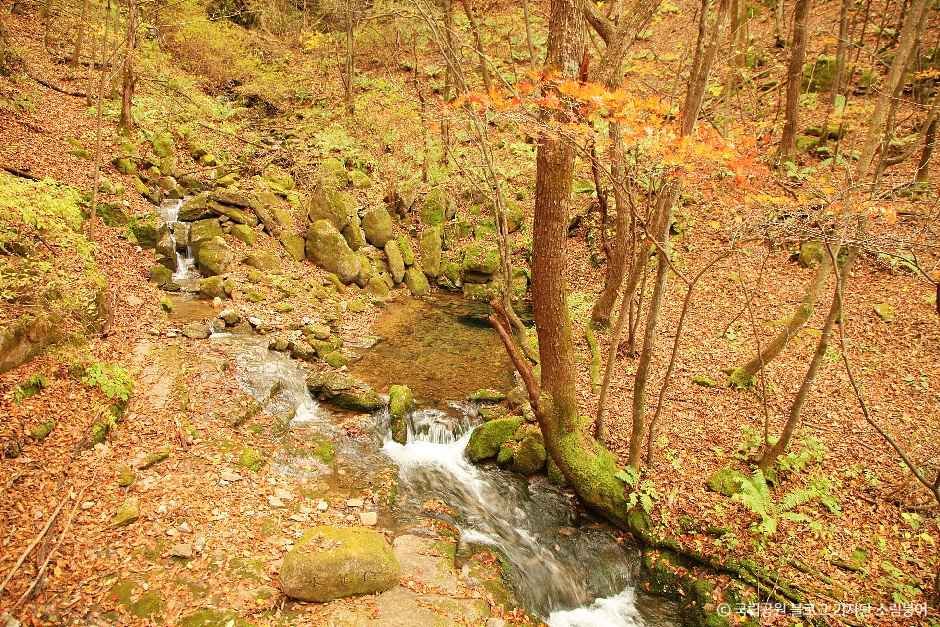
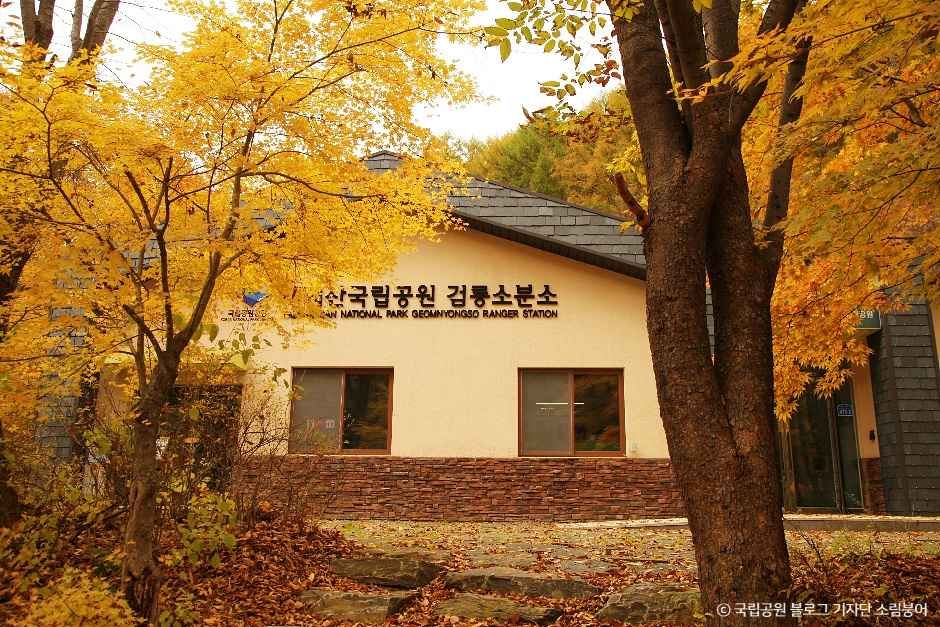
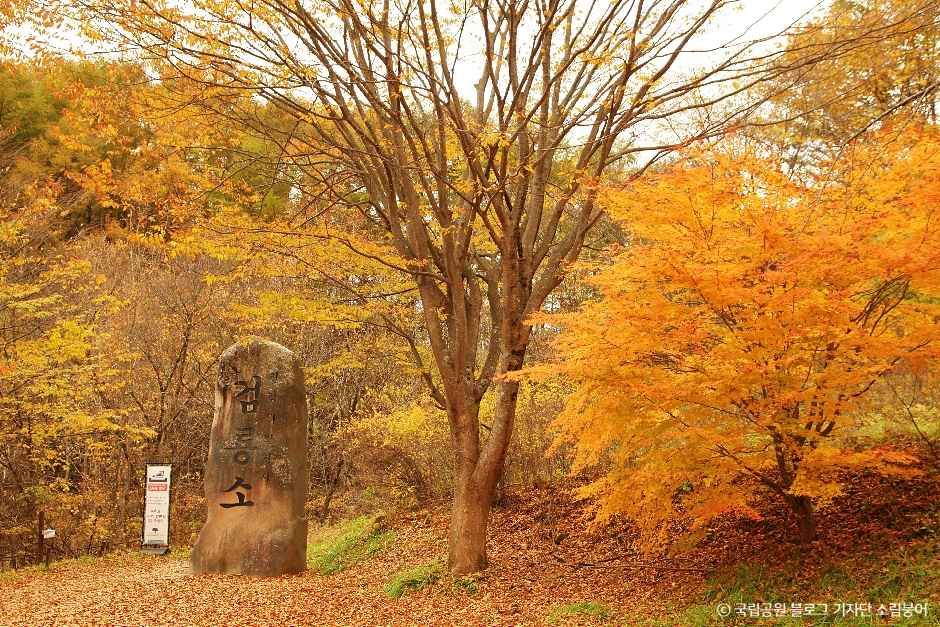
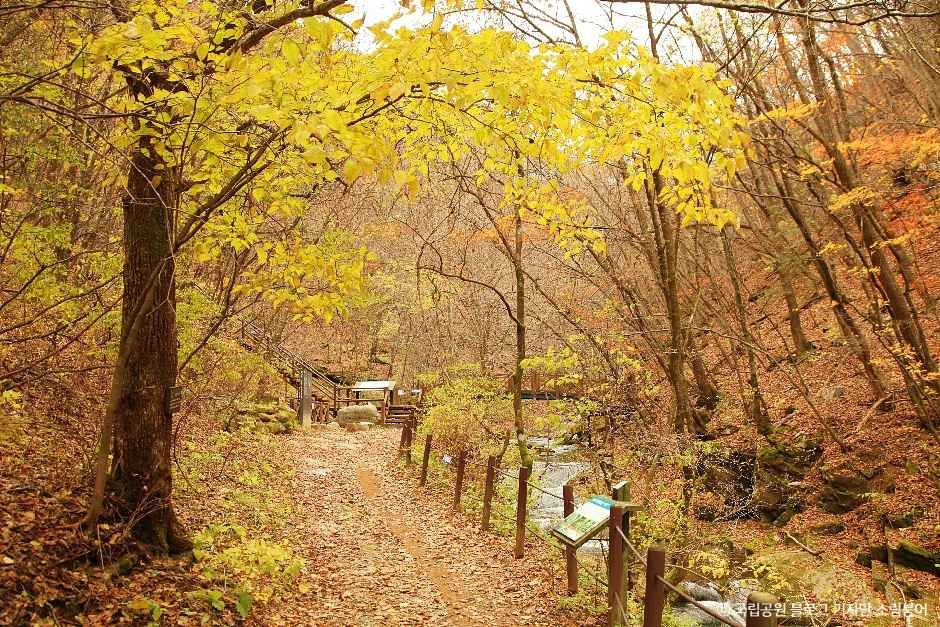
Geomryongso is named for being a pond where a dragon god lives. The Han River originates here and flows into the West Sea. Water rising from Geomryongso erodes limestone, creating potholes, and flows over the rock like a dragon crawling. The valleys around Geomryongso are made of limestone, which dissolves well in rainwater, forming caves underground. Valley water flowing from Geomryongso seeps into small caves beneath the surface, becoming groundwater. When an underground passage is blocked, the water rises again to the surface, flowing as valley water. Cracks in Geomryongso’s rocks are called bedding planes. Strong flowing water breaks the rock along these weak bedding planes, forming stepped pathways with round-shaped hollows. Such round holes frequently appear in rivers or valleys of limestone areas. Small gaps in the limestone floor allow sand and gravel to swirl with rapidly flowing water, carving out these potholes (portholes).
コース後に休みやすい宿を集めました
会員登録して自分のチャンネルも一緒に紹介してもらう
(会員になると、マイページで設定した Instagram・YouTube・ブログのリンクが、あなたのコメントと一緒に表示されます。)
“「弘大近くに滞在して、夜のカフェ巡りをしました。街の夜景も雰囲気も最高でした。」”
ゲストとして投稿したコメントには、SNSリンクやプロフィールカードは表示されません。
この場所についてのちょっとしたコツや感想をシェアしてください。
ゲストとして、気軽にひとことコメントを残すこともできます。
写真の添付はログイン後に利用できます。
まだレビューがありません。最初の感想を投稿してみましょう!