静かで、とても静かで良い in 全北特別自治道 長寿郡 · schedule その他 · distance 12.9km · 2 stops · highlights Nongae Shrine, Jangsu Hyanggyo

長安山は標高500メートルの高地にあり、清らかで深い渓谷があるため夏の避暑地として人気が高い。竜が住んでいたという徳山竜沼まで散策も楽しめる。落ち葉が豊かな山道を歩きながら秋の風景に浸ると、頭がすっきりするのを感じられるだろう。
このコースは2日間の旅程サンプルです。そのまま保存するか、AI日程に拡張できます。
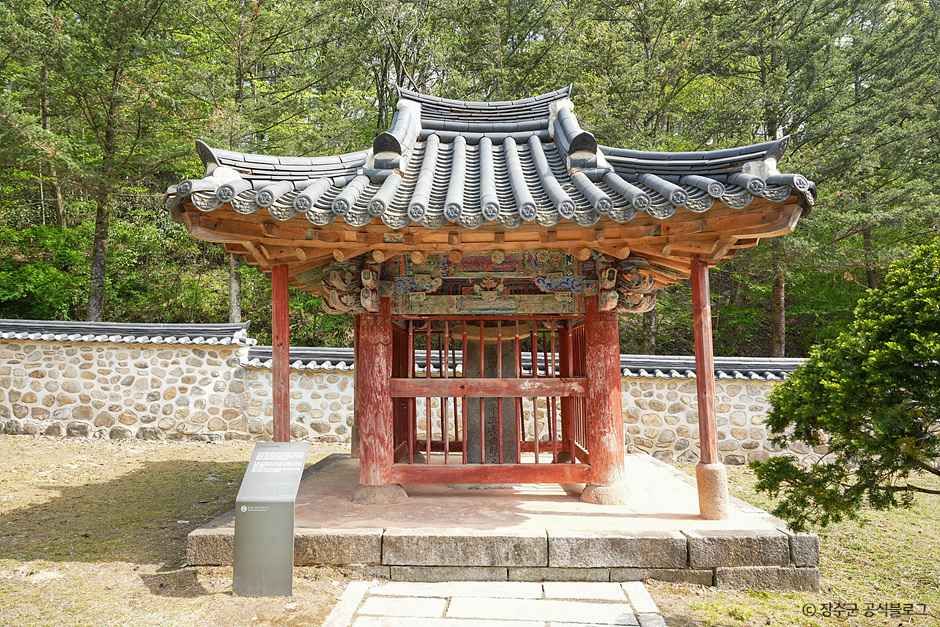
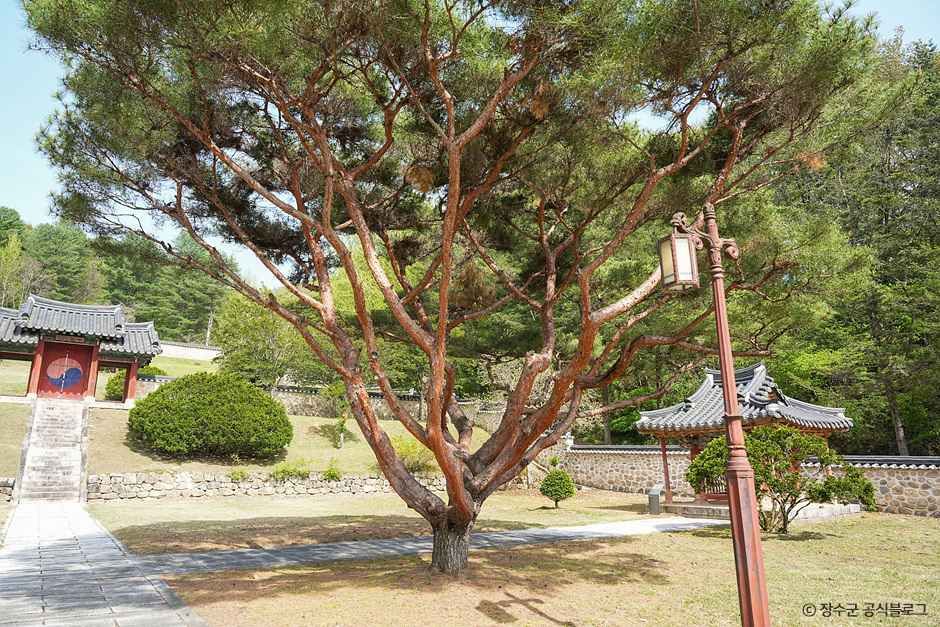
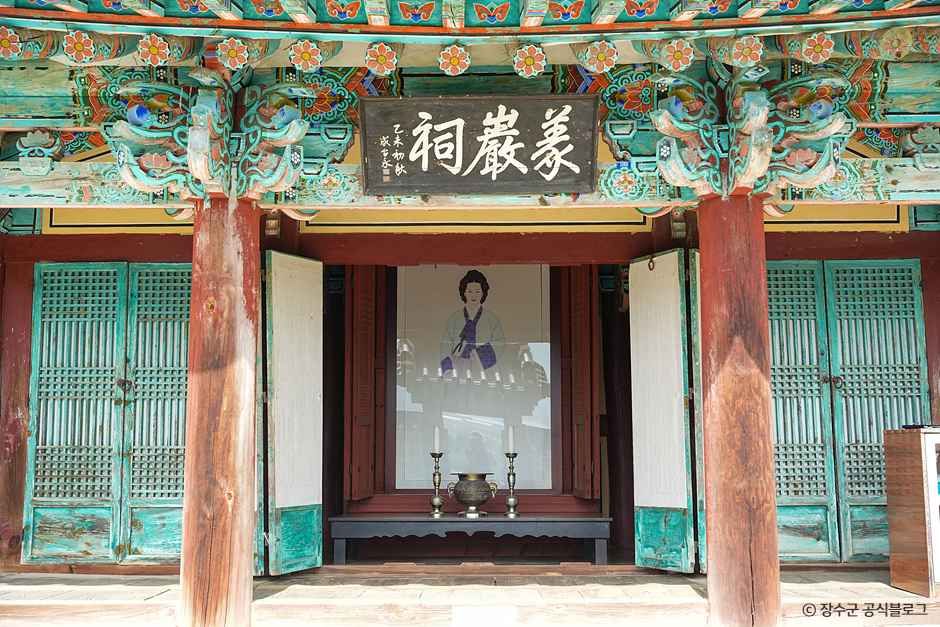
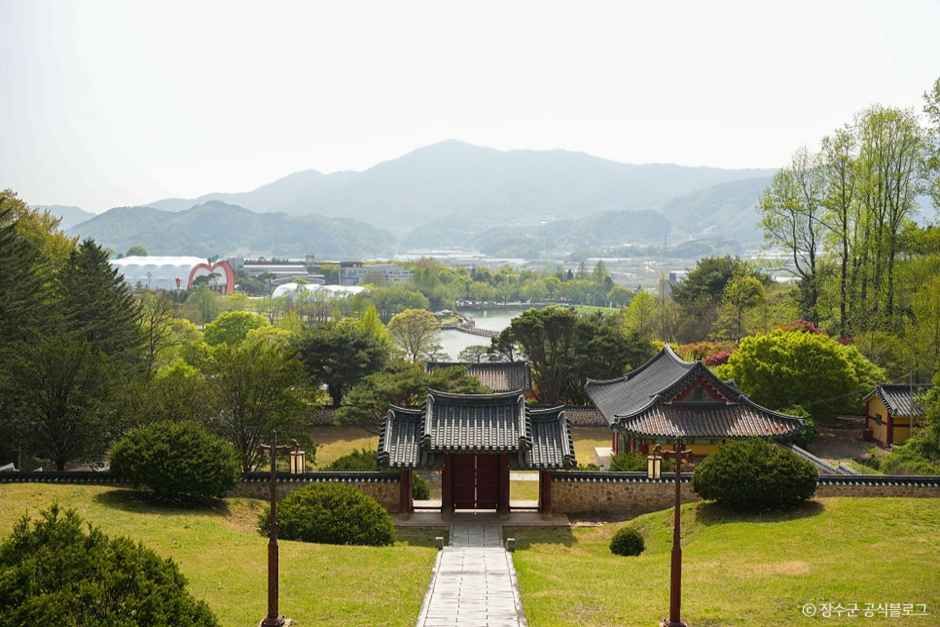
Uiamsa is a shrine enshrining the portrait of Joo Nongae, born in Jangsu, who jumped into the Namgang River with a Japanese general at Jinjoo Chokseokru. Nongae, known as one of the three great talents of Jangsu, was loved by Jinjoo military commander Choi Gyeonghoe during the mid-Joseon period. When Jinjoo Fortress, which resisted to the last during the Imjin War, was captured, the Japanese generals held a banquet at Chokseokru. Nongae, attending as a gisaeng, could not contain her grief over the fall of the fortress and the death of soldiers and civilians. She lured the Japanese general Geyamura Humisuke onto a rock, embraced him, and then jumped into the Namgang River to commit suicide. The rock she jumped from was later called Uiam, which is why the shrine is named Uiamsa. To commemorate her, in the 12th year of King Heonjong's reign (1846), the Jangsu magistrate erected the Chokseoksi Gionga Nongae Saengjanghyangsumyeongbi monument, and later in 1955, Jangsu residents built Nongae Shrine on Namsan, Jangsu-gun. In 1973, a sanctuary project was approved which relocated the shrine and built walls, triple gates, and decorated the Dancheong. The shrine grounds include the Saengjanghyangsumyeongbi Pavilion, memorial hall, outer triple gate, inner triple gate, Chungui Gate, and Portrait Pavilion. Every lunar September 3rd, Jangsu-gun holds a memorial ritual to honor Nongae's noble patriotism, designating the day as Jangsu Citizens' Day.
Jangsu Hyanggyo is a local educational institution established by the state in the 7th year of King Taejong of Joseon (1407) to enshrine virtuous people and educate local residents. It was relocated to its current site in the 12th year of King Sukjong (1686). The Daeseongjeon is a space for enshrining Confucius and various sages, measuring 3 kan wide by 3 kan deep. The roof forms a side-facing gable roof resembling the Chinese character for person (人). The building is modest in size, with a double door in the center of the front facade. Each side room has a similar door, with a well-shaped (井) window beside it. The decorative structure supporting the eaves is elaborately adorned, a characteristic element of mid-Joseon architecture. Jangsu Hyanggyo was well preserved even during the Japanese invasions of the late 16th century, providing a clear example of early Joseon Hyanggyo style. The books stored here are valuable for local historical research, and particularly, the Daeseongjeon is one of the representative buildings of Joseon-era hyanggyo architecture.
会員登録して自分のチャンネルも一緒に紹介してもらう
(会員になると、マイページで設定した Instagram・YouTube・ブログのリンクが、あなたのコメントと一緒に表示されます。)
“「弘大近くに滞在して、夜のカフェ巡りをしました。街の夜景も雰囲気も最高でした。」”
ゲストとして投稿したコメントには、SNSリンクやプロフィールカードは表示されません。
この場所についてのちょっとしたコツや感想をシェアしてください。
ゲストとして、気軽にひとことコメントを残すこともできます。
写真の添付はログイン後に利用できます。
まだレビューがありません。最初の感想を投稿してみましょう!