地の果てで楽しむキャンプ旅行 in 全羅南道 海南郡 · schedule その他 · distance 59.2km · 5 stops · highlights Wonjo Jangsu Tongdak, Dalmasan, Ttangkkeut Tourist Site

地の果ての村は韓国最南端に位置し、その意味だけでも一度は訪れる価値がある場所である。ヘナム邑内から地の果ての村へ向かう道には、高山ユンソンドの遺跡であるノクウダンをはじめ、タルマ山のミファンサ、干潟体験ができるテジュク村などが順に見られる。ソンホリ海辺の美しい松林には地の果てオートキャンプ場があり、キャンプを楽しむのに適している。
このコースは2日間の旅程サンプルです。そのまま保存するか、AI日程に拡張できます。
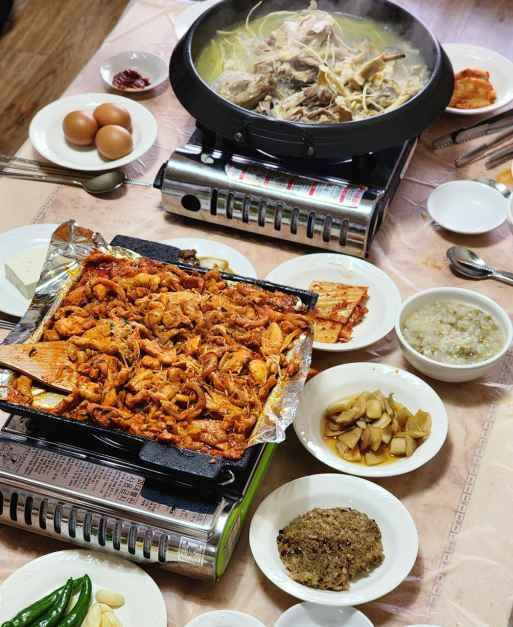
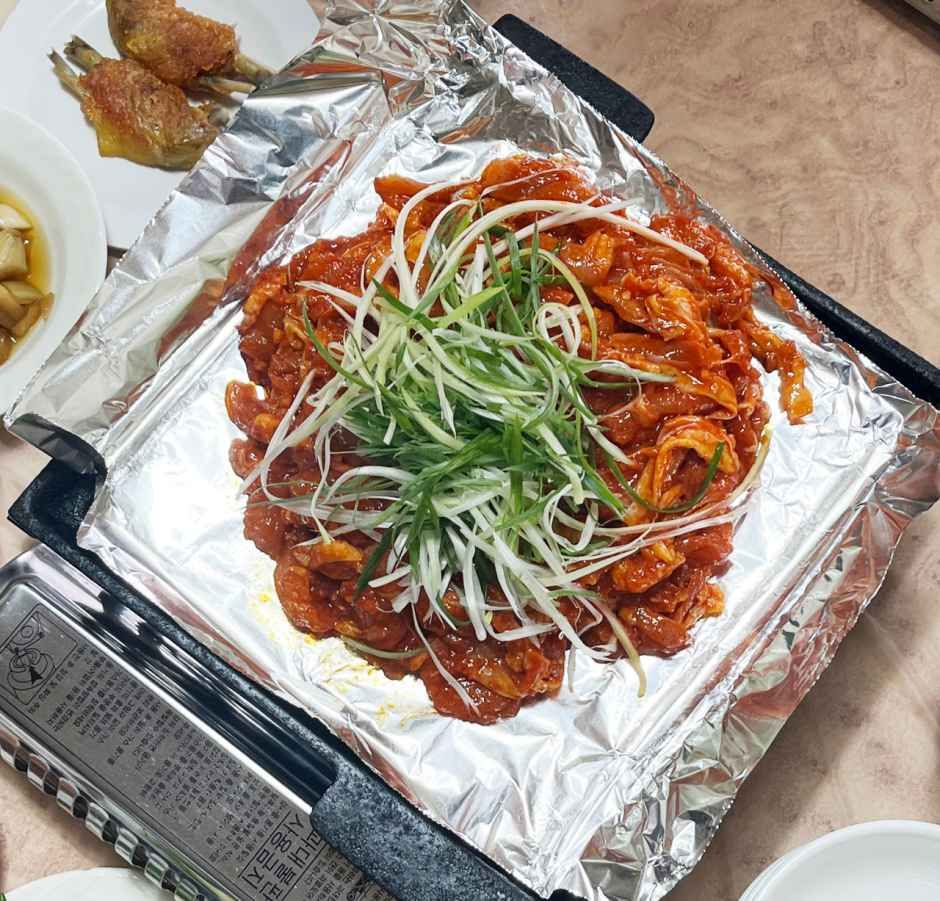
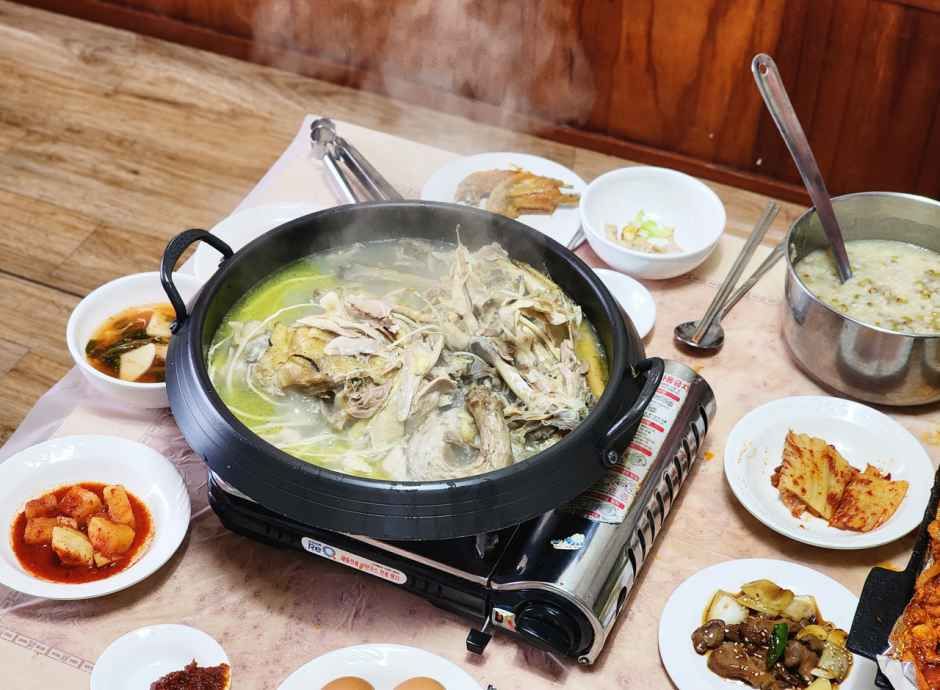
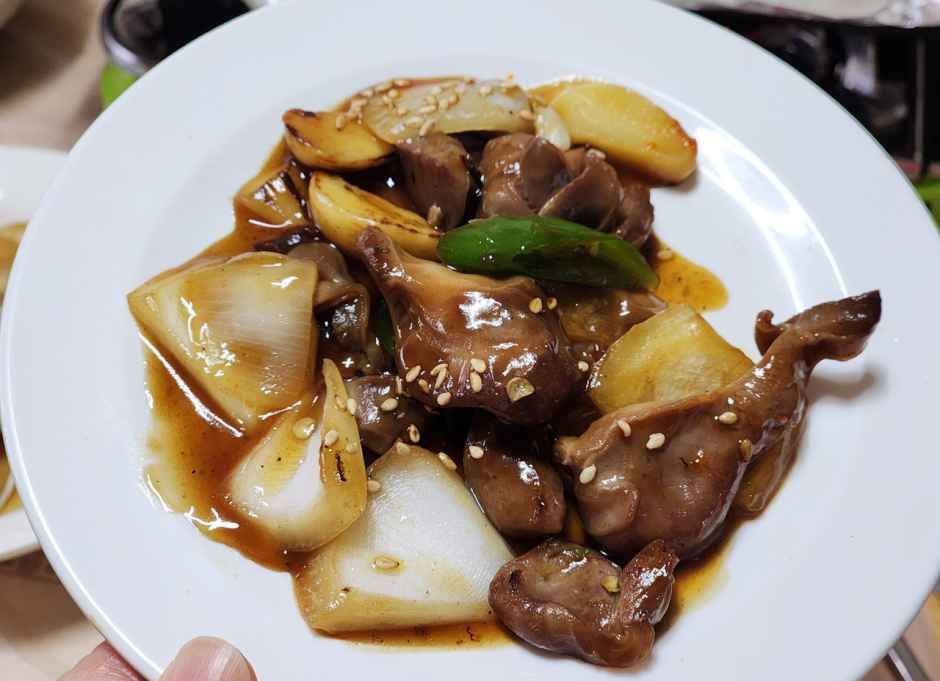
A traditional native chicken cuisine specialty restaurant with over 25 years of history, located on the way to Haenam Daeheungsa. The menu features native chicken and duck jumulleok (stir-fried marinated duck). Currently run by the third generation, when ordering the native chicken course, a hearty full table is offered starting with chicken yukhoe (raw chicken), followed by grilled chicken, chicken jumulleok, chicken baeksuk (boiled chicken), and chicken porridge.
Dalmasan is located at the end of the Honam Jeongmaek mountain range, spanning Haenam-gun's Songji-myeon, Bukpyeong-myeon, and Hyeonsan-myeon. The mountain ridge of Dalmasan, starting from the southern slope of Duryunsan, stretches long like a dragon's spine, ending at Mulgorijae, connecting Yeongjeon-ri in Bukpyeong-myeon and Mabong-ri in Songji-myeon. The oddly-shaped rocks of Dalmasan are called the Geumgangsan of the southern provinces. From the ridge, one can view the vast Haenam plains and the archipelago of Wando and Jindo. In spring, azaleas bloom abundantly among the rocky crags, making it a famous mountain for mountaineers nationwide. There are four main hiking courses. First, a round-trip course for beginners and Mihwangsa visitors takes 3 hours. Next, a course starting from Mihwangsa and ending at the Mabong-ri mineral spring, and another starting from Songchon village and ending at Mihwangsa. Lastly, a 7-hour Dalmasan traversing course starts at the entrance of Songchon village, passes through the forest road, Sujeong Cave, Seokmun Cave, and ends at the Mabong-ri mineral spring parking lot. Additionally, Mihwangsa Temple, located mid-mountain, is famous. The temple has a deep connection with Dalmasan and harmonizes beautifully with the surrounding scenery. Around 749, when a stone boat carrying scriptures and Buddha statues reached Sajapo Port, Monk Uijo, with 100 disciples, carried them by ox. When the ox brayed loudly and lay down, Tonggyosa Temple was built there, and where the ox stopped again, Mihwangsa was established.
‘Ttangkkeut,’ where the sea and sky meet and begin, is the place where the Baekdudaegan mountain range extends southward and makes its final powerful gesture before stopping, marking both the start and end of Baekdudaegan. It is also the place where the energy (gi) of the Korean Peninsula is most concentrated, traditionally considered sacred as it opens the gate to the heavens, where many sages and artists perform holy rites. There is a legend in Ttangkkeut Village that making wishes toward the sky and sea grants those wishes and fosters hope. With this symbolism, Ttangkkeut attracts many tourists nationwide. It serves as the starting point of national pilgrimage routes and is an important hub and transit route for maritime culture.
Ttangkkeut Monorail is an electric vehicle that connects Ttangkkeut Village and the Ttangkkeut Observatory. Riding the monorail up to the observatory allows you to vividly enjoy the spectacular scenery of the southwestern coastline and the beauty of the deep blue sea. It is especially helpful for people with disabilities and the elderly. The monorail is 395 meters long, and it takes about 7 minutes to reach the observatory. It opened on December 19, 2005.
In front of the village to the west in the sea, there is an island with many bamboo trees, and the village is located in front of the large island called Daejukdo, hence it is called 'Daejuk Village.' The beautiful scenery of the Dadohae (archipelago) unfolds in front of the village, and nearby there is a clam-picking experience fishing ground, making it a clean and beautiful fishing village where visitors can enjoy nature. Along with the picturesque landscape, the tidal flat ecosystem is well preserved, providing a rich fishing ground with various seafood such as clams, octopus, oysters, and crabs. A clam-picking experience is operated every summer and is popular as a family activity spot. Additionally, on the opposite side, Daeseom (Jukdo) and Siru Island (Jeungdo) reveal a mysterious 1.2km sea path during low tide. The opening times of this sea path change daily according to the tides, so it is necessary to check beforehand.
コース後に休みやすい宿を集めました
会員登録して自分のチャンネルも一緒に紹介してもらう
(会員になると、マイページで設定した Instagram・YouTube・ブログのリンクが、あなたのコメントと一緒に表示されます。)
“「弘大近くに滞在して、夜のカフェ巡りをしました。街の夜景も雰囲気も最高でした。」”
ゲストとして投稿したコメントには、SNSリンクやプロフィールカードは表示されません。
この場所についてのちょっとしたコツや感想をシェアしてください。
ゲストとして、気軽にひとことコメントを残すこともできます。
写真の添付はログイン後に利用できます。
まだレビューがありません。最初の感想を投稿してみましょう!