白雲山の森で楽しむ癒しのキャンプ旅行 in 全羅南道 光陽市 · schedule その他 · distance 54.6km · 5 stops · highlights Hanguk Sikdang, 백운산자연휴양림, Gwangyang Okglyongsa Camellia Forest

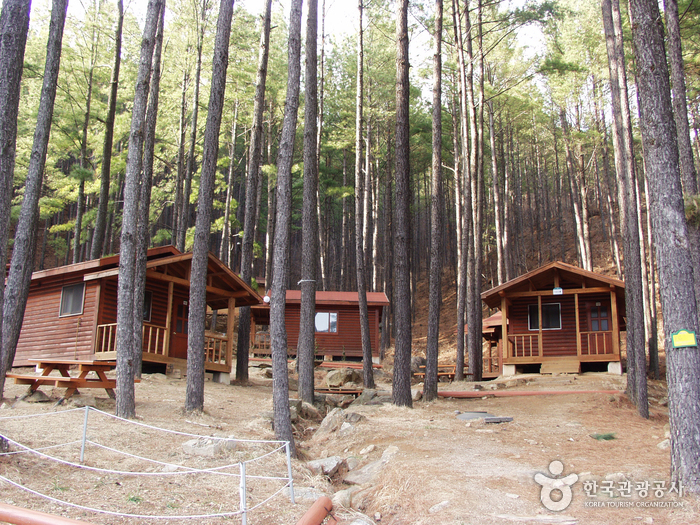
光陽は春が美しい土地である。鮮やかな梅の香りが漂う鮮津江沿いの鮮津江梅村と清梅農園があり、白雲山の麓にある玉龍寺址には歴史の深い椿の森が赤い壮観を成している。白雲山自然休養林でキャンプを楽しみ、華やかで鮮やかな春の気配を感じることができる。
このコースは2日間の旅程サンプルです。そのまま保存するか、AI日程に拡張できます。
Hanguk Sikdang is a truly living traditional restaurant that has sold only bulgogi for four generations at the same location for over 100 years. Nowadays, not many places grill meat over charcoal because it is difficult to manage. However, Hanguk Sikdang grills meat using traditional methods on a brazier with three legs, using oak charcoal grown on Baegunsan Mountain. They use a copper grate as the grill, which has antibacterial effects. As expected, biting into bulgogi grilled well over charcoal naturally brings out admiration. The texture is soft and sticks to the mouth, giving a truly amazing taste. The meat is rich in juice, so you don’t get tired of it and keep reaching for more even when full. Additionally, the pickled plum side dish served as a banchan offers a refreshing crunch that pairs perfectly with bulgogi, better than any salad. It has been selected as a Namdo cuisine specialty restaurant in Jeollanam-do, a model restaurant in Gwangyang-si, and recognized as a famous restaurant by Sports Seoul.
해발 1,218m의 백운산을 주봉으로 하여 인공림과 천연림이 조화된 아름드리 소나무가 융단처럼 펼쳐져 있고 삼나무와 편백 숲속의 계곡은 감탄을 자아내게 한다. 인근에는 도선국사가 35년간 수도하던 옥룡사지(국가지정 사적407호)가 자리 잡고 있으며, 초봄(2~3월)이면 옥룡사지 주변을 둘러싼 7,000여 그루의 동백꽃이 만개장관을 이루고 있다.
Located around the Okglyongsa site 7 km south of Baegunsan, Okglyongsa was a temple where the eminent monk and Korean pungsu expert Seongak Guksa Doseon stayed for 35 years, teaching hundreds of disciples before passing away. It holds a very important place in Korea's Buddhist history as a millennium-old sacred site. The temple site is located in Chusan-ri, Okglyong-myeon, and the name 'Okglyong' is said to originate from Doseon's pen name 'Okglyongja.' Baegyesan (505.8m), which surrounds Okglyongsa, is a gentle mountain ridge extending from the main peak Baegunsan (1,218m) and is situated centrally on Baegunsan. Originally a small hermitage in late Silla, Doseon Guksa renovated and expanded it in 864, attracting many monks to hear his teachings, leading to the formation of the 'Okglyongsa faction.' To accommodate the growing number, the nearby Unamsa temple was built. Despite several fires, Okglyongsa flourished until it was destroyed by fire in 1878 and subsequently abandoned. The current Daeungjeon hall was built in 1969. Monuments and pagodas for Doseon Guksa and his disciple Tongjin Daesa once stood but disappeared around 1920, with only inscriptions preserved in literary works like Dongmunseon. Surrounding the site is a dense camellia forest covering 7 hectares with approximately 7,000 camellia trees, said to have been planted by Doseon to strengthen the land's energy. Though the temple vanished through turbulent history, the camellias have firmly taken root, boasting a thousand-year heritage. Designated as a Jeollanam-do monument (Gwangyang Baegyesan Camellia Forest) on September 24, 1974, it was changed to a natural monument on December 17, 2007. Currently, the natural forest lies on the southern mountainside at 403m elevation, covering about 7 hectares. Some camellia trees reach 1.8m in girth with an average height of 5-6m, totaling 6,342 camellia trees.
Okgnyongsa Site is where Seongakguksa Doseon, an outstanding monk of the late Unified Silla period and a master of geomancy, stayed for 35 years, teaching hundreds of disciples before passing away. The place name 'Okgnyong' is said to derive from Doseon's pen name 'Okgnyongja.' Baekgyesan (505.8M), on which Okgnyongsa Site is located, is a ridge extending from the main mountain Baegun-san (1,218M), situated in the central part of Baegun-san. Okgnyongsa was a small hermitage in the late Silla period, rebuilt by Doseonguksa in 864, where hundreds of monks gathered to hear his dharma talks, forming a faction called the 'Okgnyongsa school,' which led to the founding of the nearby Unamsa Temple to accommodate the influx. Despite several fires, Okgnyongsa flourished until destroyed by fire in 1878 and was subsequently abandoned; the present Daewoongjeon hall was built in 1969. Excavations by Suncheon National University Museum revealed temple remains, about 90 inscribed stone fragments, and the bones and stone coffin presumed to be Doseonguksa’s, providing insight into the funerary customs of monks at the time. About 7,000 camellia trees form a wide cluster around Okgnyongsa Site, and within about 1 km, there is Baegun-san Natural Recreation Forest and a campground.
Jungheungsa Temple is located about 2.5 km south of Okryongsa Temple, situated within Jungheungsanseong Fortress, which is why it is called Jungheungsa. It is said to have been founded by Doseon Guksa during the reign of King Gyeongmun of Silla. During the Imjin War, after fierce battles with Japanese soldiers, all the monastery soldiers died, and the temple was burned down and abandoned, surviving only as a hermitage. It was rebuilt in 1963 and restored to its current form. Within the temple grounds are National Treasure No. 103, the Twin Lion Stone Lantern (kept at Gwangju National Museum), the three-story stone pagoda of Jungheungsanseong Fortress (Treasure No. 112), and the Stone Ksitigarbha Bodhisattva Relief (Jeollanam-do Tangible Cultural Property No. 142). The Twin Lion Stone Lantern currently at Jungheungsa is a replica. During the Japanese occupation, a Japanese individual attempted to smuggle it out illegally but was stopped by the locals. The Jungheungsanseong Fortress that encloses Jungheungsa can be reached by climbing left from the pavilion named Sesimjeong. From the fortress, visitors can enjoy an expansive view stretching to Baegunsan Mountain. Starting from Haun Village entrance in Okryong-myeon, hiking about 800m up the mountain trail leads to Jungheungsa. Visitors can access the temple by crossing the red bridge connected to the parking lot. Directly behind Jungheungsa lies a lake called Jungheungje.
コース後に休みやすい宿を集めました
会員登録して自分のチャンネルも一緒に紹介してもらう
(会員になると、マイページで設定した Instagram・YouTube・ブログのリンクが、あなたのコメントと一緒に表示されます。)
“「弘大近くに滞在して、夜のカフェ巡りをしました。街の夜景も雰囲気も最高でした。」”
ゲストとして投稿したコメントには、SNSリンクやプロフィールカードは表示されません。
この場所についてのちょっとしたコツや感想をシェアしてください。
ゲストとして、気軽にひとことコメントを残すこともできます。
写真の添付はログイン後に利用できます。
まだレビューがありません。最初の感想を投稿してみましょう!