
槐山の自然と韓紙体験コース in 忠清北道 ゲサン郡 · schedule その他 · distance 35km · 6 stops · highlights 점심식사(산천식당), 괴산한지체험박물관, Suok Waterfall
槐山には独特で珍しい体験スポットが多いです。韓紙体験博物館やドラマ『公主の男』『善徳女王』の撮影地として知られる水玉瀑布を経て、有名な水安堡温泉で締めくくるこのコースは、身体と心の健康を考えた内容となっています。
このコースは1日旅程のサンプルです。そのまま保存するか、AI日程に拡張できます。
괴산군청에서 음성 방향으로 가다 보면 농업기술센터 정면으로 위치하였으며, 남한강과 괴강의 깨끗한 물에서 나는 민물고기를 주재료로 한 어탕과 용봉 오리탕이 주축을 이루며 가정식 백반과 삼겹살도 취급한다. 이 집의 대표 음식은 어탕과 용봉 오리탕인데 어탕은 붕어, 잉어를 7시간 동안 고아서 먹는 보양식(비린내가 전혀 나지 않는다.)이며, 용봉 오리탕은 어탕 국물에 오리를 끓인 오리탕이다.
옛 신풍분교 터에 들어선 괴산한지체험박물관은 한지를 테마로 한 전시와 체험이 어우러진 이색 공간이다. 충청북도 무형문화재 안치용 한지장이 관장을 맡고 있는데 유물실에는 그가 수십 년 동안 수집한 귀한 한지 관련 유물이 가득하다. 유물실과 기획전시실을 둘러본 뒤 공예실과 한지체험실에서 다양한 체험을 즐겨보자. 전통한지 뜨기, 야생화지 뜨기, 한지등 만들기, 한지 옛책 만들기 등 다채로운 체험 프로그램을 운영한다.
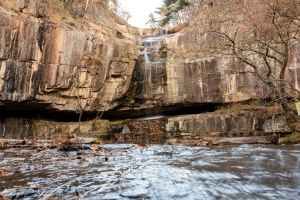
Suok Waterfall is formed where a stream flowing toward Sojoryeong from the third gate of Joryeong falls below a cliff. The waterfall consists of three tiers, and the two upper tiers form deep pools. At the end of the Goryeo Dynasty, King Gongmin fled here from the Hong Geon-jeok, built a thatched house as a temporary palace, and erected a small temple to become a Buddhist. He built a small pavilion under the waterfall to forget his sorrow. There was a pavilion on the hill below the waterfall, and in 1711 (37th year of King Sukjong's reign), Jo Yusu, the Yeonpung governor, built a pavilion called Suokjeong to honor his upright uncle, Donggang Jo Sang-u. Also, the deep pool where the water falls from the two upper tiers is said to have been dug by Jo Yusu using people to gather and drop the water. Over time, the pavilion deteriorated and disappeared, but in 1960, local residents with the support of Goesan County built an octagonal pavilion, which remains today. ◎ Travel information to enjoy the charm of the Korean Wave Suok Waterfall is a three-tiered waterfall with the upper part forming stair-like layers, and its scenic beauty blending waterfall and pavilion is often chosen as a filming location for movies and historical dramas.
There is a small trail just past the Mireuk-ri three-story stone pagoda in Wolaksan. Facing a picturesque view of faraway hwangjangmok (red pine), oak trees, and haesong (Korean red pine), this path, known as 'Haneuljae,' opens to a cool breeze under the clear sky. The ditch lower to the left side of the path may sometimes dry up due to drought, but wildflowers like bright pink balsam, deep purple water artemisia, and yellow jipsinnamul greet travelers along with the rocky cliffs and peaks nearby. Although the name suggests it touches the sky, Haneuljae (elevation 525m) is not very high. It serves as the provincial boundary connecting Mireuk-ri, Suanbo-myeon, Chungju-si, Chungcheongbuk-do with Gwan-eum-ri, Mungyeong-eup, Mungyeong-si, Gyeongbuk. About 30-40 minutes (2 km) from Mireuk-ri leads directly to Gwan-eum-ri in Mungyeong. The rough dirt road smooths into an asphalt path at the Haneuljae pass's ridge, where the summit of Daemisan Mountain (elevation 1,115m) in Mungyeong appears faintly to the west. Below Haneuljae lies the site of Jungwon Mireuk-ri Temple, believed to have been established from the late Silla to early Goryeo periods, with remnants like dangganji-ju (flagpole supports) and corridors indicating a large scale. It is the only Buddhist temple in Korea oriented north and located in Mireuk-ri basin between Jilpjae and Haneuljae. The wooden structures of Jungwon Mireuk-ri Temple were destroyed during the 13th-century Mongol invasions. Remaining are a five-story stone pagoda (treasured), stone Buddha statue (treasured), stone lantern (provincial tangible cultural asset), and three-story stone pagoda (provincial cultural asset). Excavations by Cheongju University Museum in 1977 and 1979 revealed it as 'Mireukdaewon,' where the monk Il-yeon once resided. Close proximity to Wolaksan National Park, the Mireuk-ri original site, and Haneuljae's historical and nature observation trail attracts many tourists.
The Mireuk Temple site is spread southward in the basin between the Haneuljae mountain pass connecting Chungbuk and Gyeongbuk. The Mireukri temple site (彌勒里寺址) is said to have been established by the last prince of Silla, Ma-ui Taesa, who, while on his way to Geumgangsan, received a dream revelation from Avalokitesvara Bosal to erect a stone Buddha statue. Upon crossing Haneuljae and confirming the geographical conditions, he erected the statue and built the temple at present-day Mireuk-ri. The second excavation by Cheongju University from 1977 to 1978 revealed the temple's name as Mireukdaewonsa, and the third excavation by Ewha Womans University in 1980 found that a stone grotto temple was once operated here but was destroyed, leaving only the stone structures. According to the Samguk Sagi, Silla Annals, in the third year of Adallaiisageum (156), "In April, the Gyellipryeong path was opened." This marks Silla’s exchanges with Baekje and Goguryeo and eventually achieving the unification of the Three Kingdoms via the Han River. The Mireuk Temple site is a rectangular temple site of about 14,000 pyeong with a single pagoda and a single golden hall arranged. Within Mireukri site stand a five-story stone pagoda (treasure) and a standing stone Buddha (treasure), along with a stone lantern and a three-story stone pagoda designated as local tangible cultural heritage. The Jungwon Mireukri site is a unique grotto temple combining stone and wooden structures, oriented northward with a stone grotto serving as the main hall. Further, the stone Buddha at Mireuk Temple is the only north-facing statue in the country. The square grotto main chamber housing the statue measures 9.8m wide by 10.75m deep, with stone walls 6m high built of large Musaseok stones, enshrining the statue at its center. Above the stone walls stood a now-disappeared wooden building, and the front hall was a half-underground wooden grotto structure.
The Suanbo Oncheon Tourist Special Zone is a traditional hot spring resort. It is known as Korea's first naturally flowing hot spring, said to have existed for 30,000 years, and its benefits are well recognized. The hot spring water, flowing from 250 meters underground, is mildly alkaline. Managed directly by Chungju City, the hot spring water contains beneficial far-infrared radiation and various minerals. Because of this, Suanbo Oncheon has attracted many visitors seeking treatment and relaxation since ancient times. At the center of Suanbo Oncheon is Muldang Park, where a shallow stream of hot spring water flows. Most travelers use accommodations such as hotels and motels within the Suanbo Oncheon area to enjoy the hot spring baths. Nearby, there are many natural attractions to explore, including Wolaksan Mountain, Chungju Lake, and Songgye Valley.
コース後に休みやすい宿を集めました
会員登録して自分のチャンネルも一緒に紹介してもらう
(会員になると、マイページで設定した Instagram・YouTube・ブログのリンクが、あなたのコメントと一緒に表示されます。)
“「弘大近くに滞在して、夜のカフェ巡りをしました。街の夜景も雰囲気も最高でした。」”
ゲストとして投稿したコメントには、SNSリンクやプロフィールカードは表示されません。
この場所についてのちょっとしたコツや感想をシェアしてください。
ゲストとして、気軽にひとことコメントを残すこともできます。
写真の添付はログイン後に利用できます。
まだレビューがありません。最初の感想を投稿してみましょう!


